Artist website examples. Pick one and Cactal builds it.
149 designs for painters, illustrators, sculptors, printmakers, muralists and makers. Choose one and Cactal turns it into your website, with your artwork, exhibitions and an inquiry form for sales and commissions.
Artist website designs
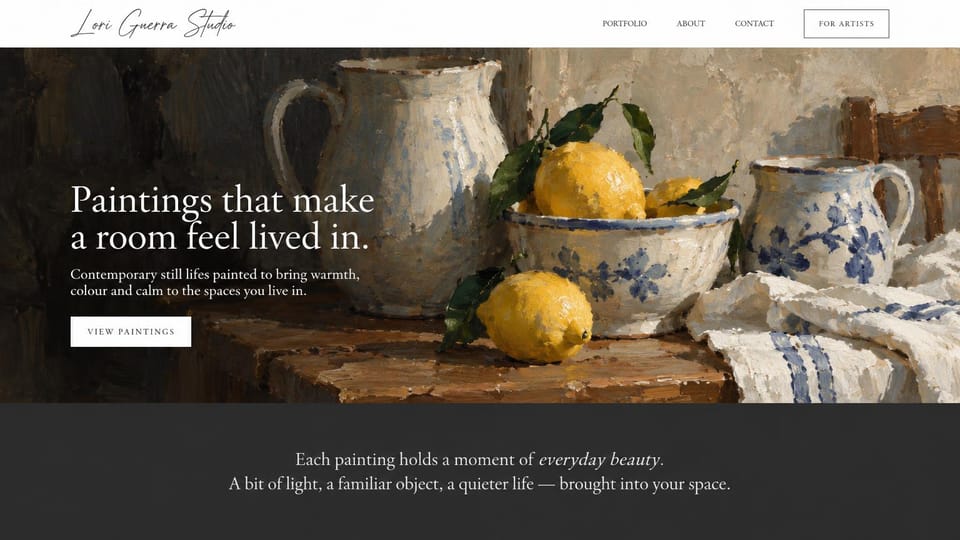
Talks about the room a painting will hang in, the way people who buy art for their homes think.
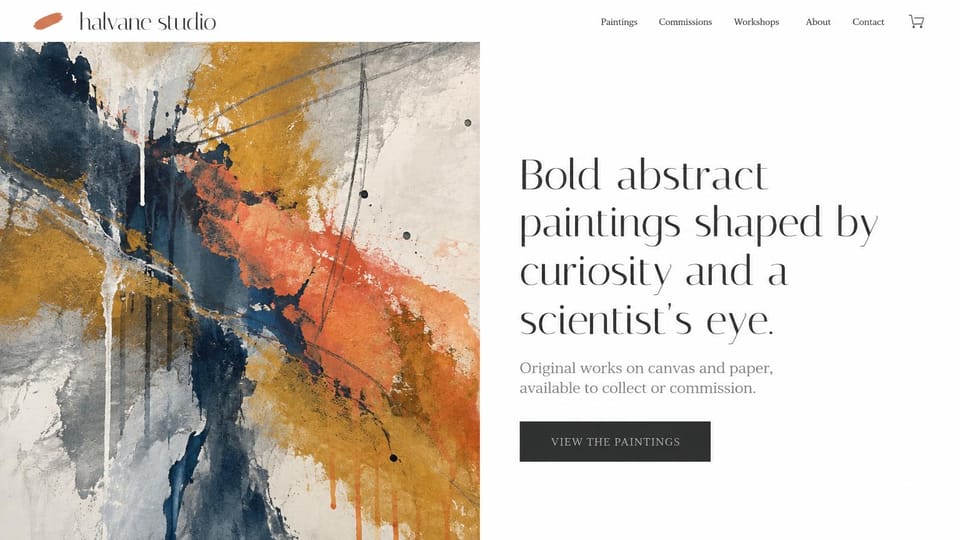
One large painting beside a short statement and a single button, for painters selling originals and commissions.
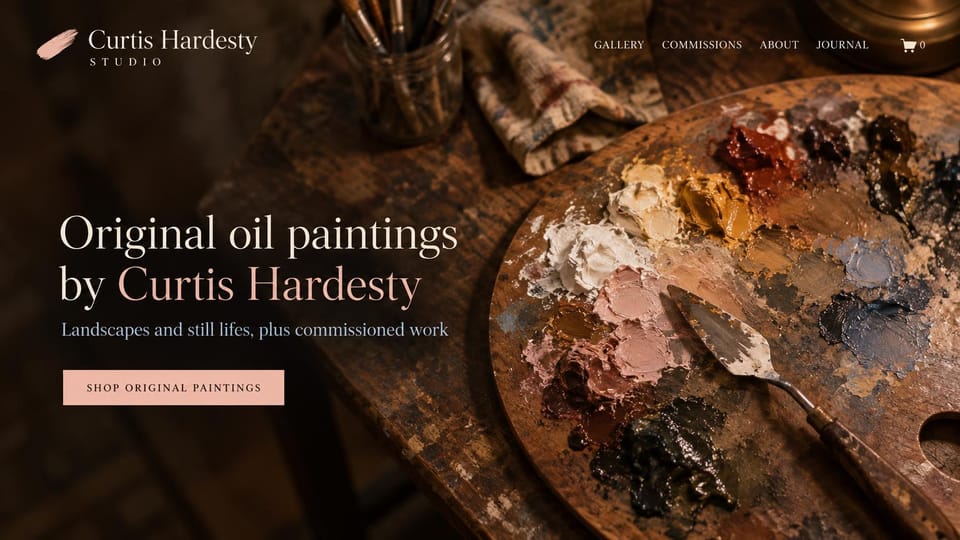
A close-up of a loaded palette sets a warm studio mood, with one button to shop original paintings.
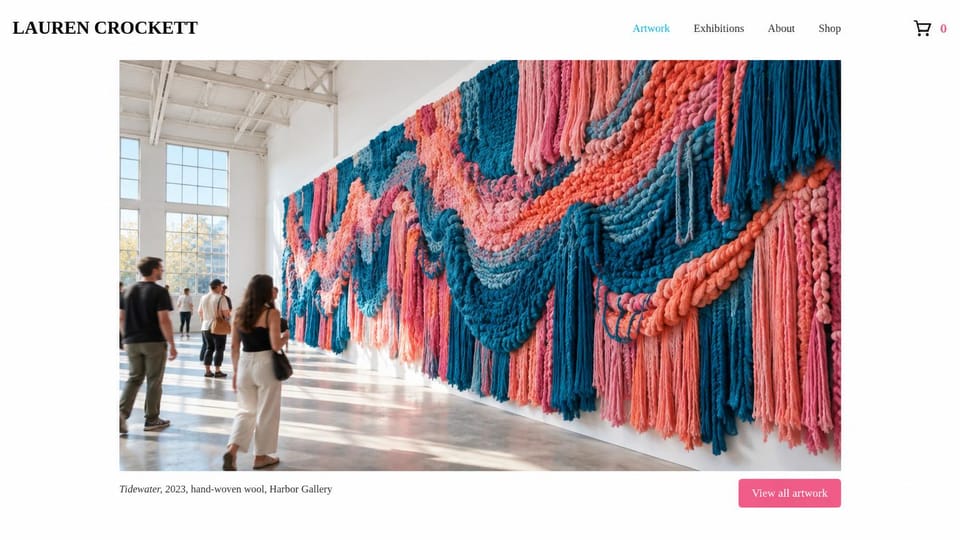
One installation shot with visitors for scale, a short caption and a single button to all the artwork.
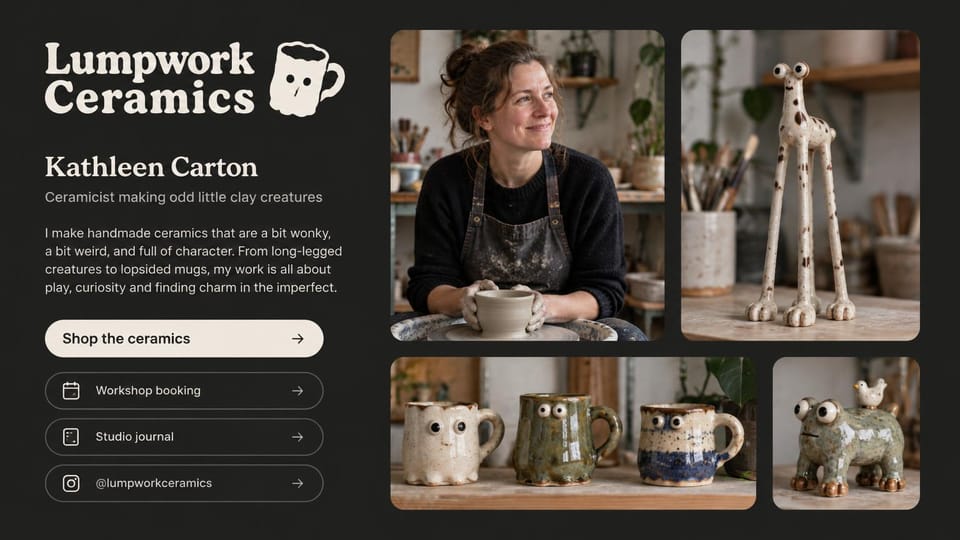
A short bio and stacked links to the shop, workshops and journal, beside photos of the studio and the pieces.
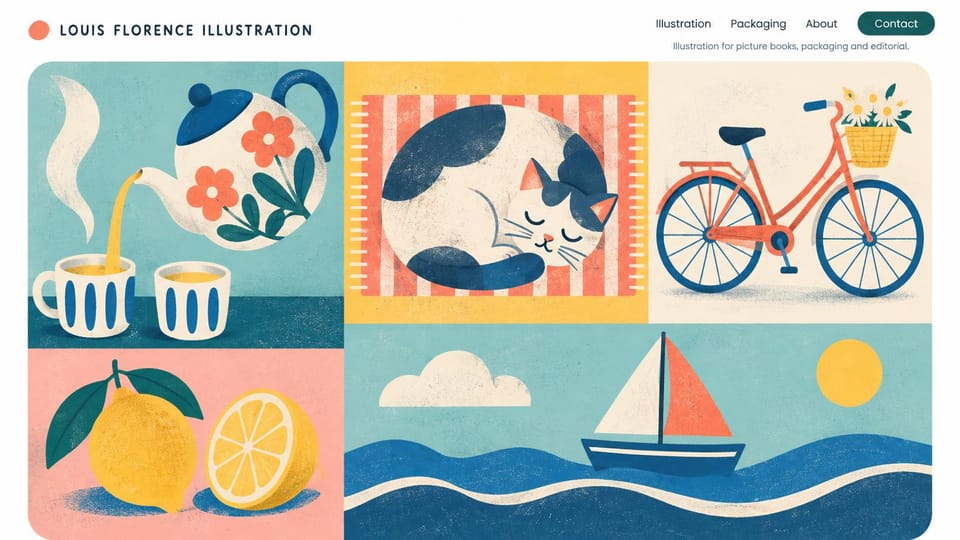
Five finished pieces fill the screen under a one-line list of the work you take on.
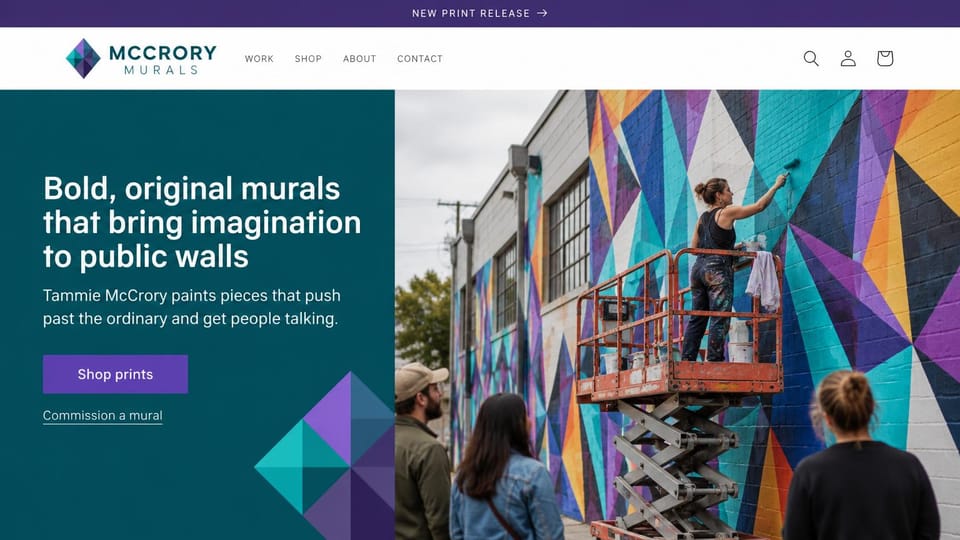
The muralist at work on a lift fills half the screen, with prints to buy and a link to commission a wall.
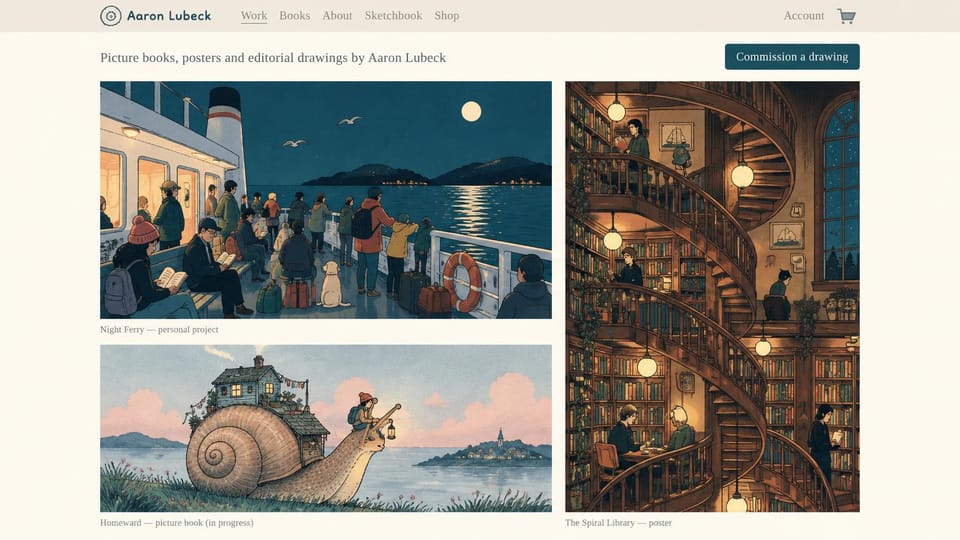
Finished pieces in a two-column gallery, each captioned by kind of project, with a button to commission work.
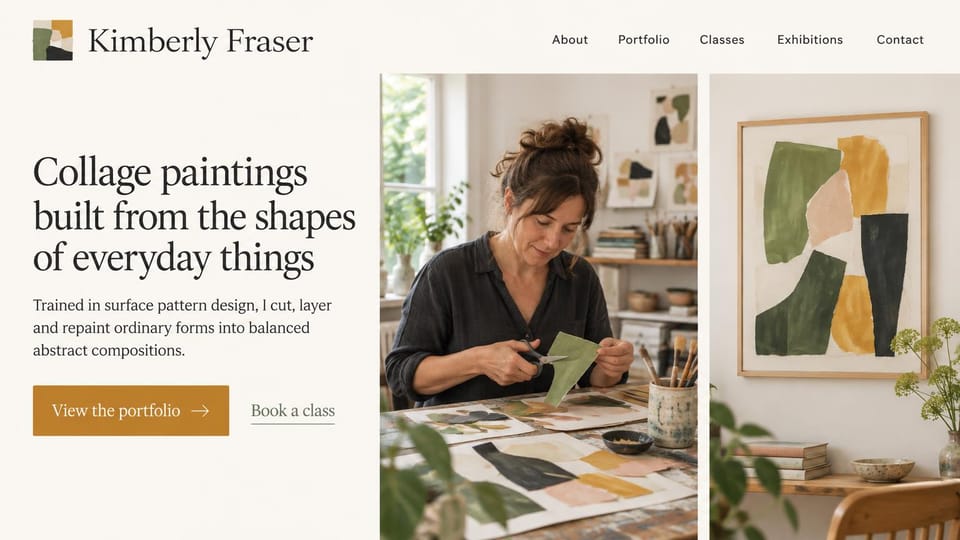
The artist cutting shapes beside a finished piece, with a class link, for painters who also teach.
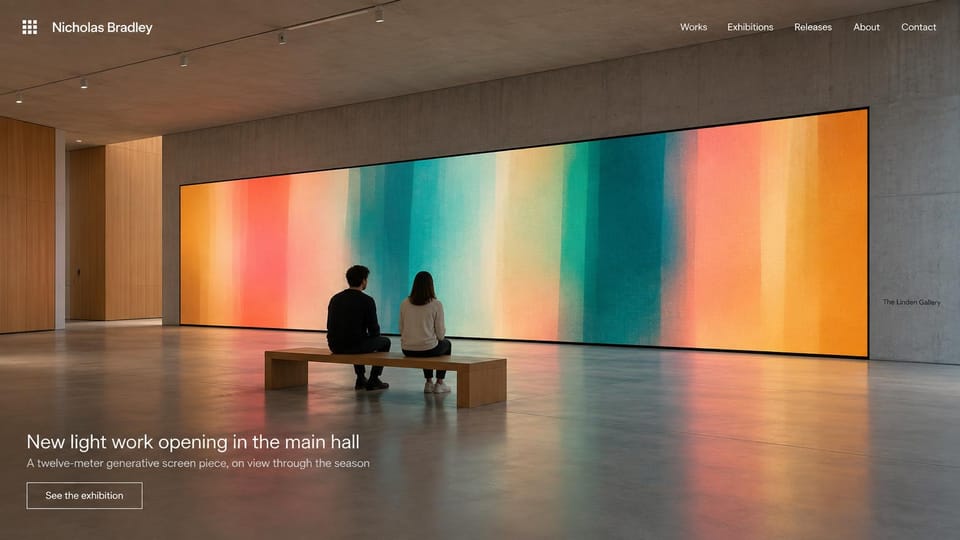
A gallery view of the newest work opens the site, with exhibitions and releases a click away.
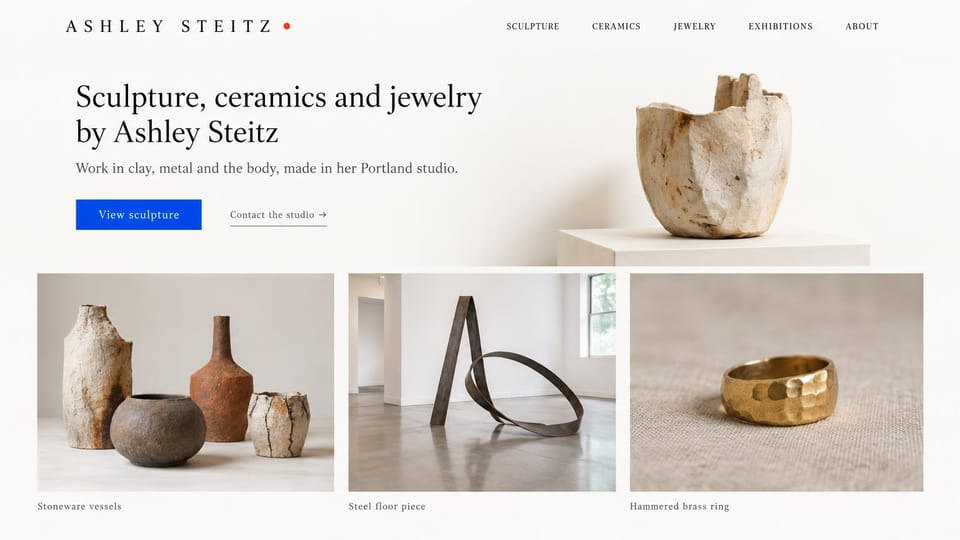
One piece on a plinth, then a captioned photo for each medium, for artists who work across materials.
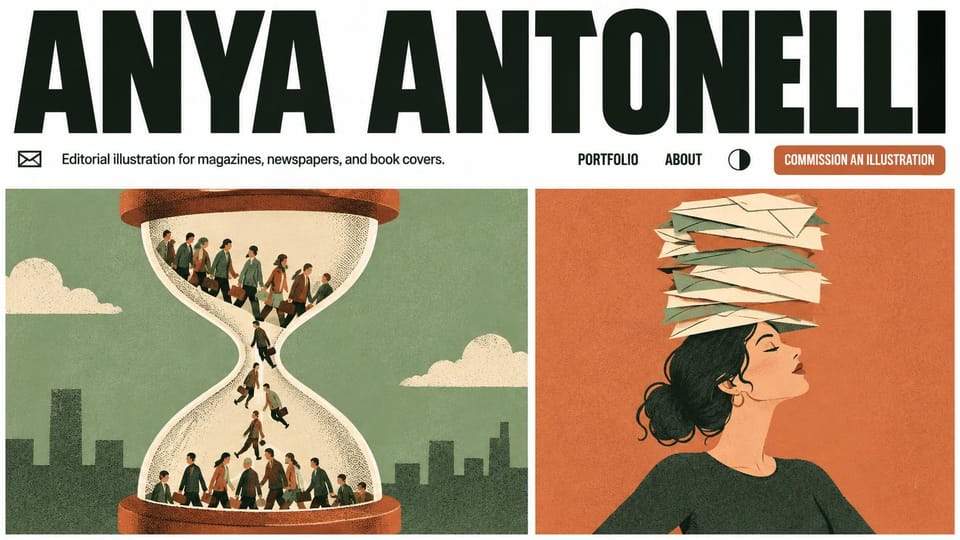
Your name runs the full width above two big pieces, for illustrators who work for magazines and book covers.
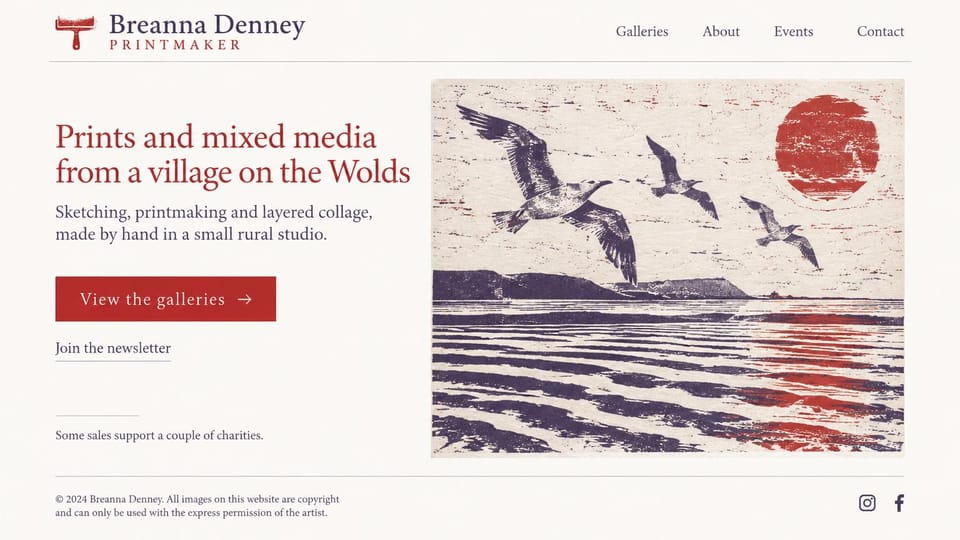
One large print beside a short studio line and a galleries button, for printmakers with a signature style.
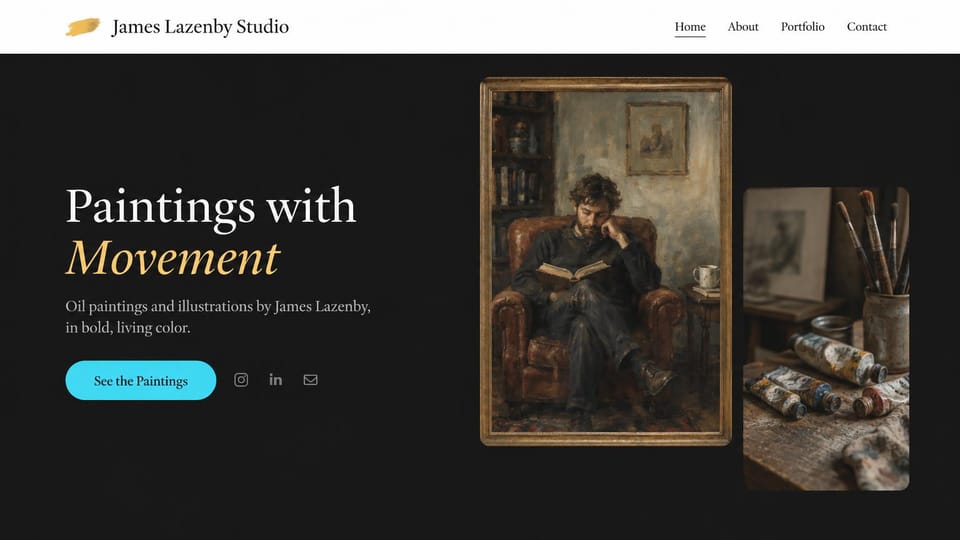
One framed painting beside a studio still life of brushes, under a short promise and a single button.
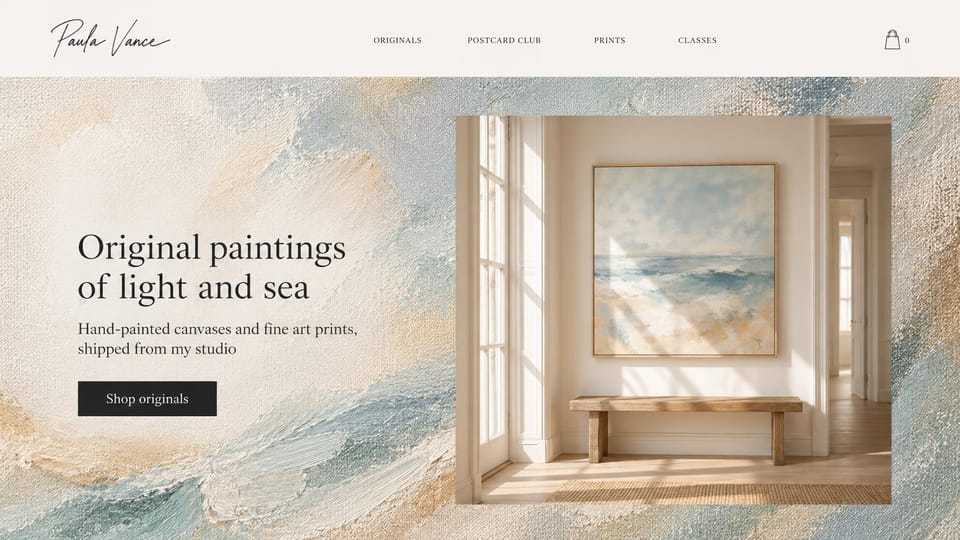
A painting hung in a sunlit room helps buyers picture it at home, with originals, prints and classes nearby.
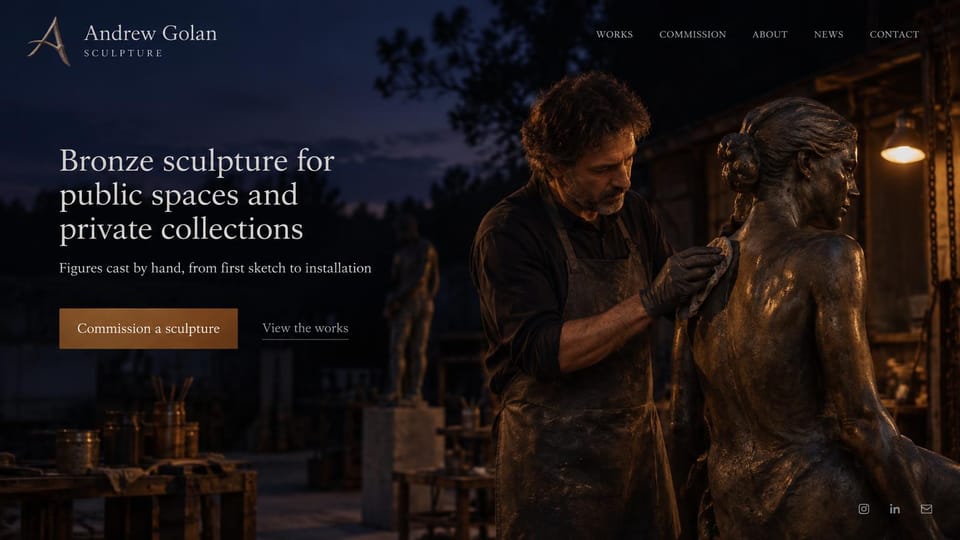
The sculptor finishing a figure fills a dark screen, with commissions first for public and private clients.
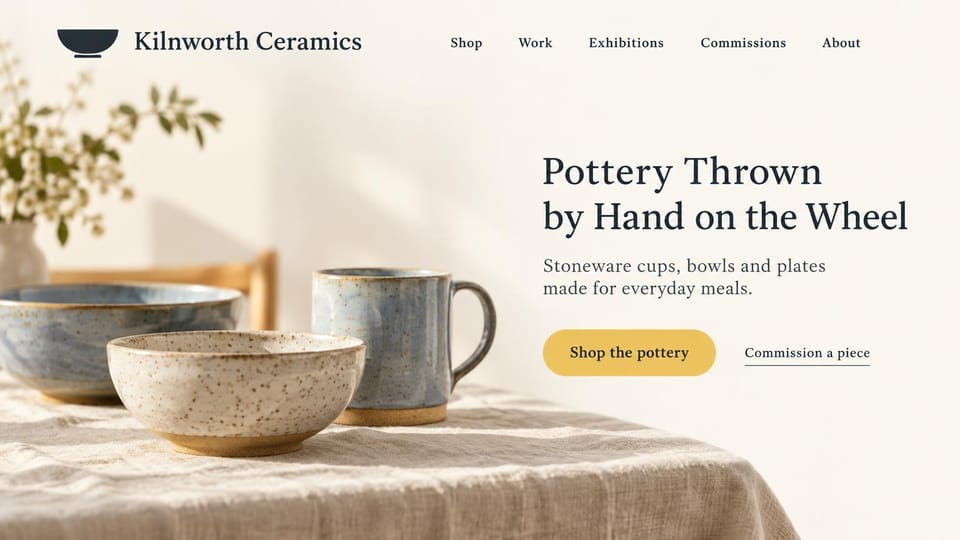
A sunlit table of cups and bowls sits behind a plain promise, with the shop first and commissions second.
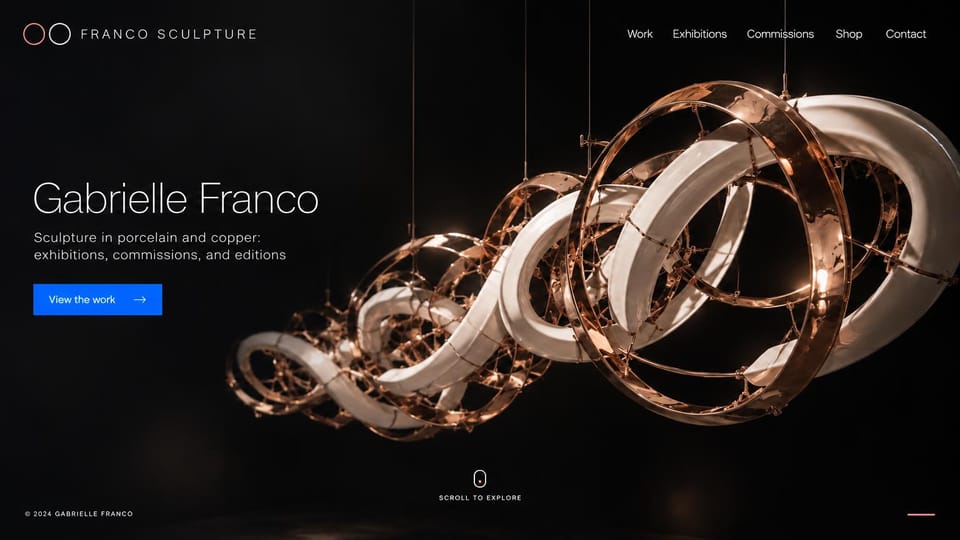
One lit sculpture floats across a black screen beside a short line on materials and a single button.
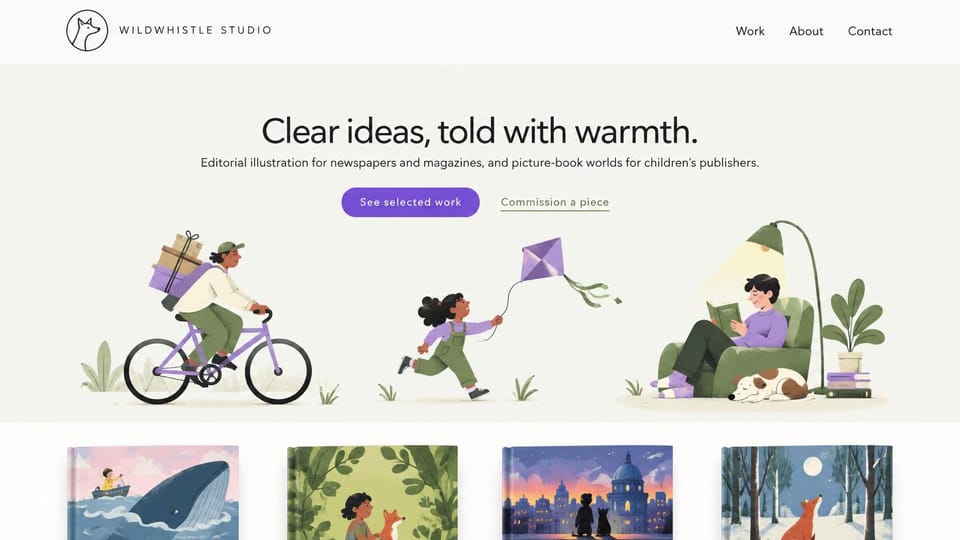
A plain line on the work you take, three light scenes and a row of book covers, for illustrators with clients.
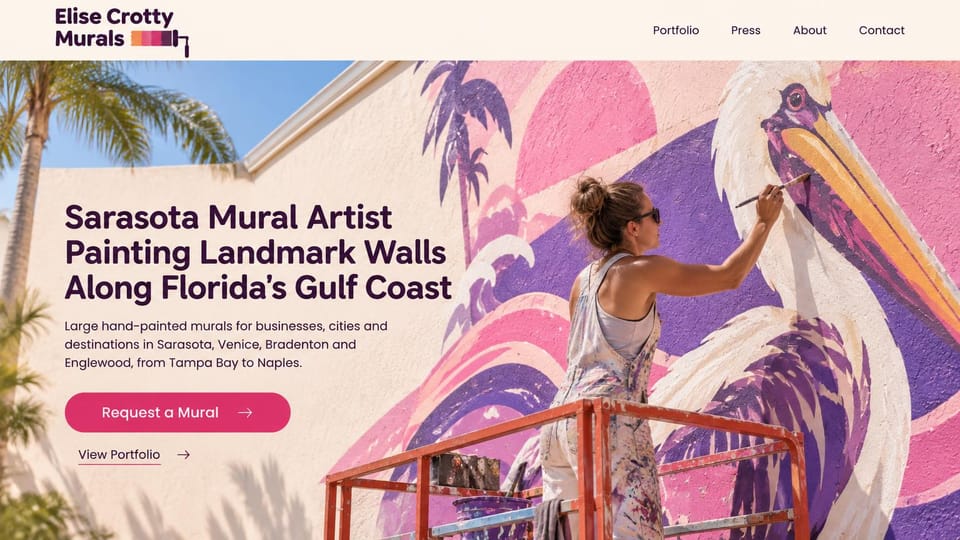
A headline naming the towns you serve sits over a photo of you at work, so local clients can find you.
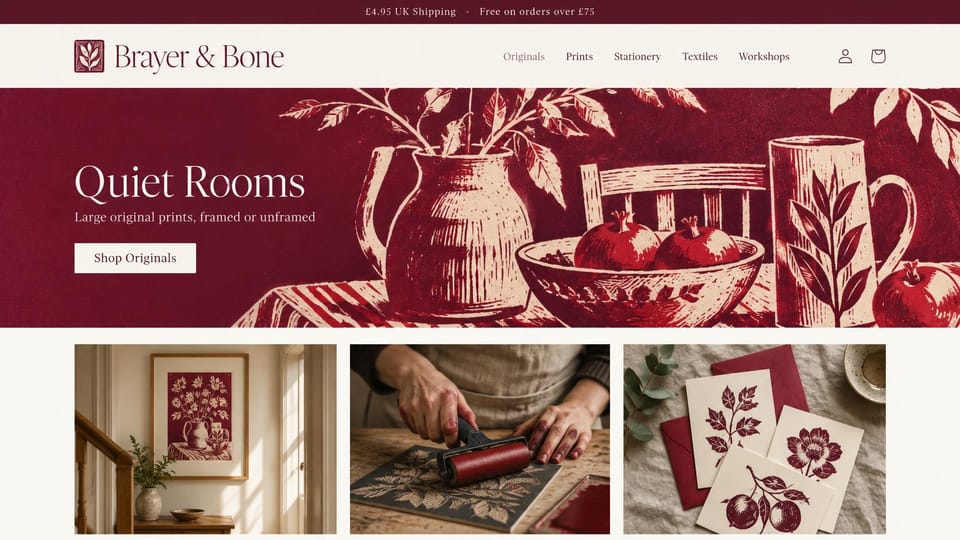
One of your prints becomes the banner, with photo tiles below for framed work, the process and cards.
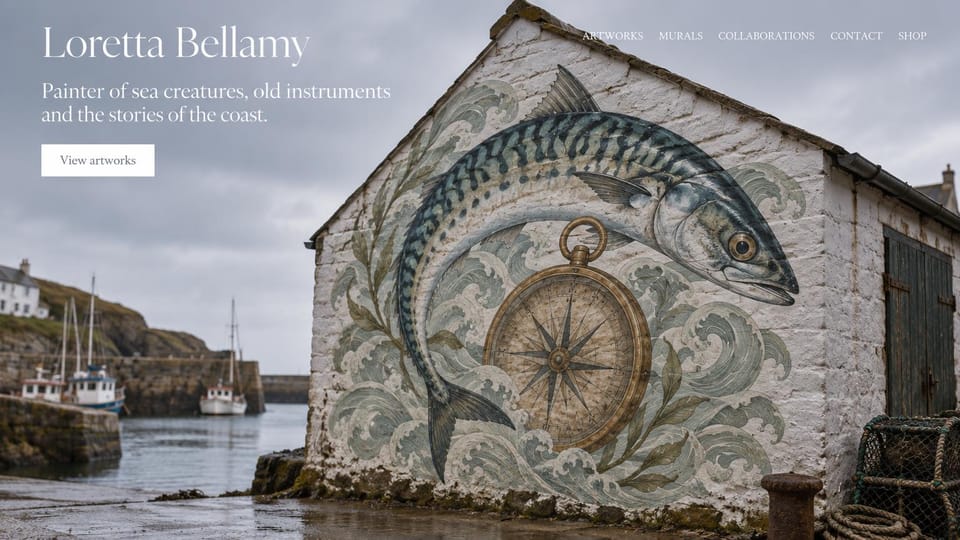
A finished mural in its setting shows the scale, with murals and collaborations next to artworks in the menu.
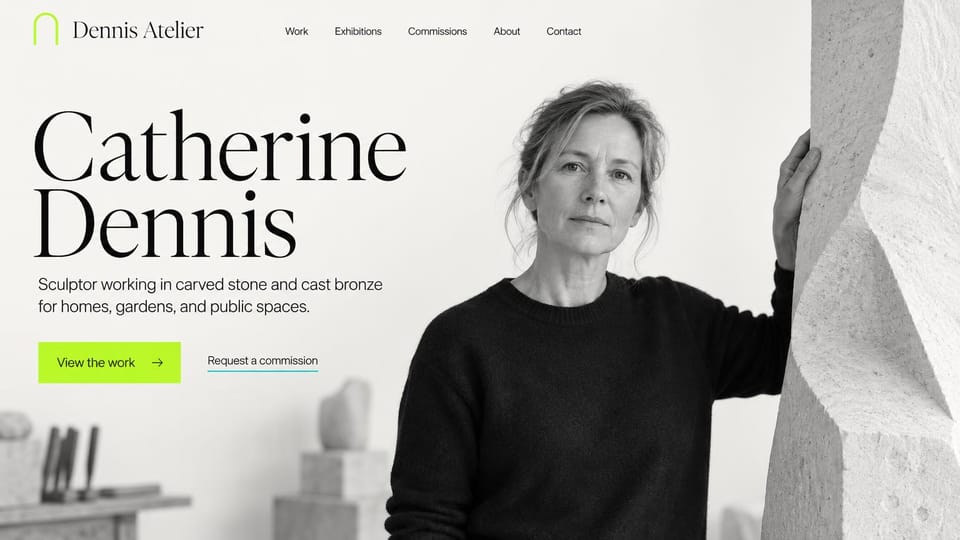
A black and white portrait and your name in large type lead, with one bright button to the work.
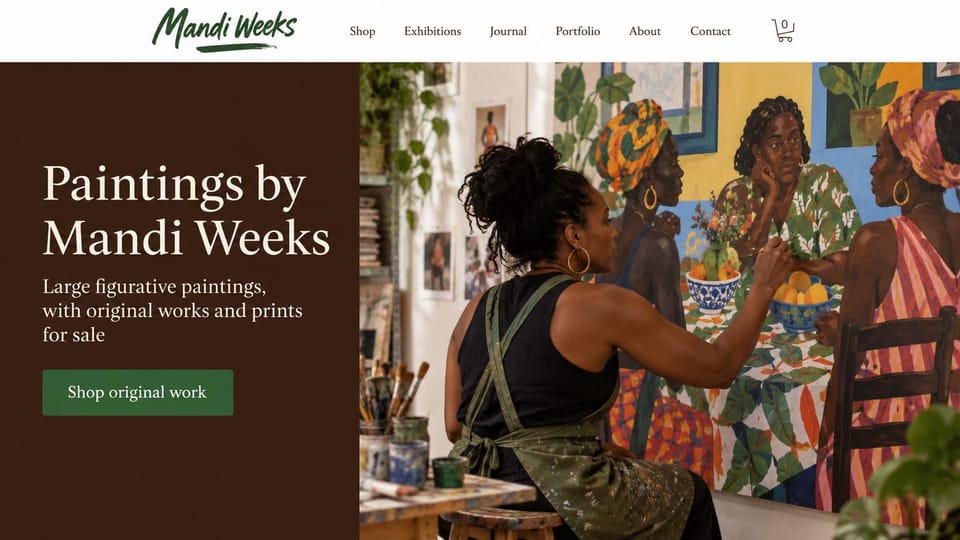
The painter at a big canvas beside a plain headline, for artists who sell originals and prints.
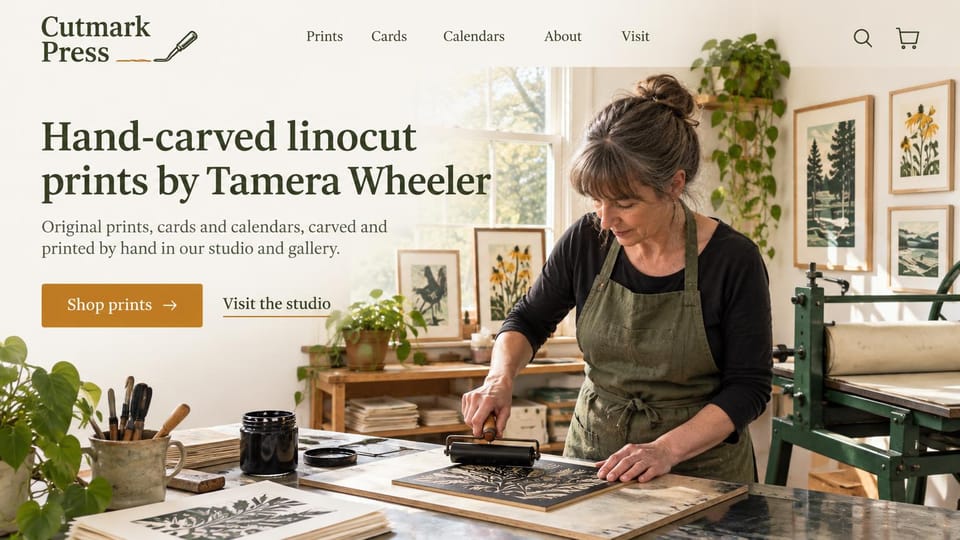
The printmaker inking a block beside the press, with buttons to shop and to visit the studio.
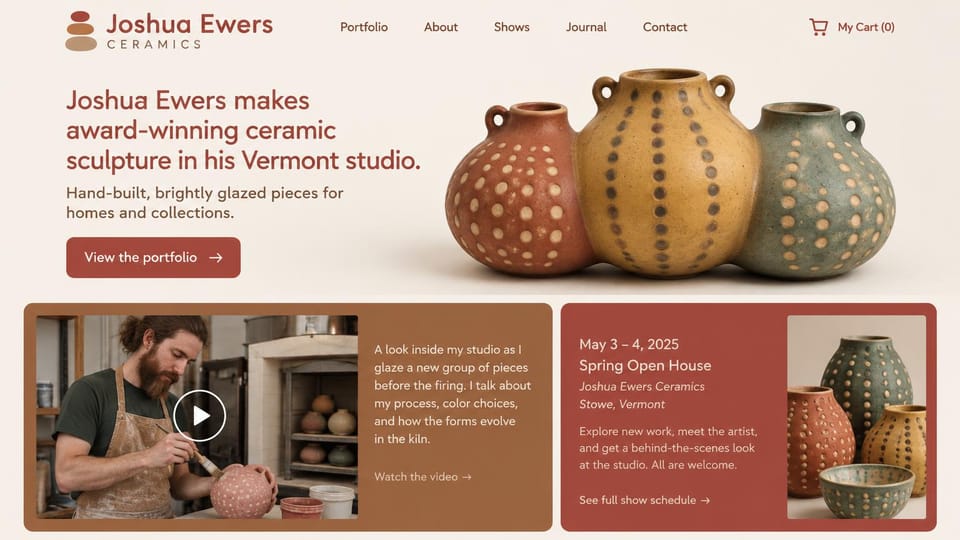
Glazed vessels up top, with a studio video and an open house card below, for ceramicists who invite visitors.
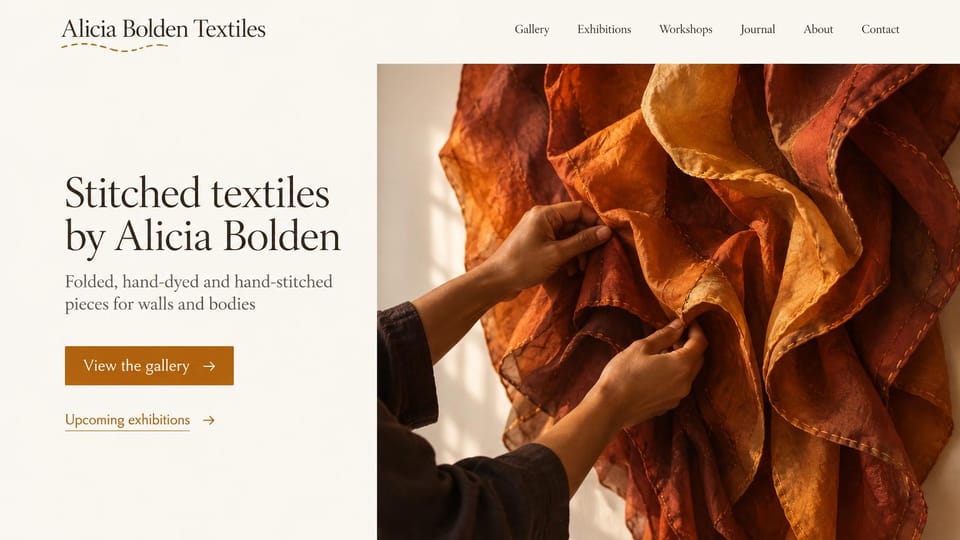
A close-up of hands at work shows the dye and stitching, with the gallery and upcoming shows one click away.
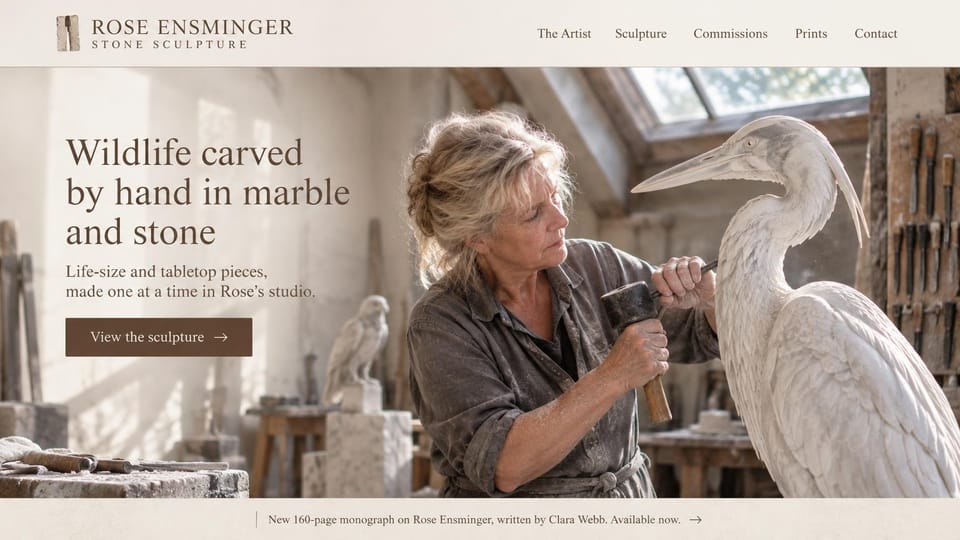
A sunlit photo of carving in progress with one button to the sculpture and a slim book announcement below.
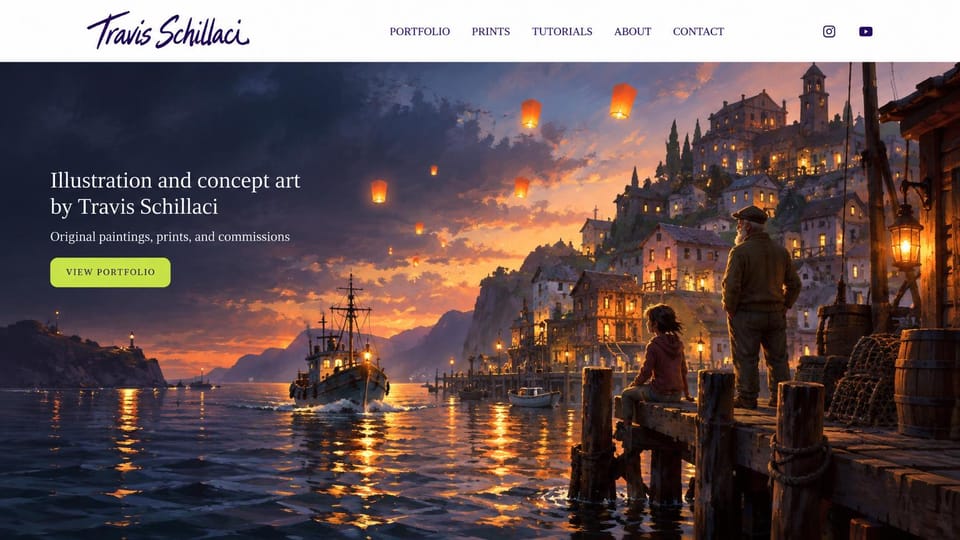
A full-screen painting sits behind a short line and a bright button, with prints and tutorials in the menu.
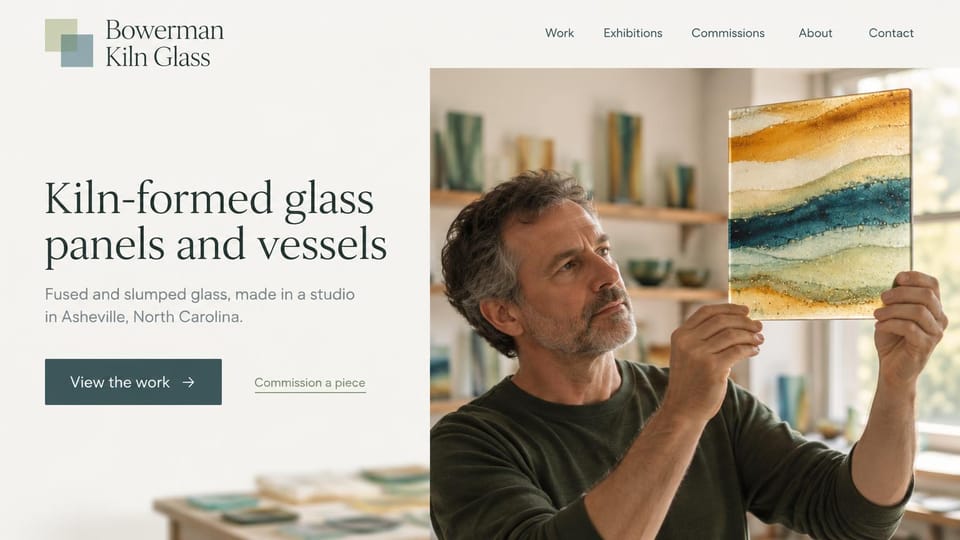
The maker holds one piece to the window beside a plain line on the craft, with commissions as a quiet link.
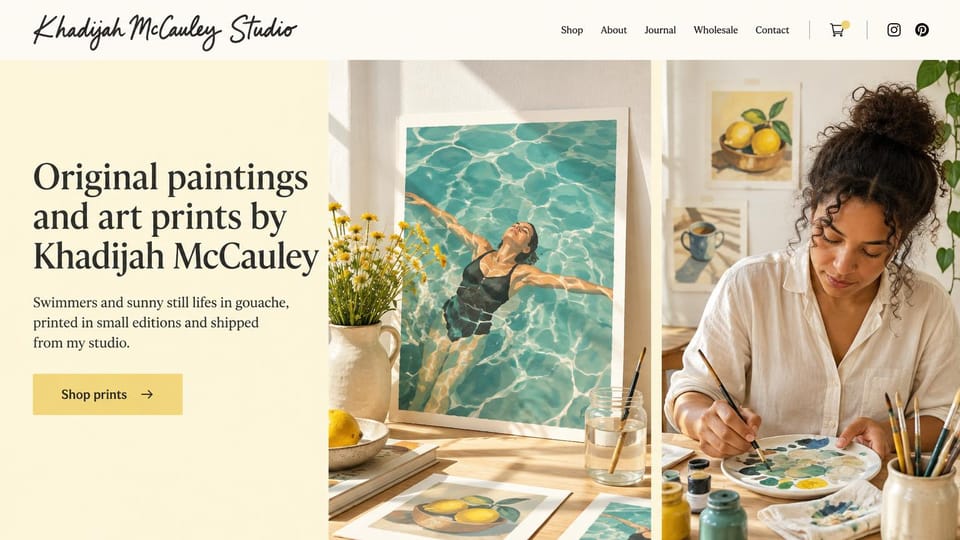
A finished painting beside the artist at work, with one button to the prints, for painters who sell editions.
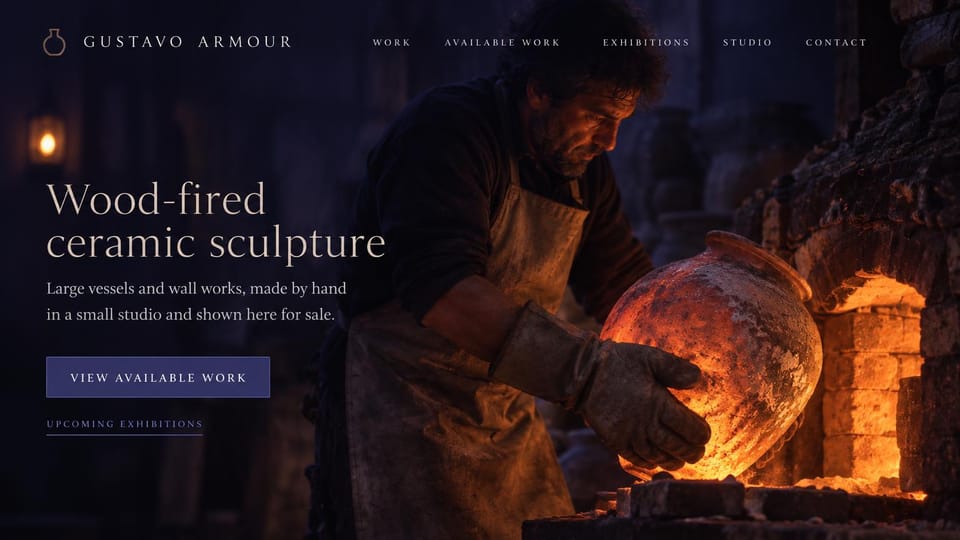
The maker at the open kiln sets the scene, with available work and upcoming shows as the two next steps.
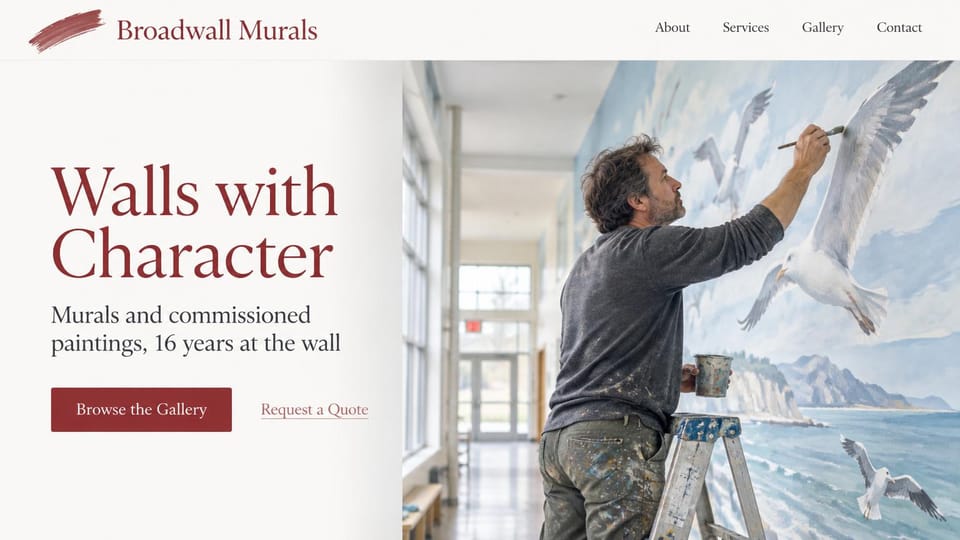
The muralist on a ladder mid-wall shows the craft and the scale, with a gallery button and a quote request.
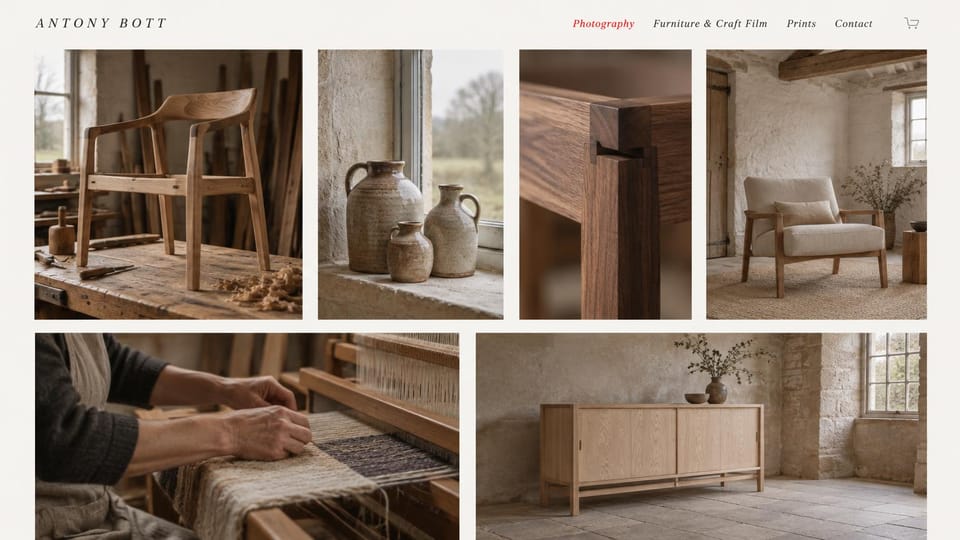
Workshop, weaving and finished pieces in one grid, for a maker who sells furniture, textiles and prints.
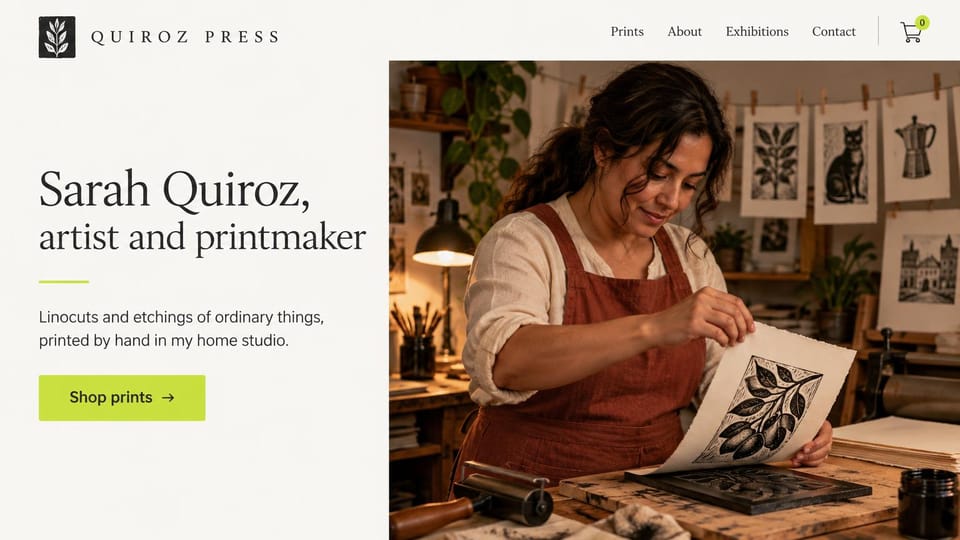
The printmaker pulling a print fills half the screen beside a plain intro and one bright shop button.
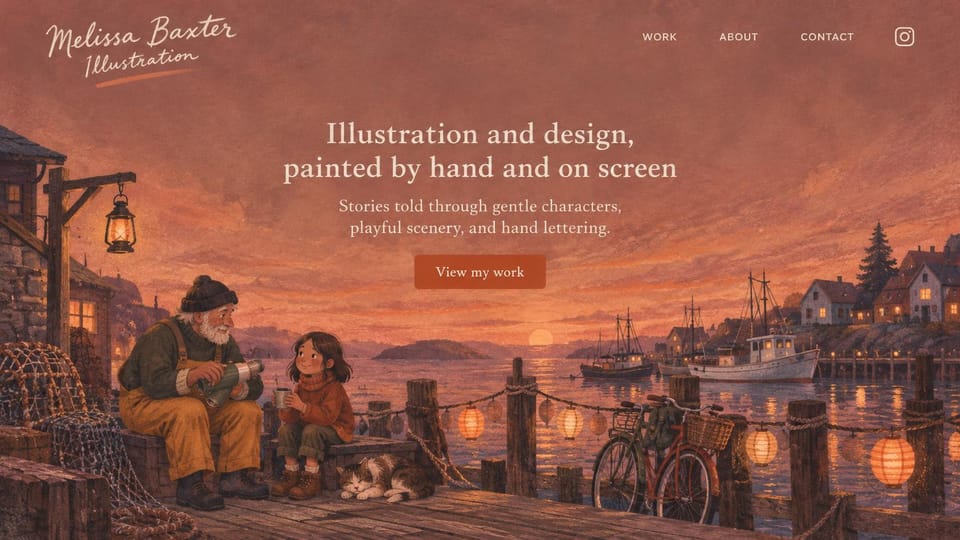
One wide painted scene sits behind a centered headline, so the first screen is already your portfolio.
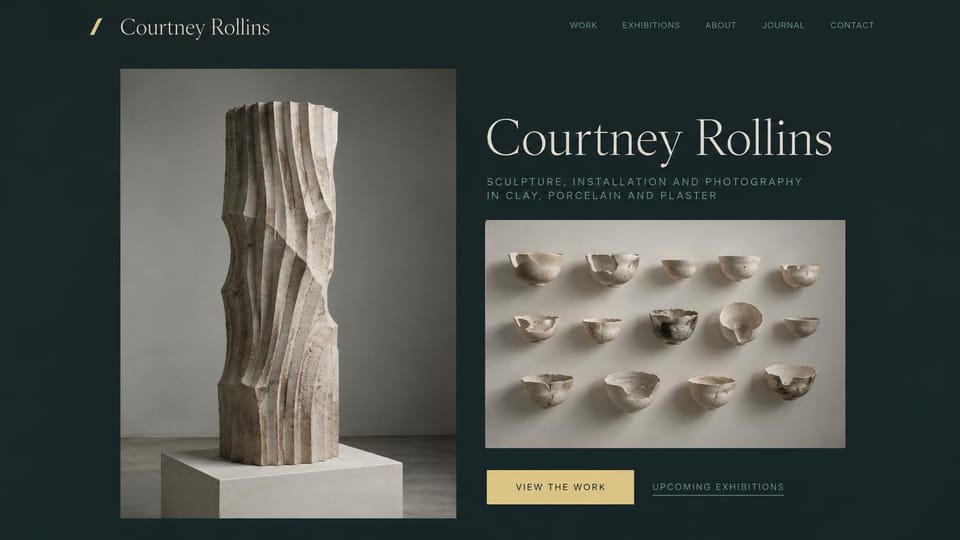
A tall piece and a wall of small forms sit beside your name and mediums, with shows one link away.
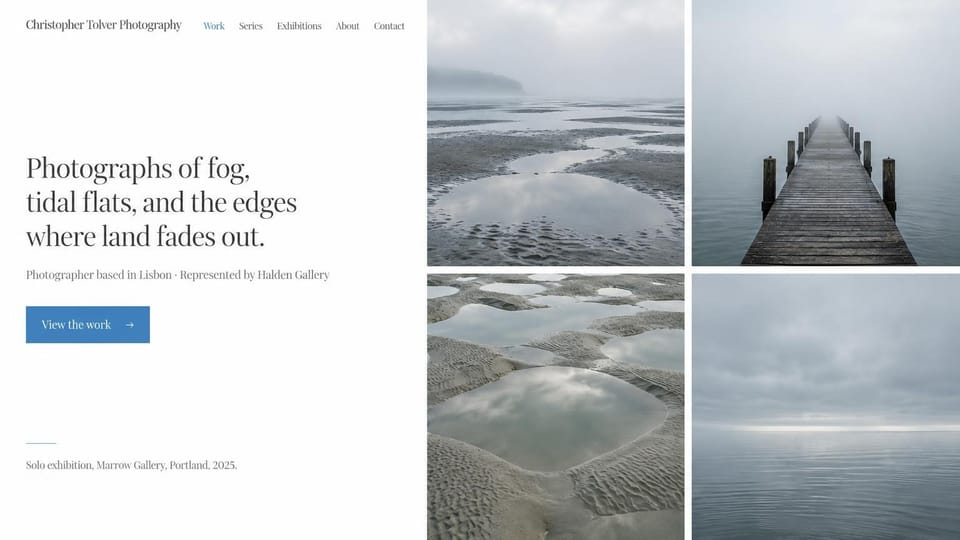
A short statement beside four photographs from one series, for photographers who show with galleries.
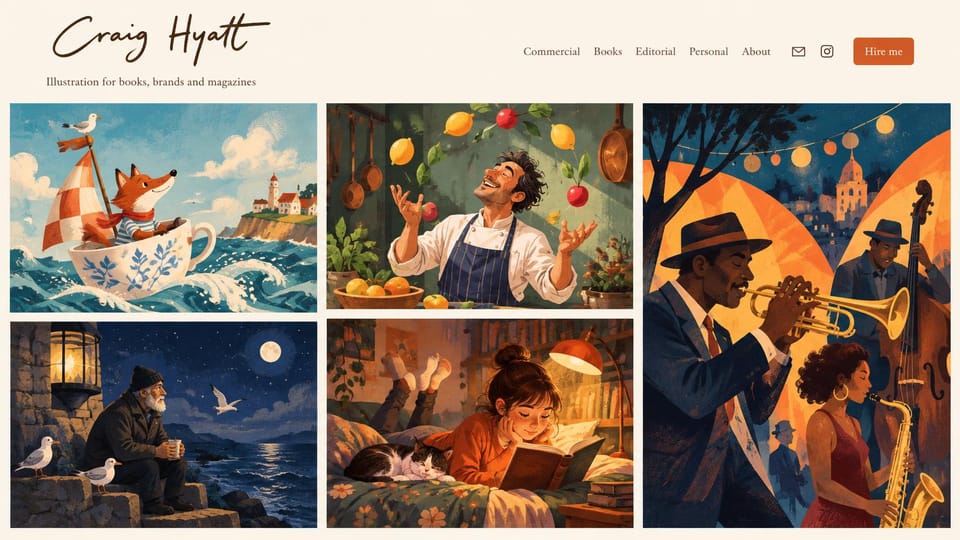
Your name in script over a tight grid of finished pieces, with one tall image and a hire me button.
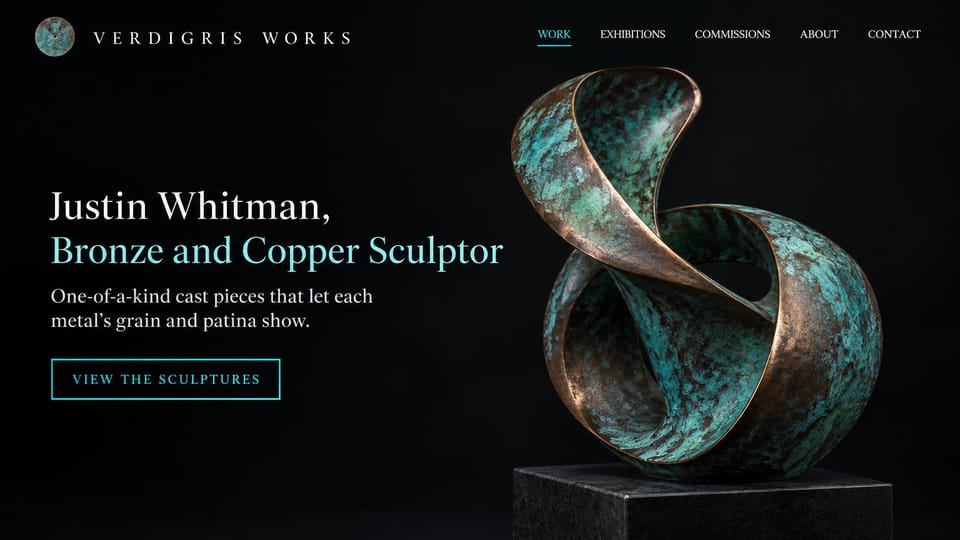
One patinated piece glows against a black page beside your name and medium, with a single button to the work.
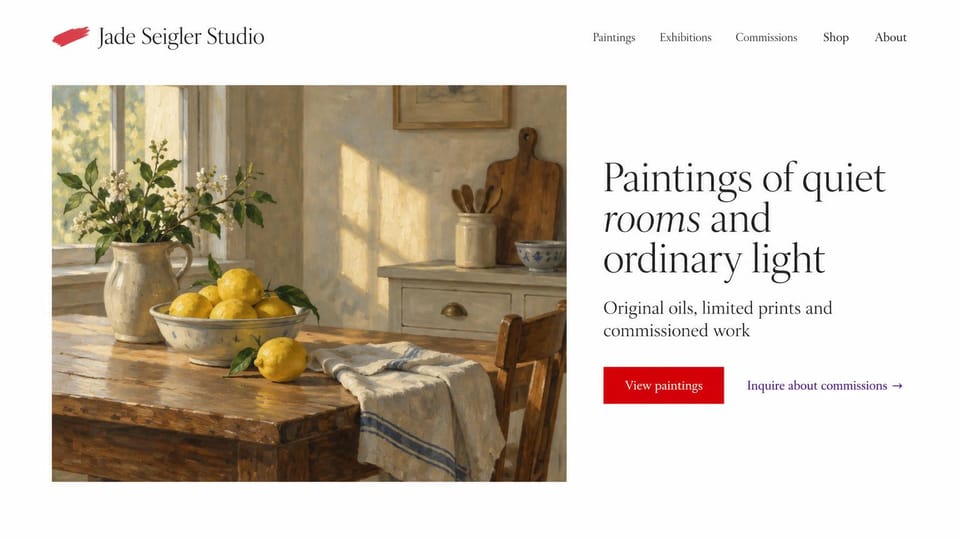
A large still life beside a calm headline, with separate links to the paintings and to commissions.
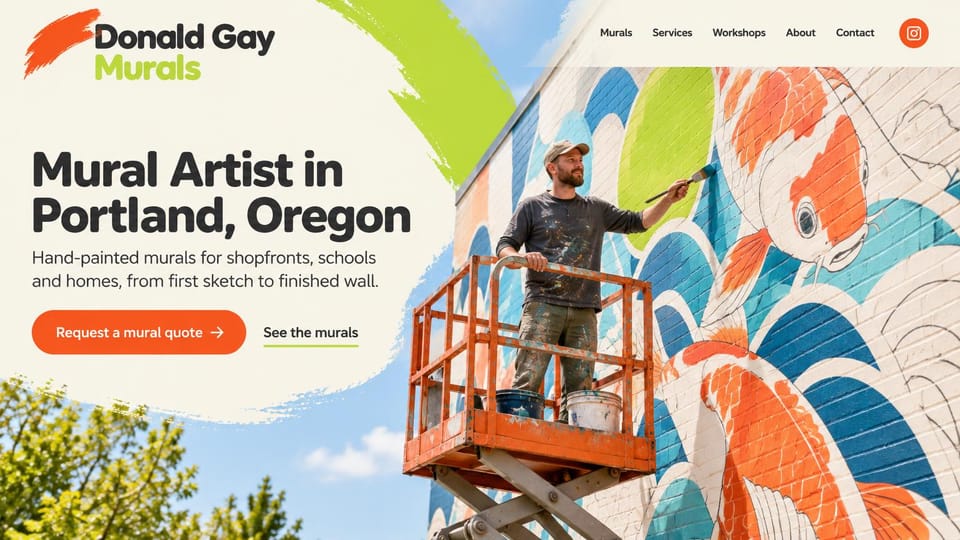
A quote request comes first beside the muralist on a lift, for artists who take shopfront and school jobs.
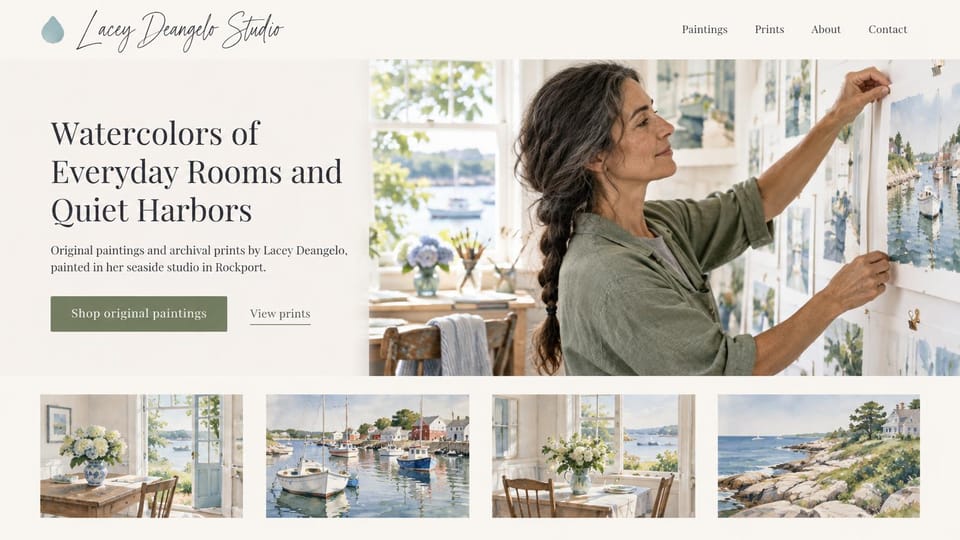
The painter pinning up new work above four finished pieces, with originals and prints as two separate links.
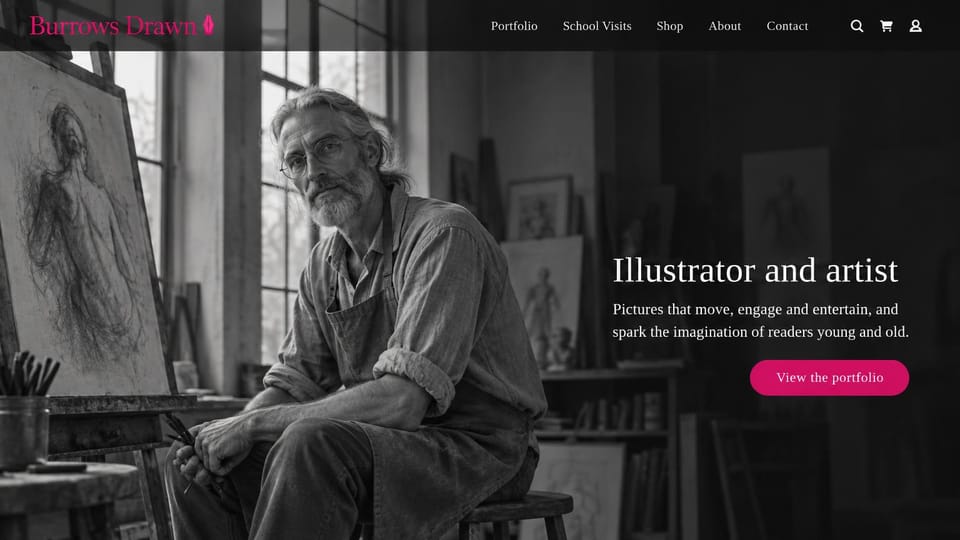
A black and white studio portrait with school visits in the menu, for illustrators who speak to young readers.
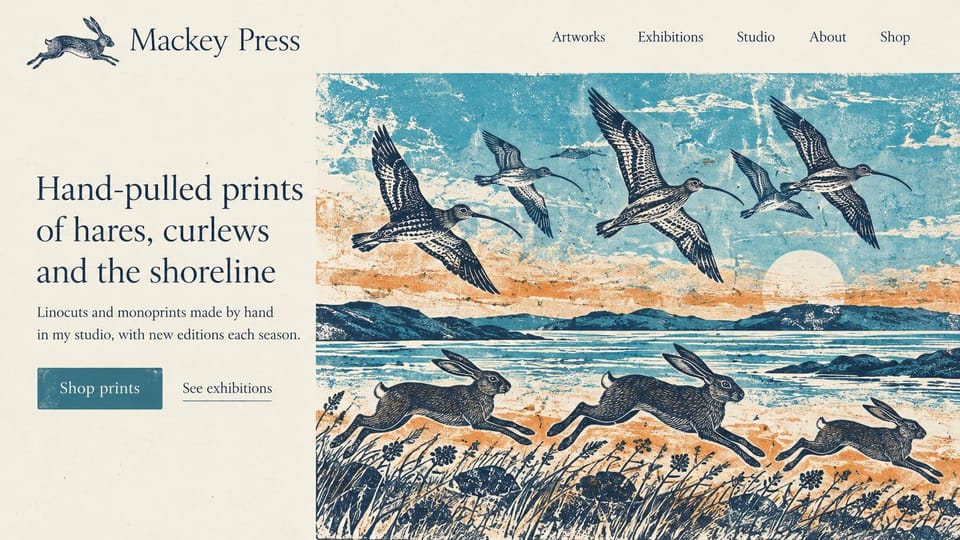
One tall print fills most of the screen beside a short line on new editions and a shop button.
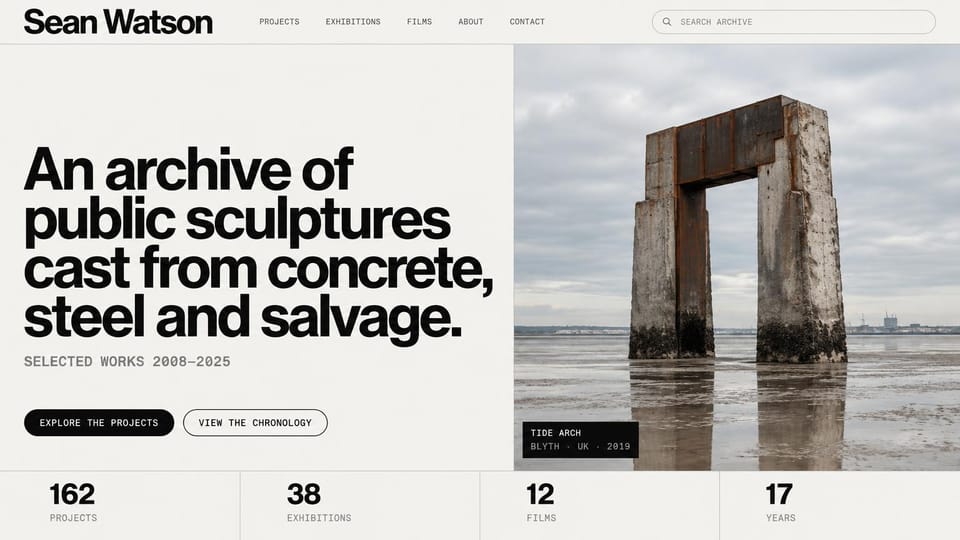
A bold statement, one work in its setting and a row of career totals, for sculptors with years of projects.
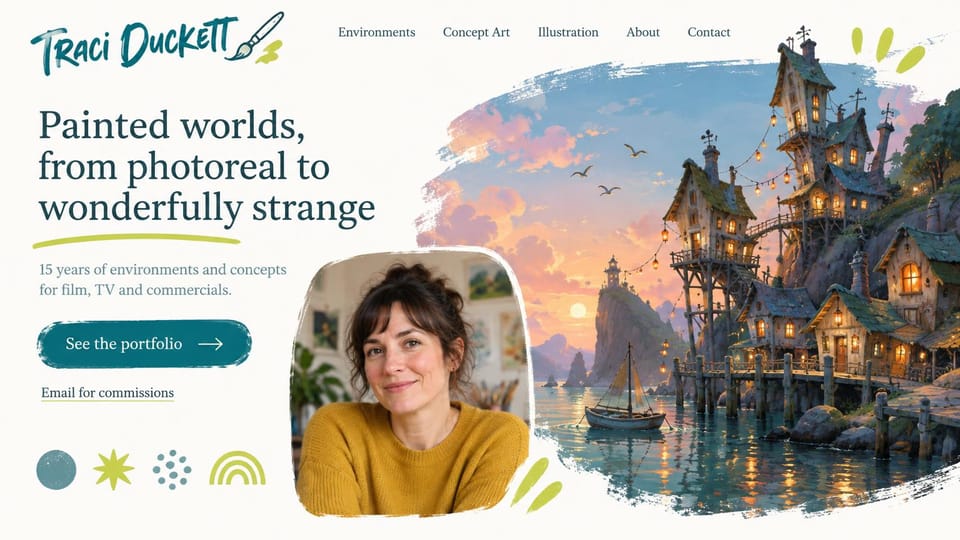
A warm portrait overlaps one of your painted worlds, with a portfolio button and an email link for commissions.
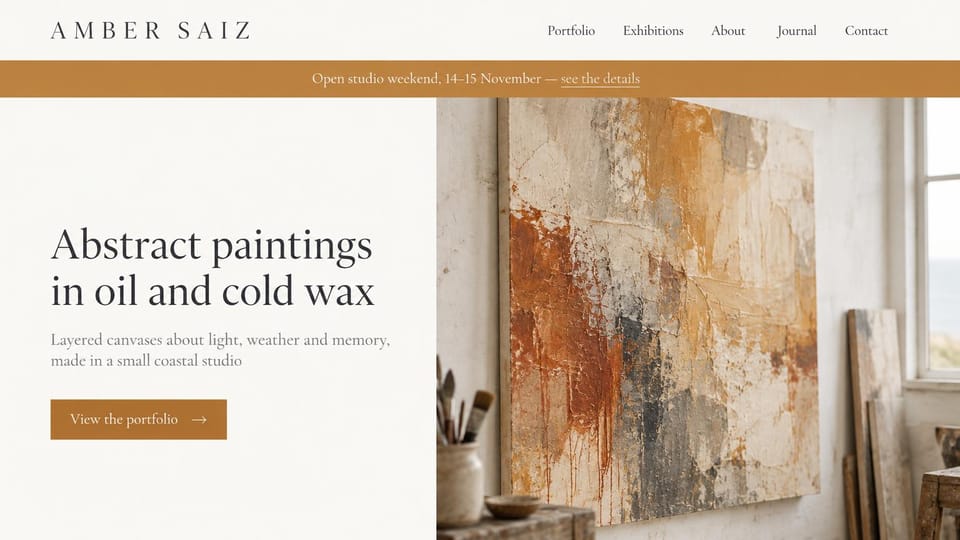
A slim banner announces the next open studio above one large canvas and a button to the portfolio.
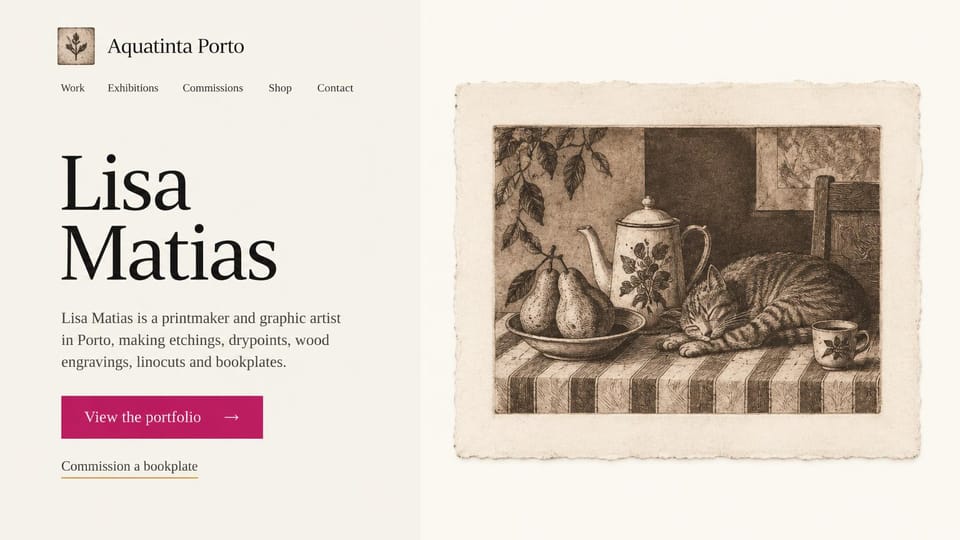
A big serif name and one deckle-edged print, with a link to commission a bookplate.

Soft light on a group of finished pieces with shop and commission buttons, for glassblowers who sell work.
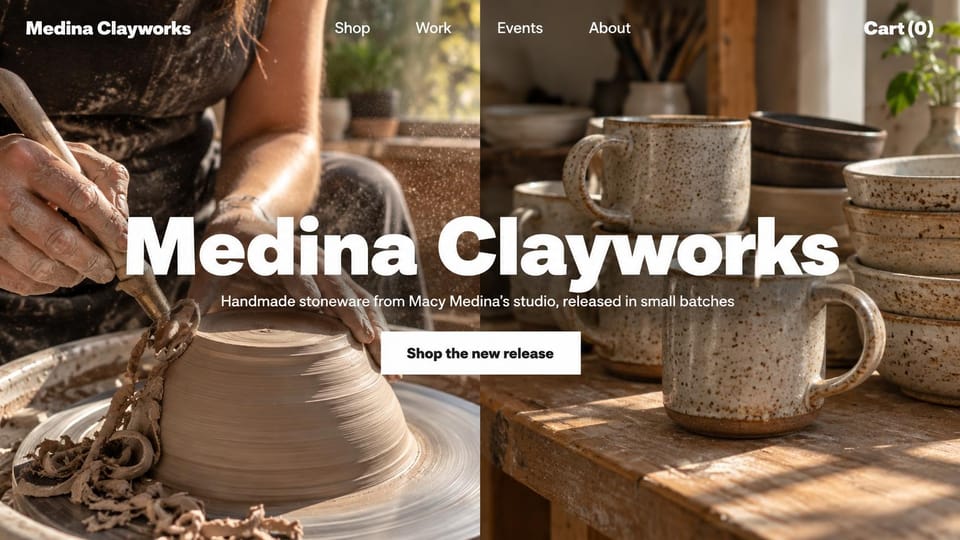
The studio name runs huge across the wheel and finished mugs, with one button to the newest release.
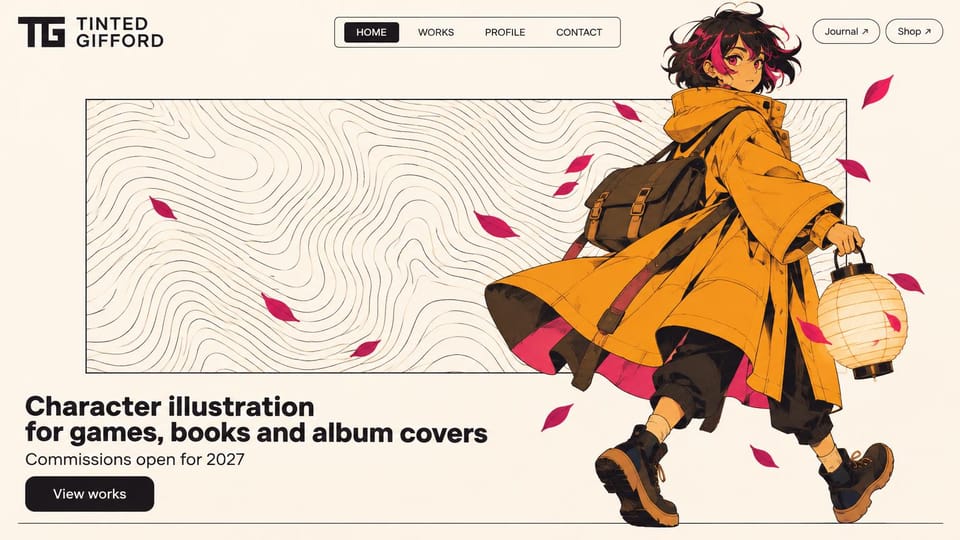
One character strides across the page beside a plain line on what you draw and whether commissions are open.
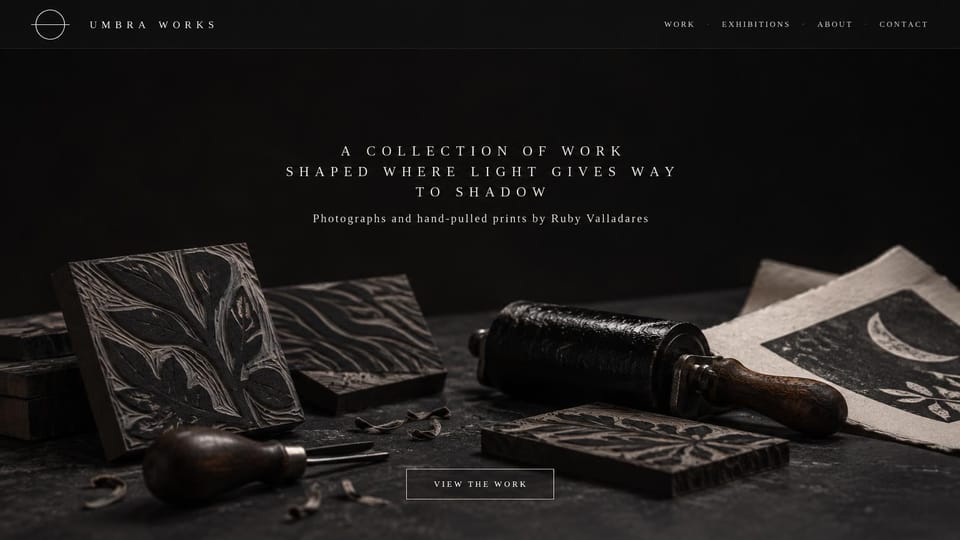
Carved blocks and tools in near darkness, for a printmaker whose process is part of the story.
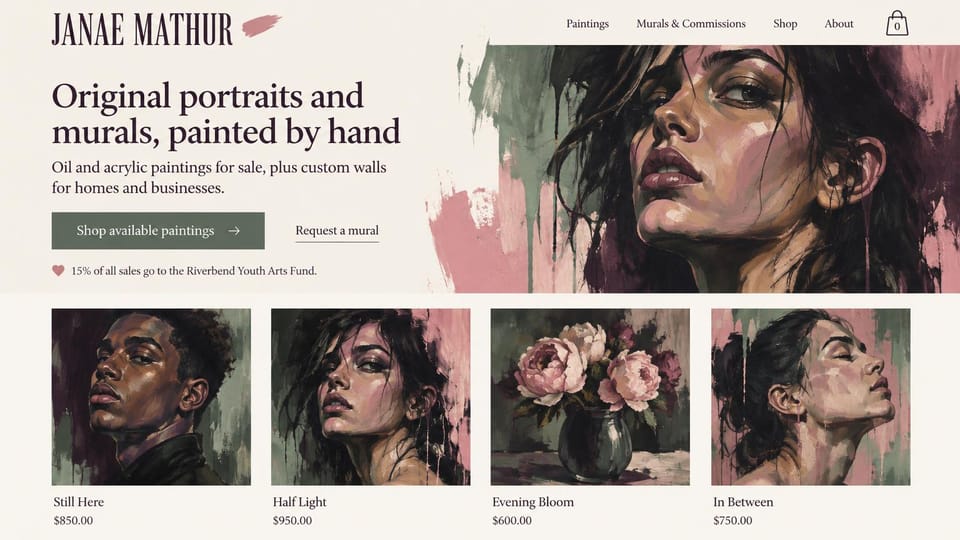
A large painted portrait leads into four priced works, with a mural request beside the shop button.
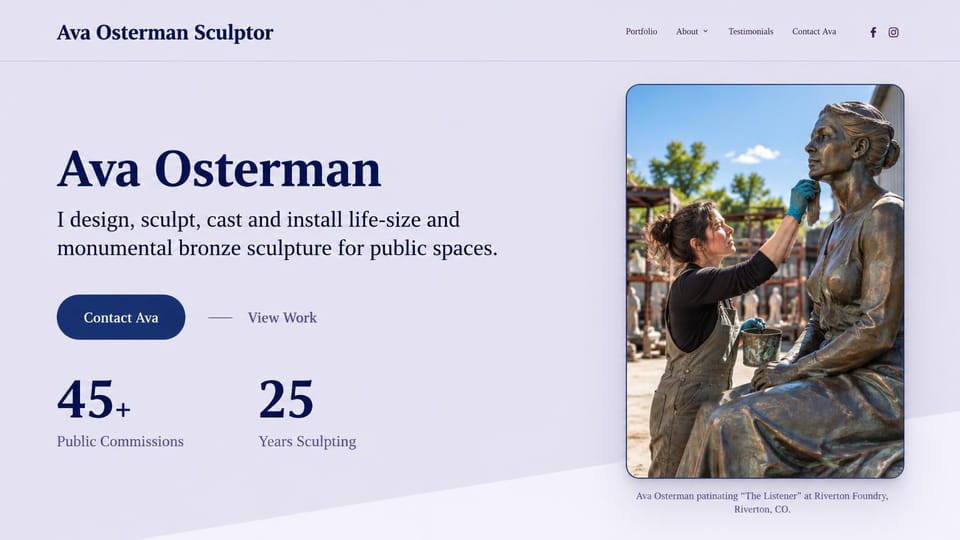
A first-person line on public work, two big totals and a captioned photo of the artist finishing a piece.
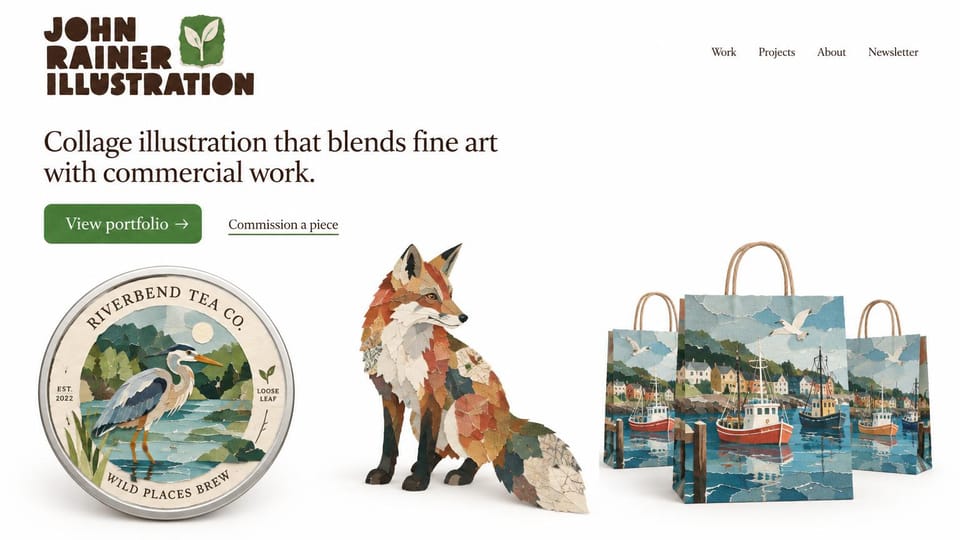
Packaging, a character and shopping bags show your art on real products, with portfolio and commission links.
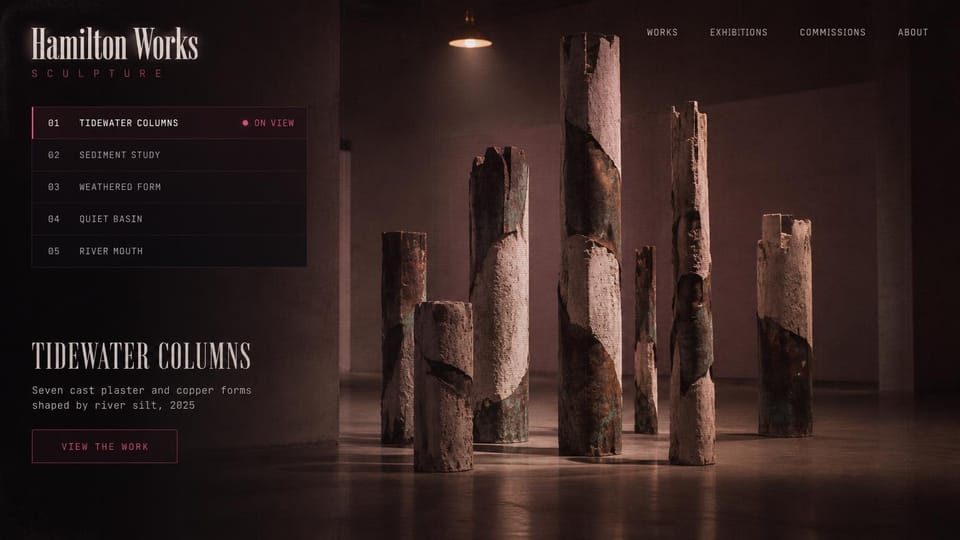
A numbered list of series sits over a dark room of work, so collectors can move between projects quickly.
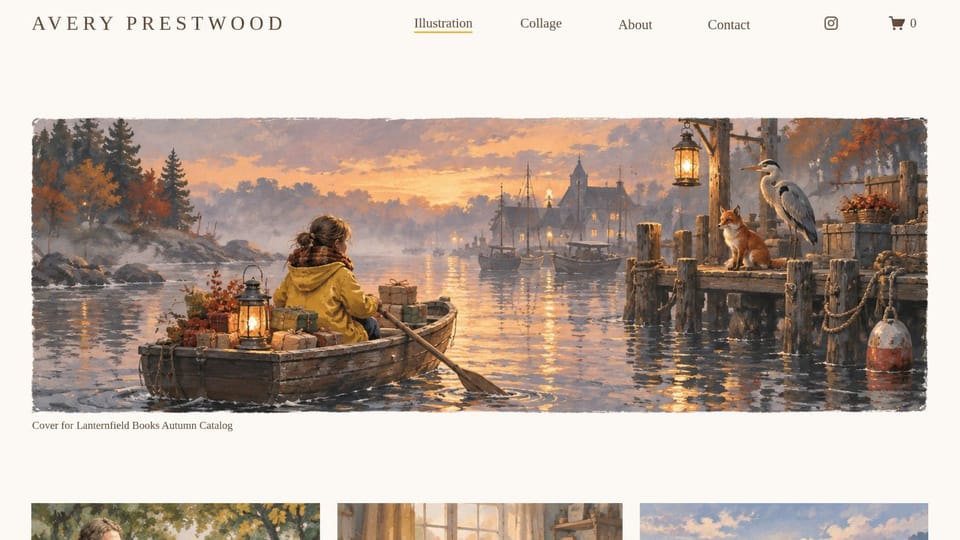
One wide painting across the page with a caption on where it ran, for illustrators of covers and books.
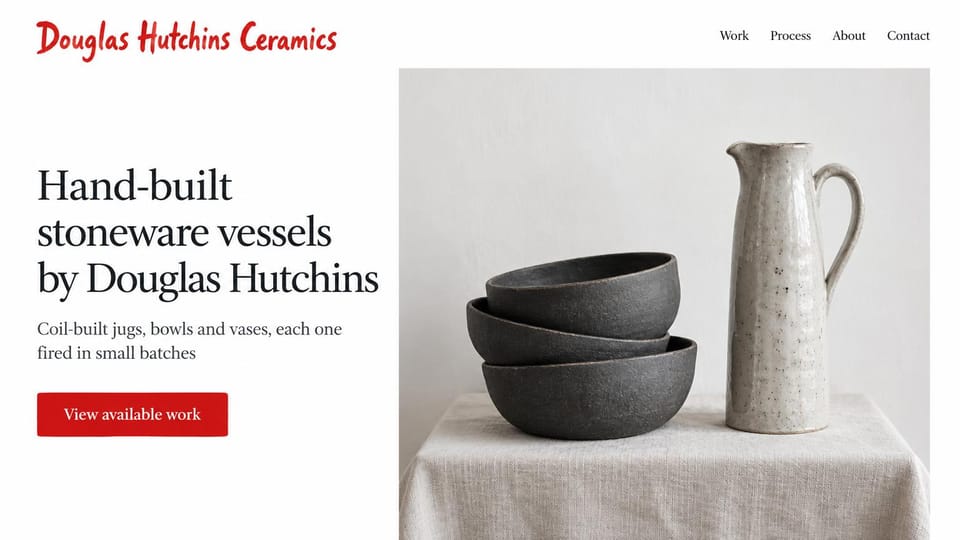
Finished pieces fill half the screen beside one line on how they're made and a button to what's for sale.
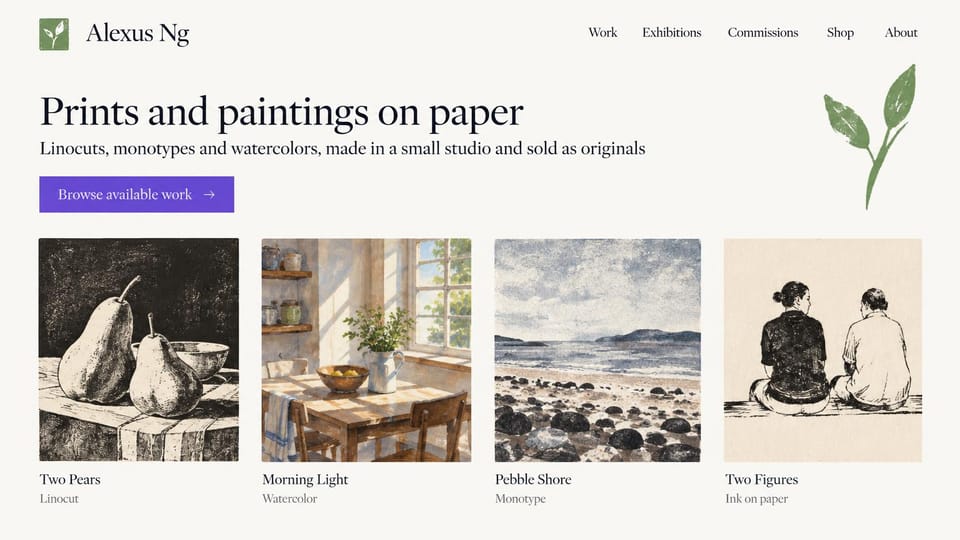
Four works sit in a row under a short headline, each labeled with its title and medium, for artists on paper.
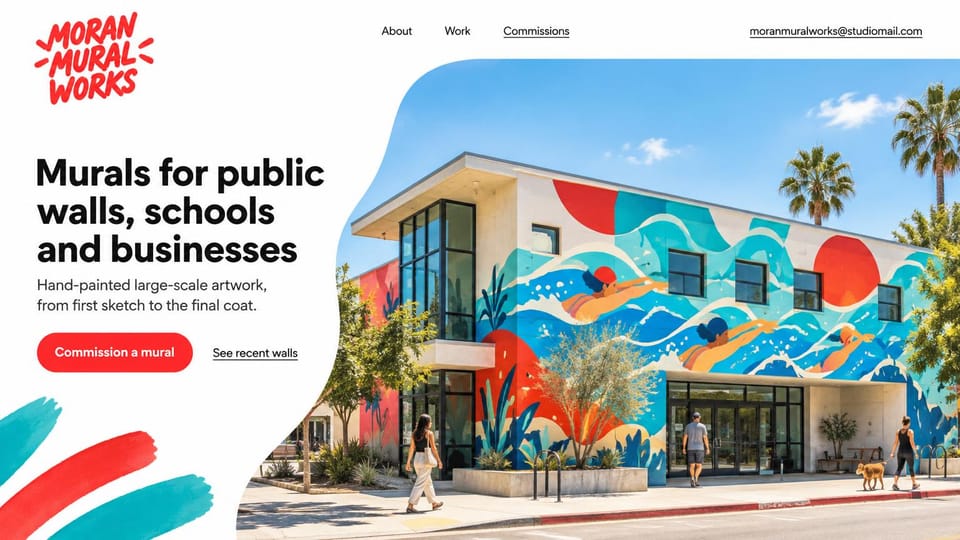
A finished building fills the screen beside a commission button, for muralists who pitch schools and businesses.
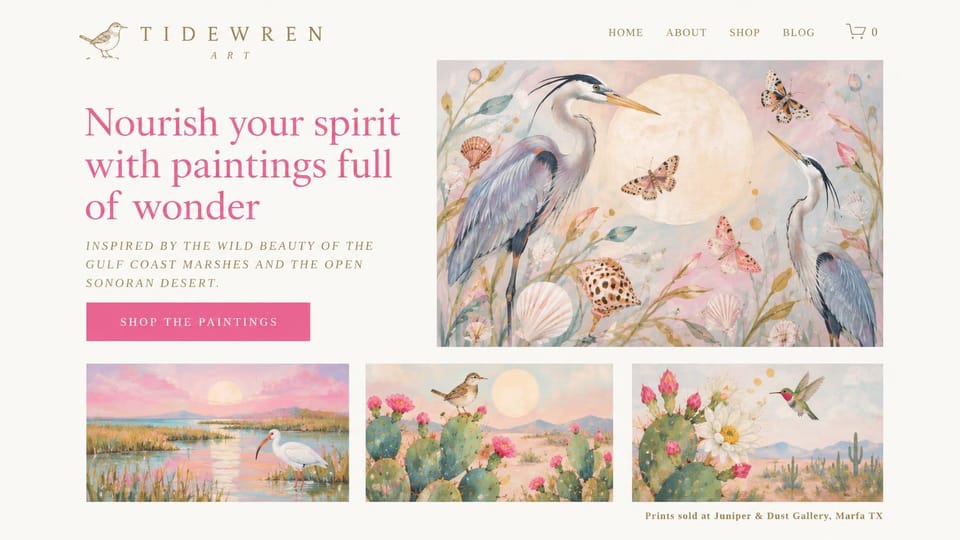
One large painting beside the headline, three smaller ones below and a line saying where to buy prints.
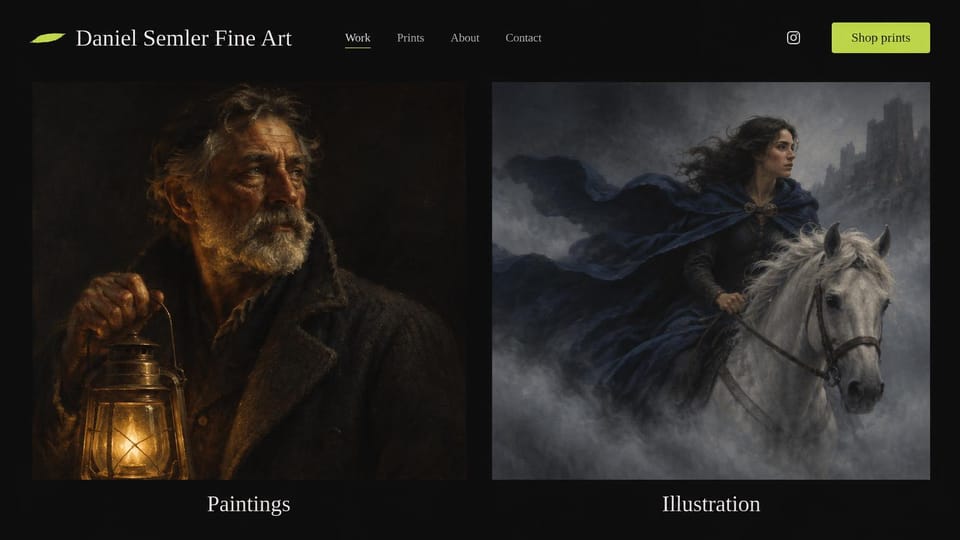
Two large pieces, one for each side of your practice, labeled and clickable on a black page.
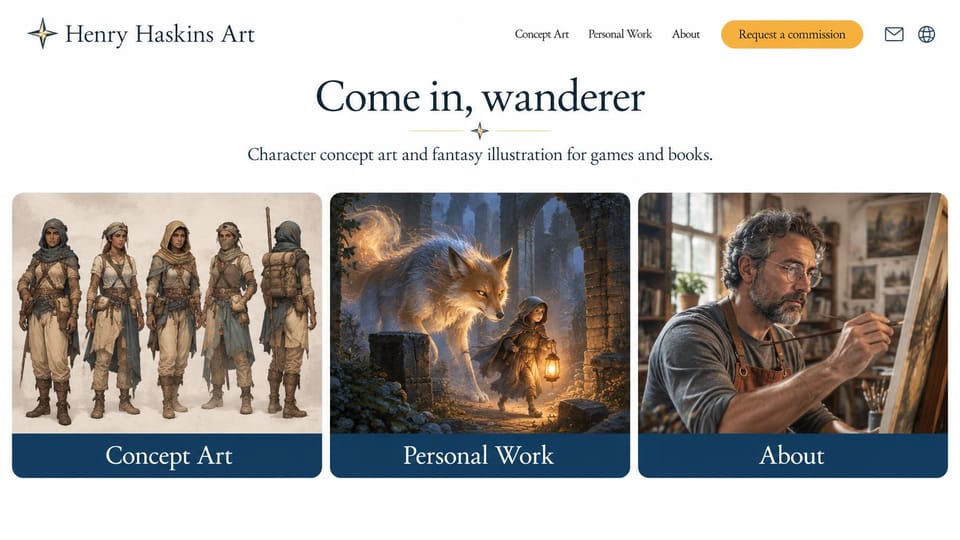
A welcoming line above three big cards for concept art, personal work and about, so visitors pick a path.
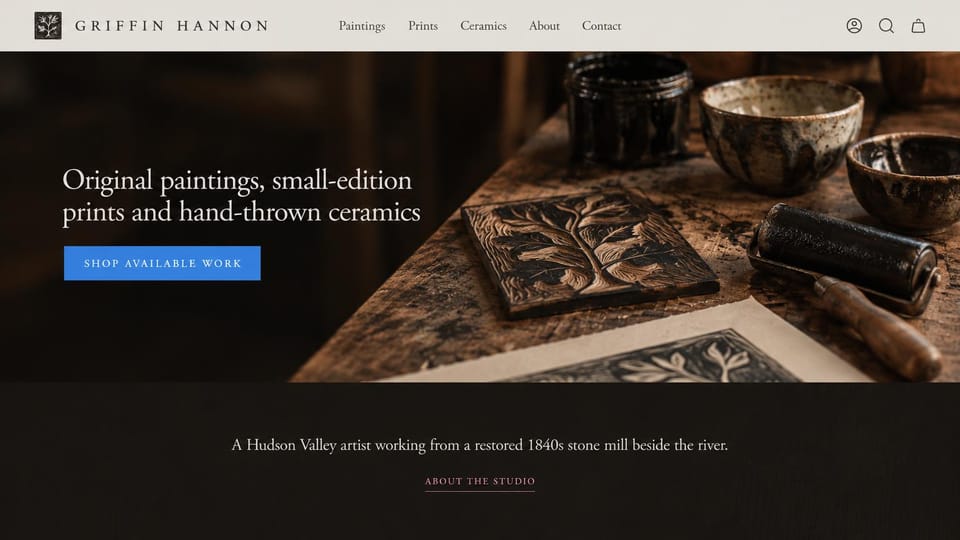
A dark studio photo of blocks and bowls, one shop button and a line about where the work is made.
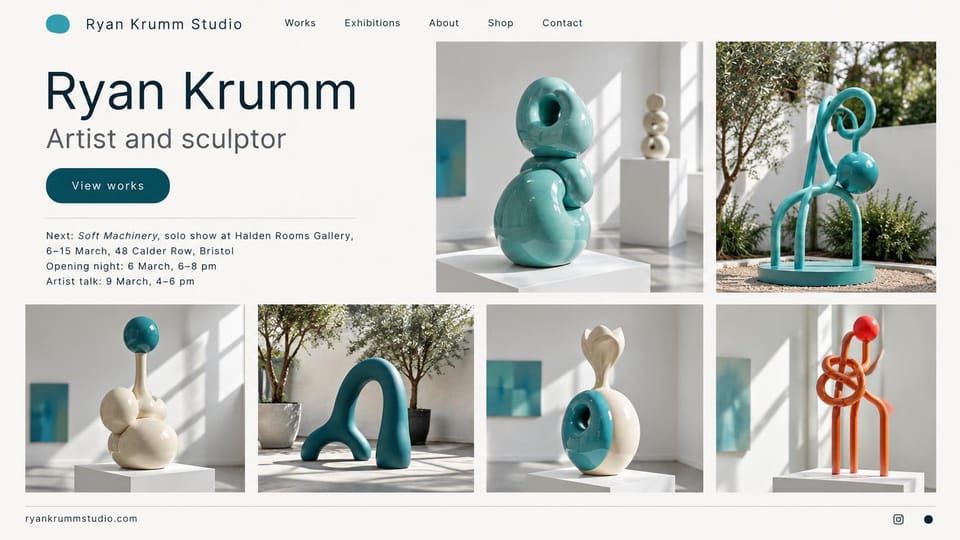
Your next show sits under your name with its dates and place, beside a tidy grid of six finished pieces.
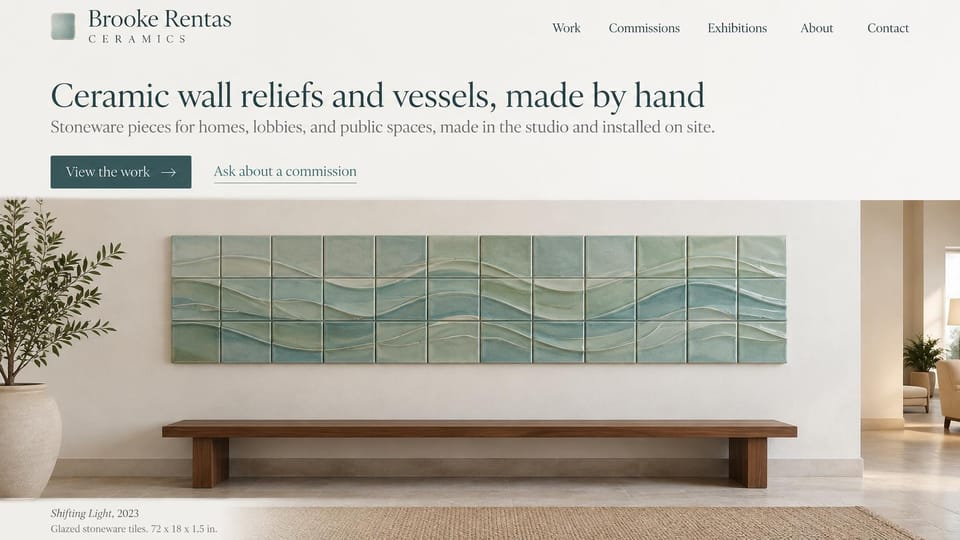
A long relief installed above a bench, with a commission link, for artists who make work for lobbies.
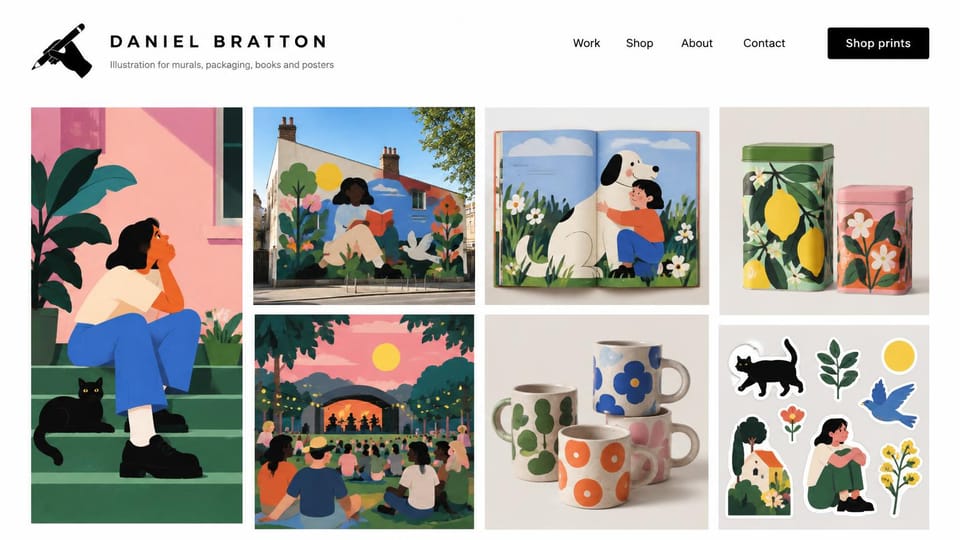
Shows the work where it lives, on a wall, a book, tins and mugs, with a shop button for prints in the header.
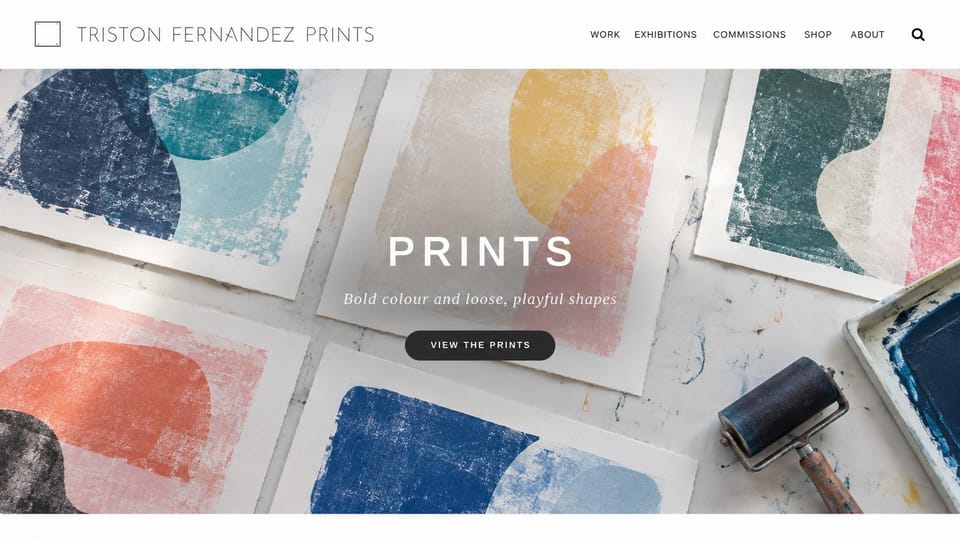
A tabletop of fresh prints and a roller fills the screen behind one word and a button to the prints.
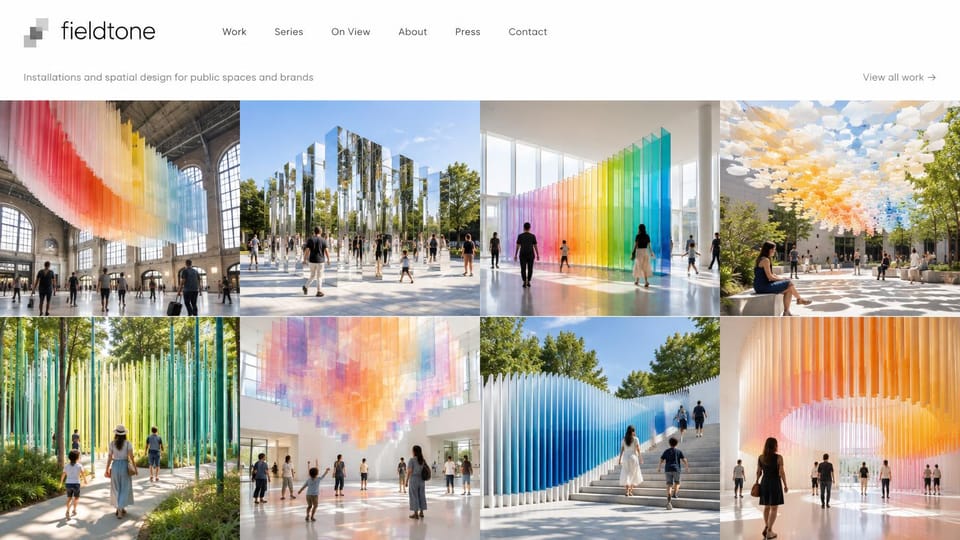
Eight projects fill the first screen in a tight grid, for public artists with a large body of work.
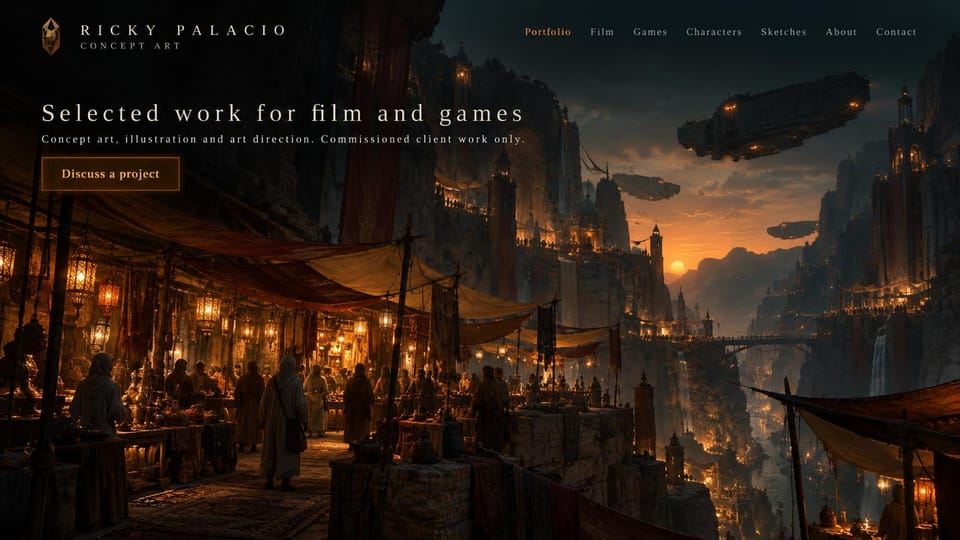
A full-screen painted city sets the mood, with the menu split by film, games and characters for studio clients.
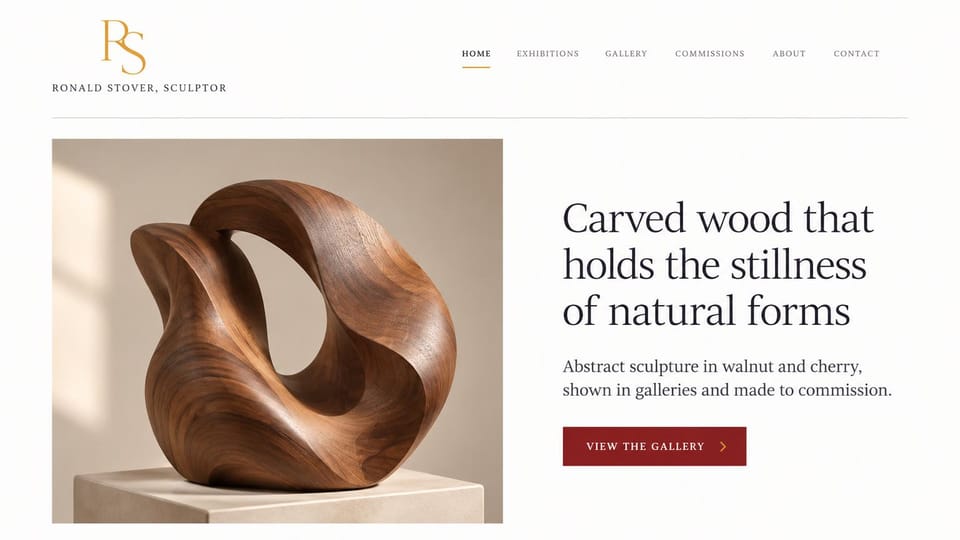
A single flowing piece in warm light beside a short line on materials, for sculptors who take commissions.
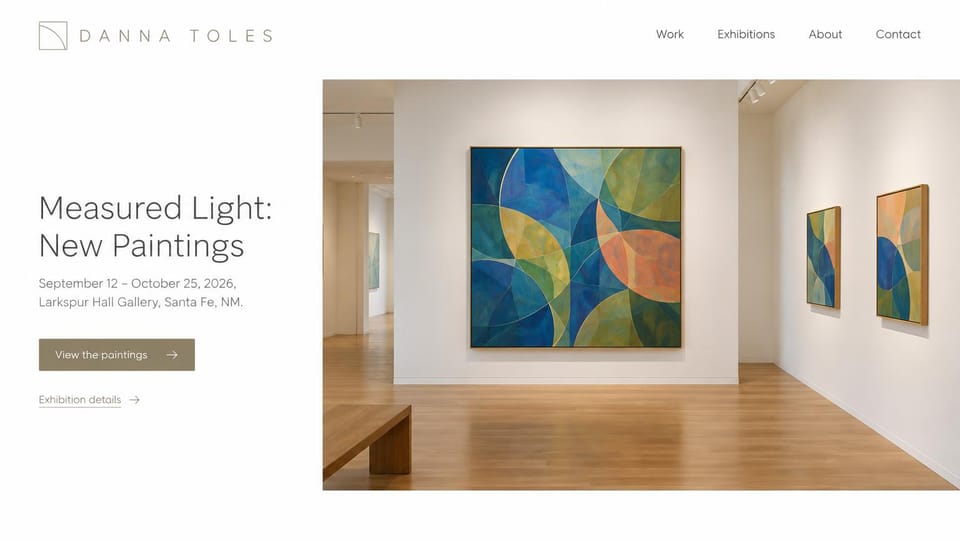
The current show's title, dates and venue sit beside an installation photo, for painters who exhibit regularly.
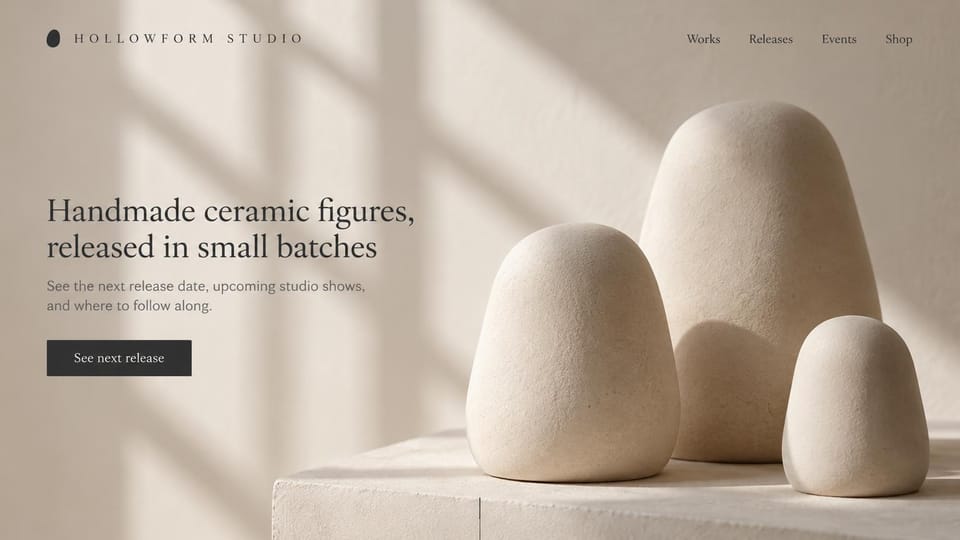
Points visitors to the next release date and studio shows, for a maker who sells work in limited drops.
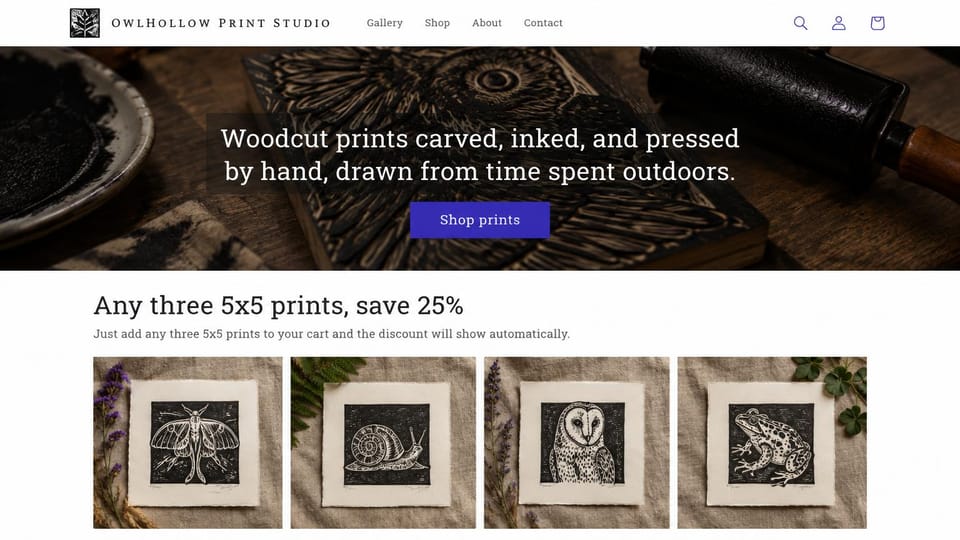
A carved block sets the mood, then a bundle offer and a row of small prints, for printmakers who sell online.

The maker with a board at sunset, for craftspeople whose customers want to know who made it.
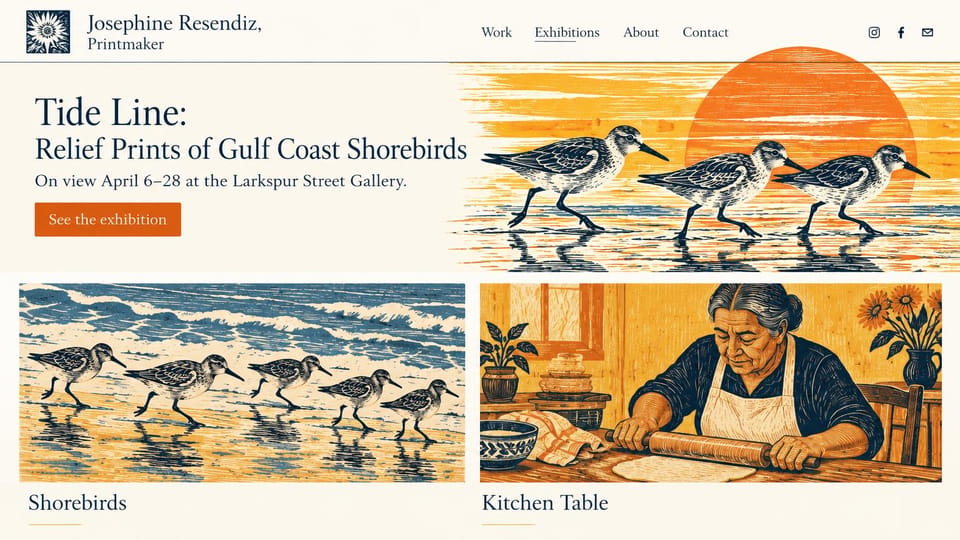
The current show leads with its title, dates and one button, above two captioned prints from the series.
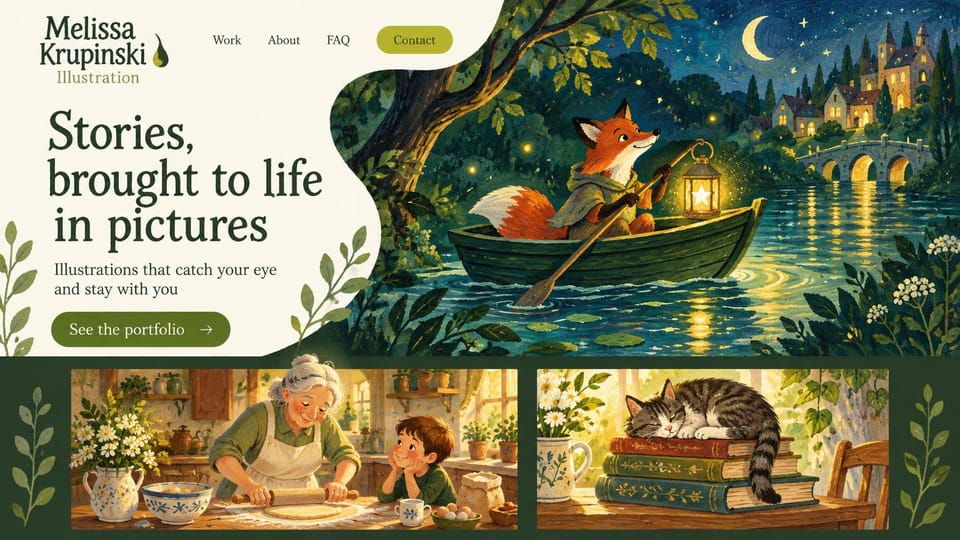
A curved panel opens onto a night scene, with two more storybook pieces on a deep green band below.
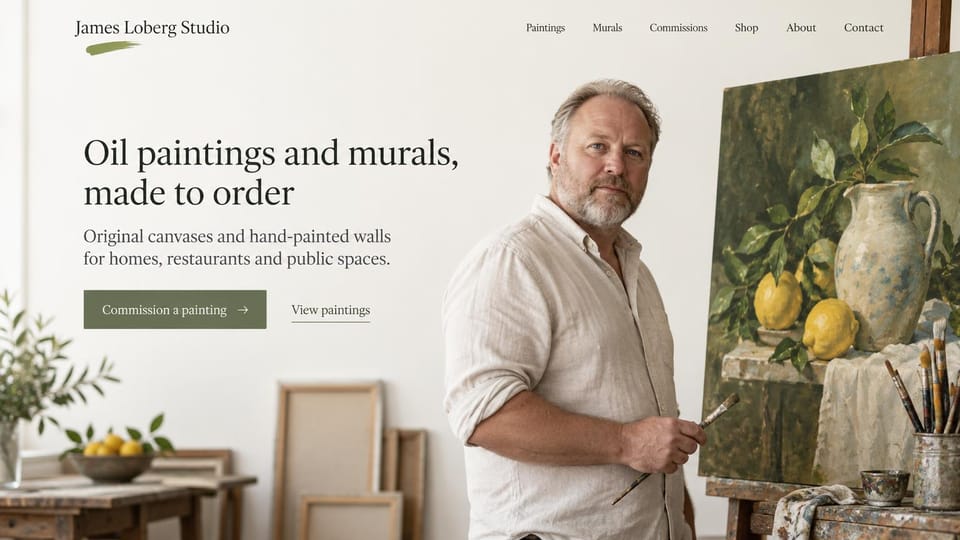
The painter beside a canvas in progress, with commissions first, for artists who paint both canvases and walls.
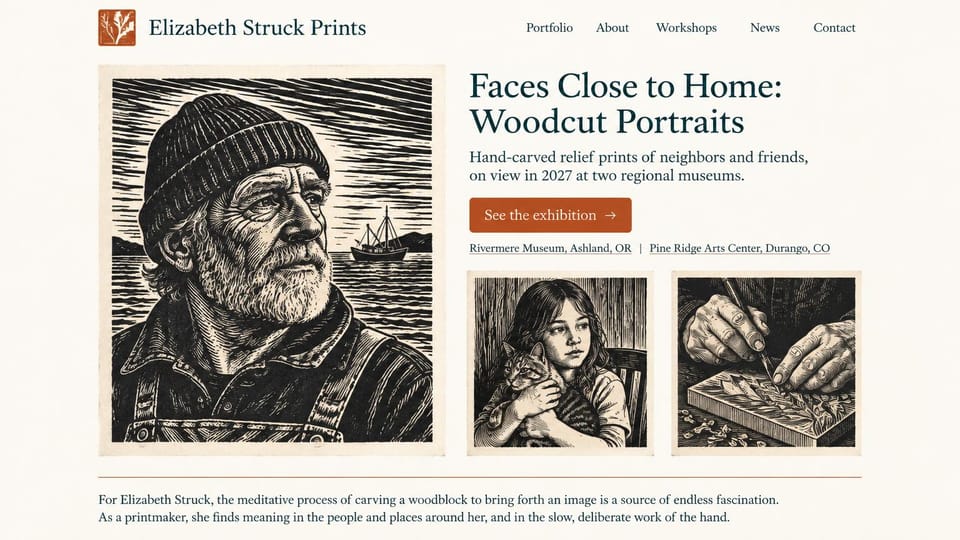
One large print beside the exhibition and its venues, with two smaller prints and a short statement below.
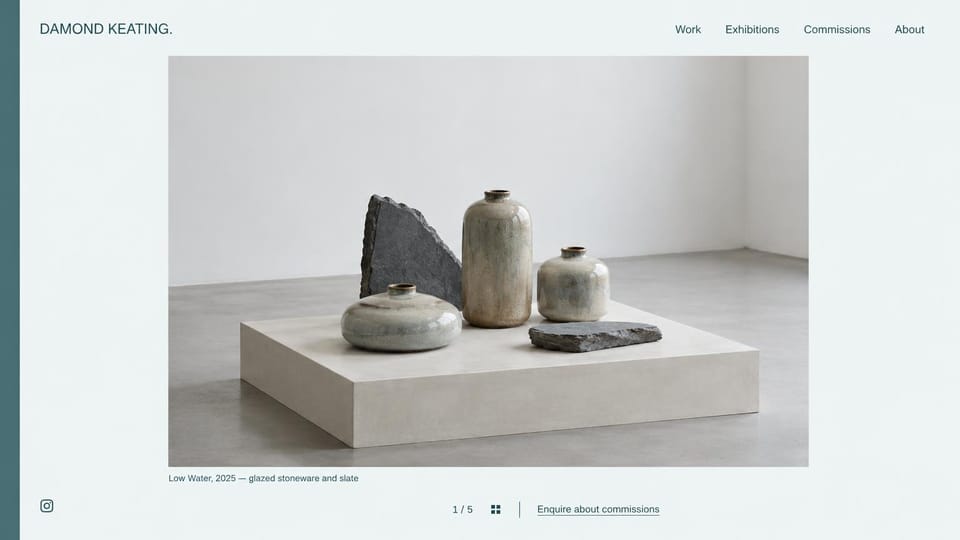
One piece on a plinth fills the screen with a caption and a counter, letting visitors step through the work.
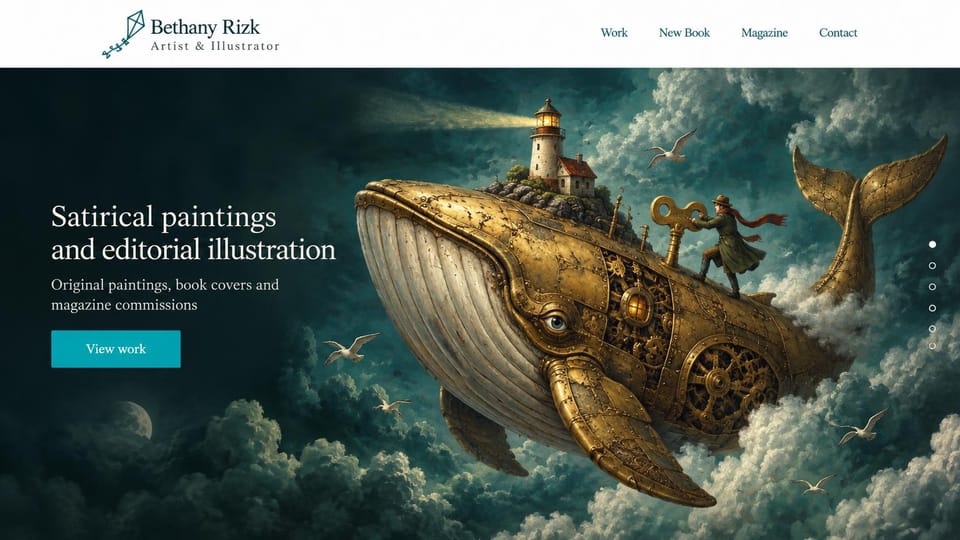
One imaginative painting fills the screen behind a short line, for painters who also take editorial work.
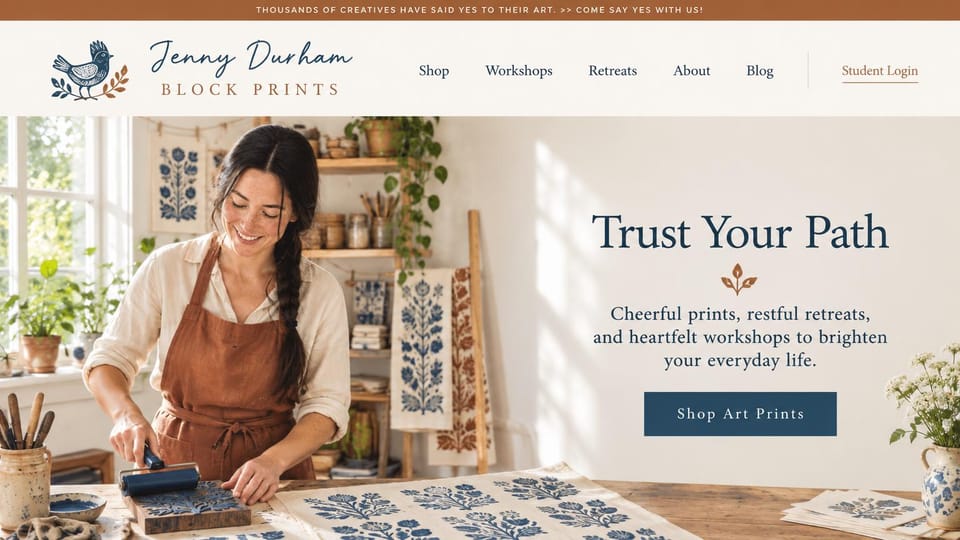
The printmaker at work beside a short promise and a shop button, with workshops and retreats in the menu.
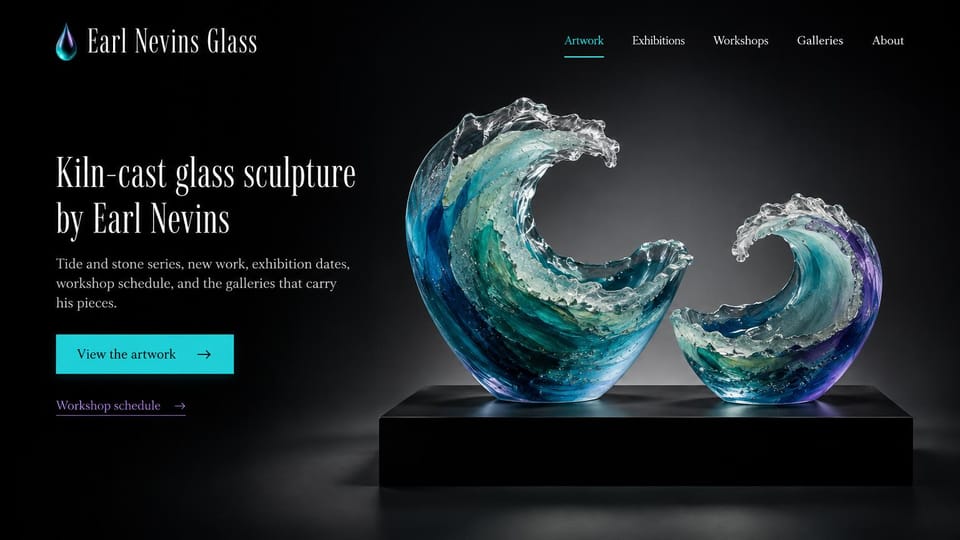
Two lit glass pieces glow on a dark page, with workshops and the galleries that carry the work in the menu.
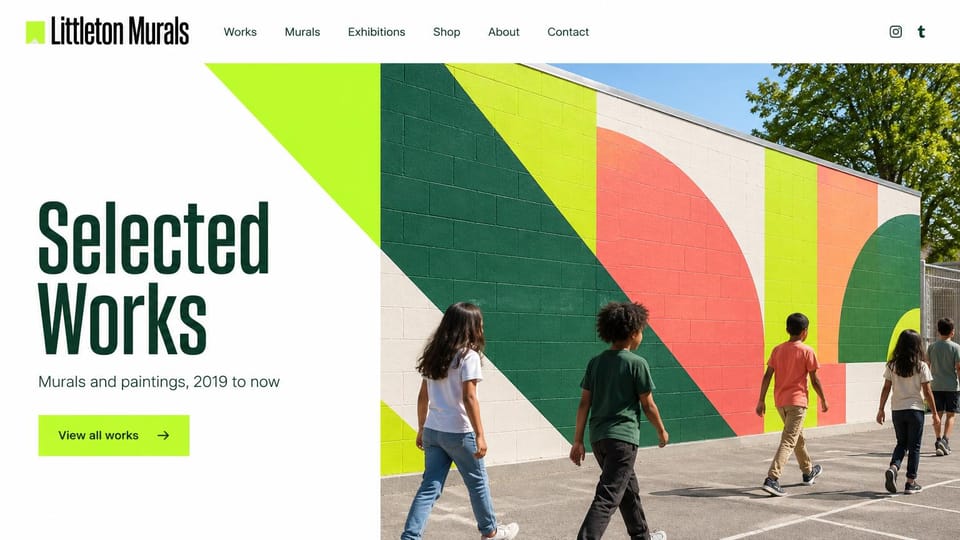
A finished wall with people walking past shows the scale, beside an oversized heading and one bright button.
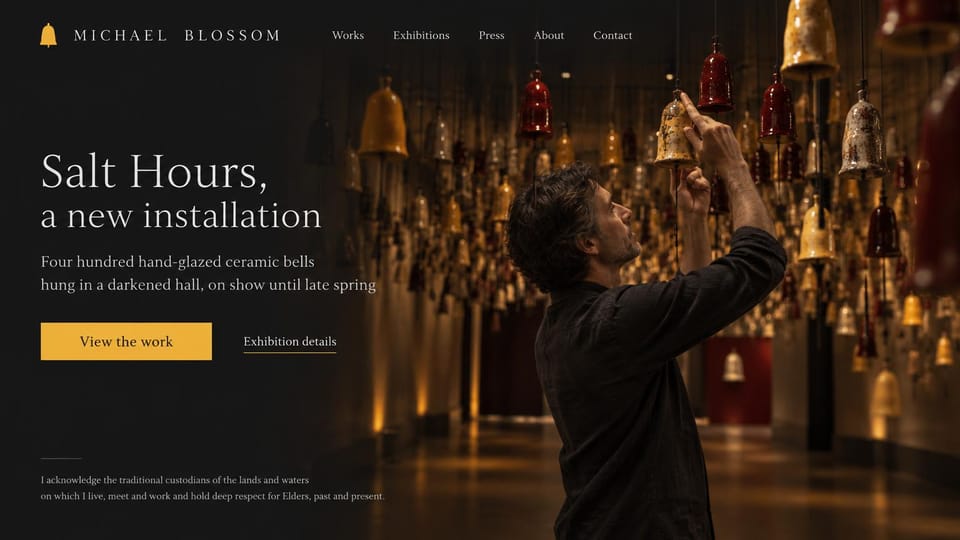
A new installation leads with its title and two plain lines, with exhibition details one click away.
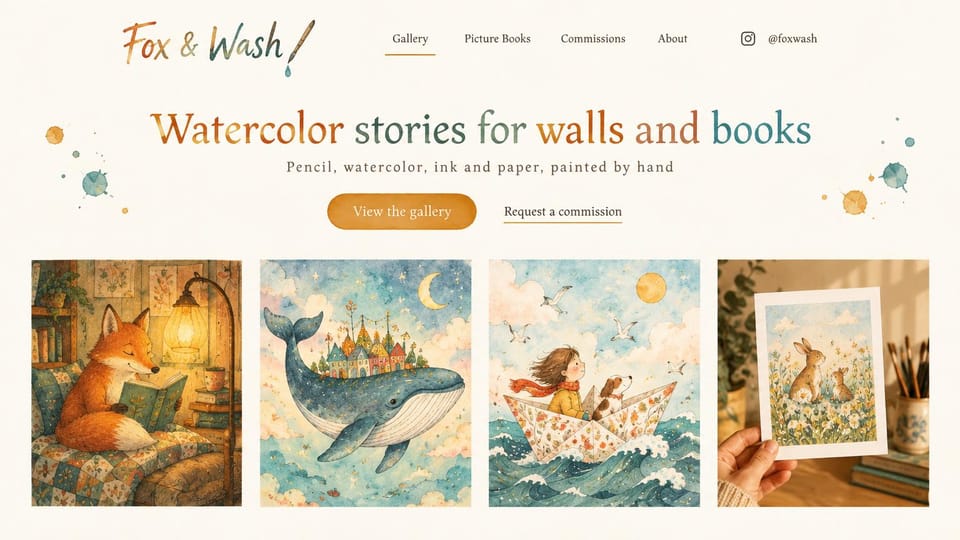
A soft multicolor headline over a row of four watercolors, with gallery and commission links.
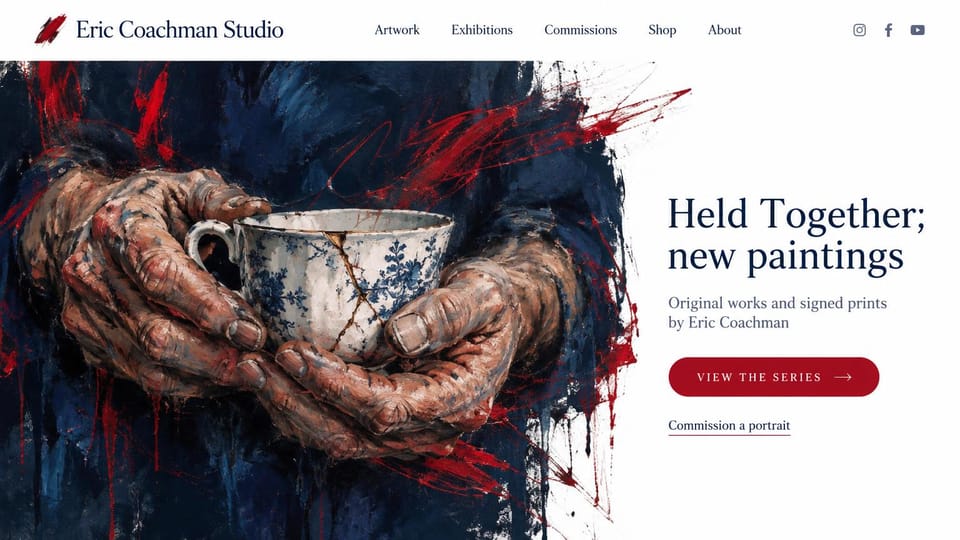
One painting from the new series fills half the screen, with a button to the series and a link for portraits.
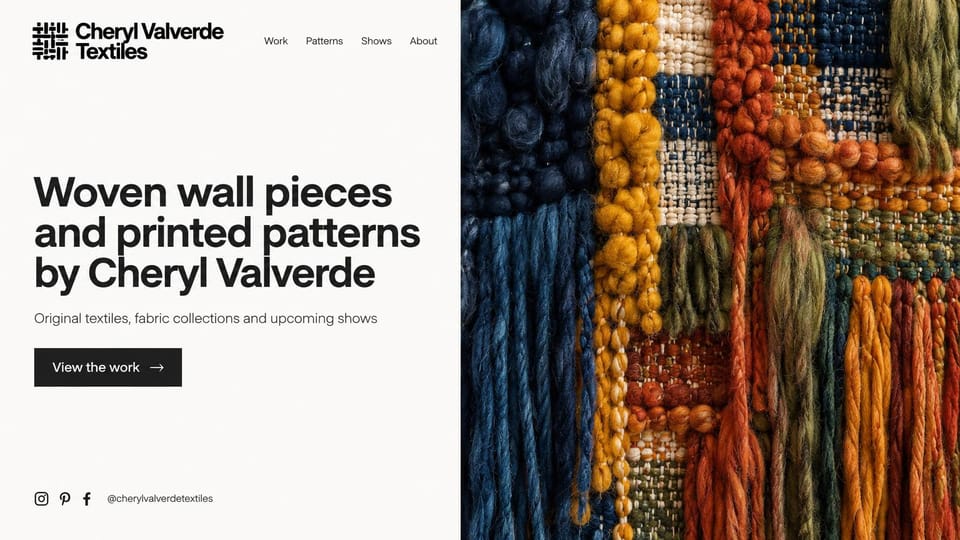
Plain text on one half and woven texture on the other, for textile artists and pattern designers.
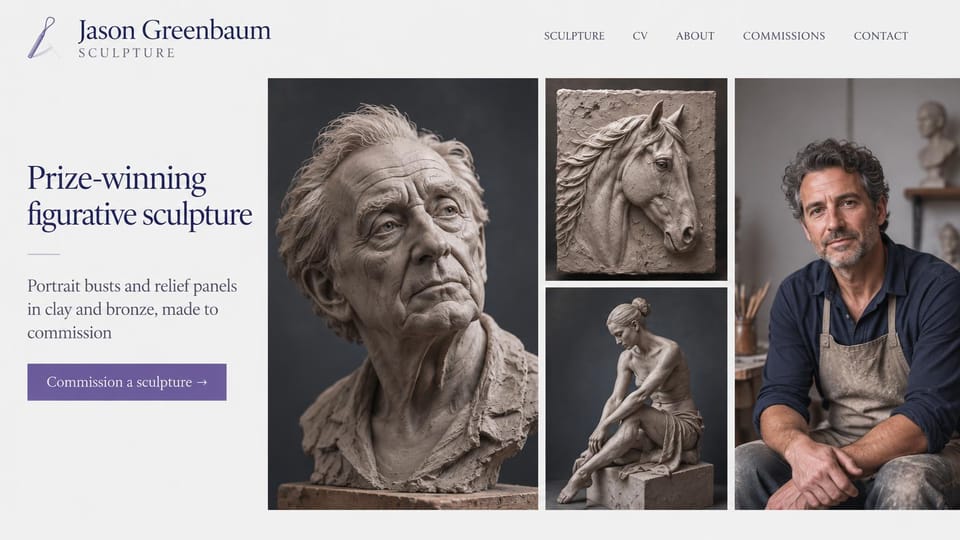
Three finished pieces and a photo of the sculptor beside one commission button, for figurative work.
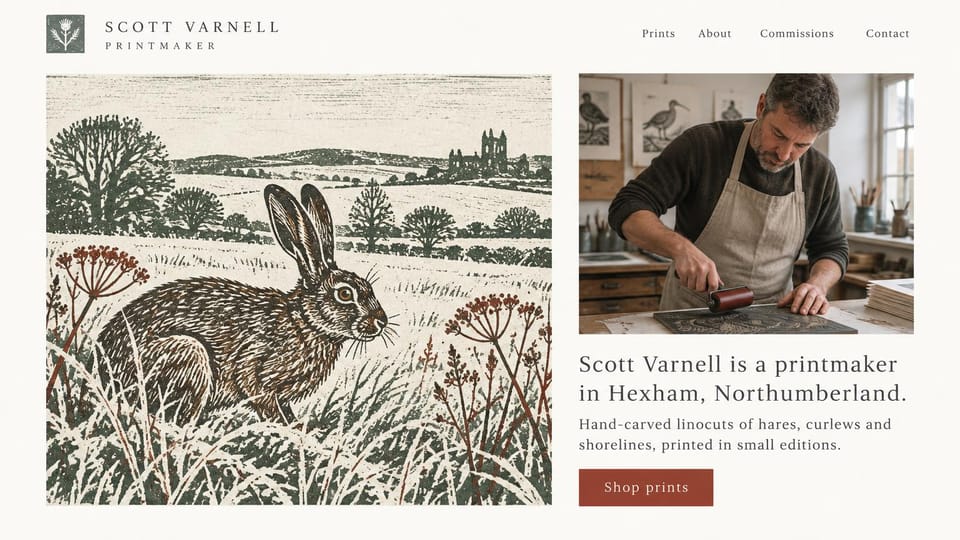
One large print sits beside the printmaker inking a block, with a short intro and a shop button below.
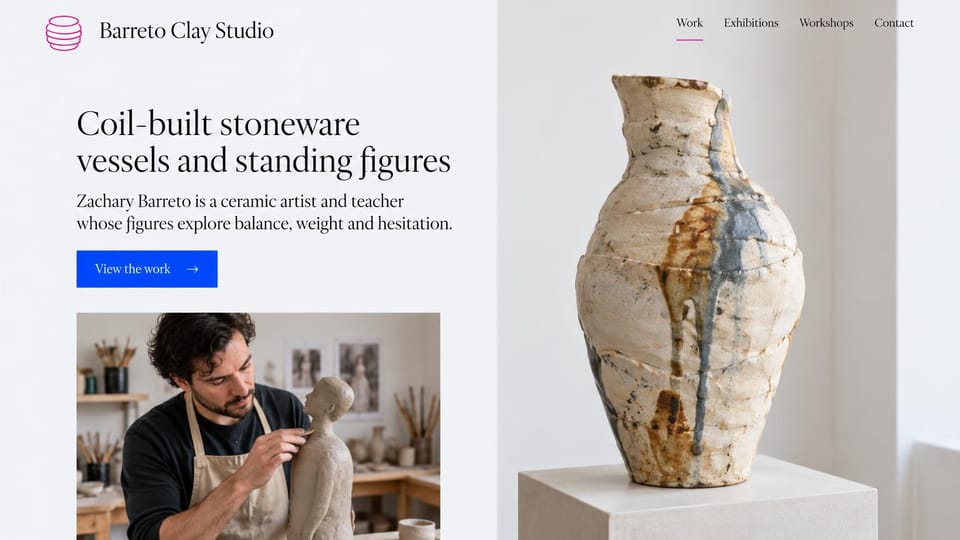
A large vessel fills one side while a smaller photo shows the maker at work, with workshops in the menu.
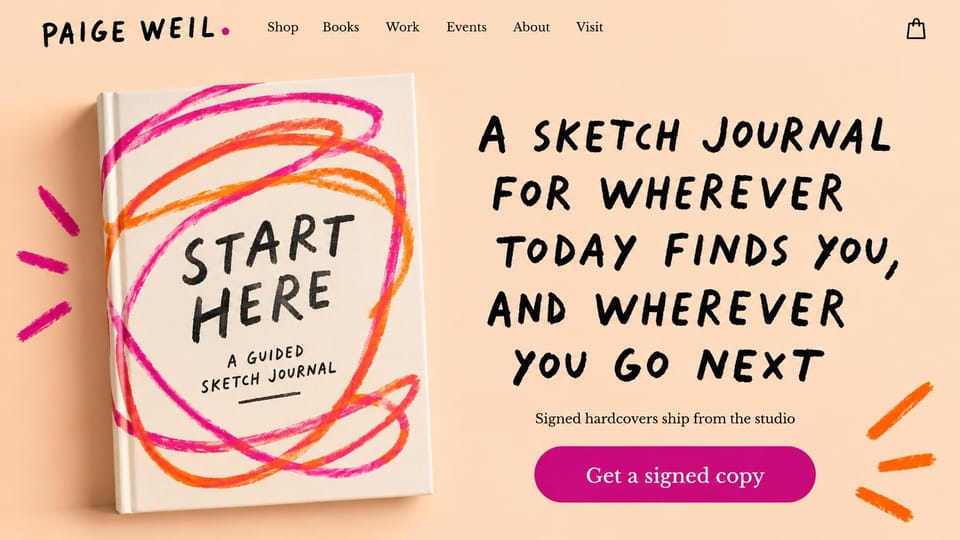
One book and one big hand-lettered line come first, for an artist who publishes journals or zines.
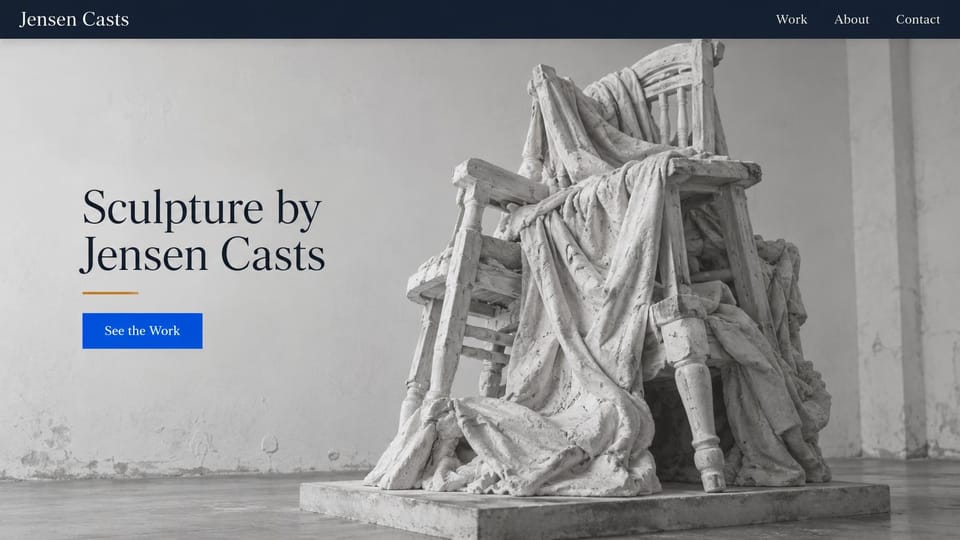
A grayscale photo of one large piece fills the page, with a short headline and one button to the work.
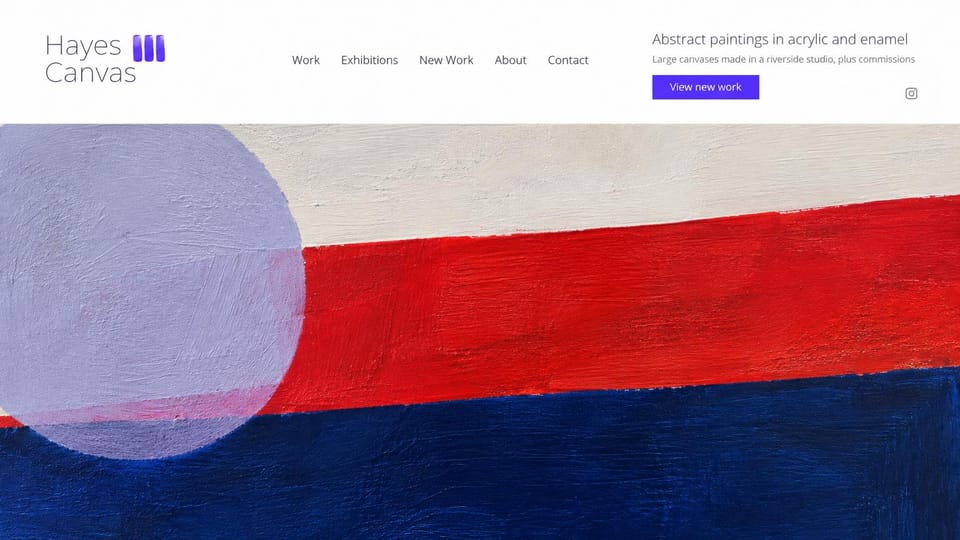
One painting runs edge to edge under a slim header, with a line on your medium and a button to new work.
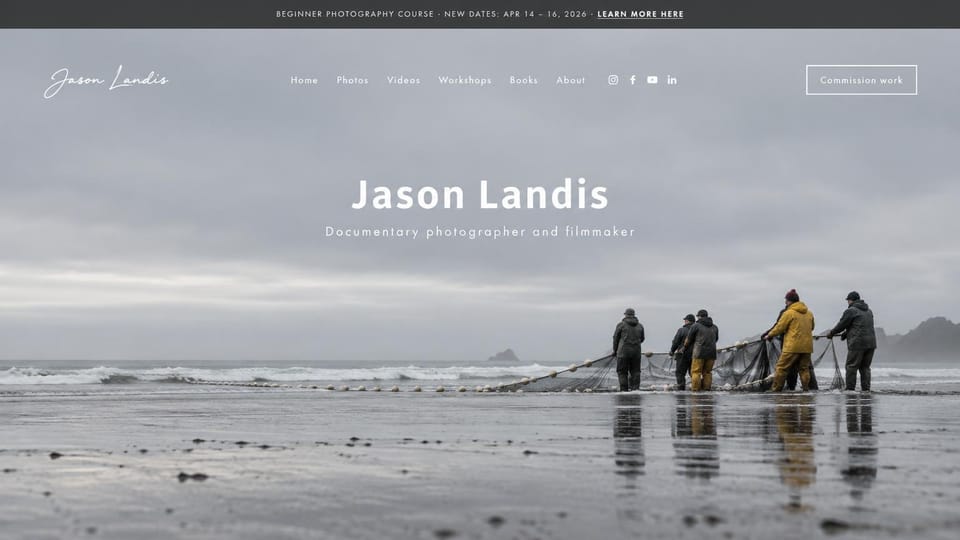
One wide photo under your name, with books, workshops and commissions in reach, for photographers who teach.
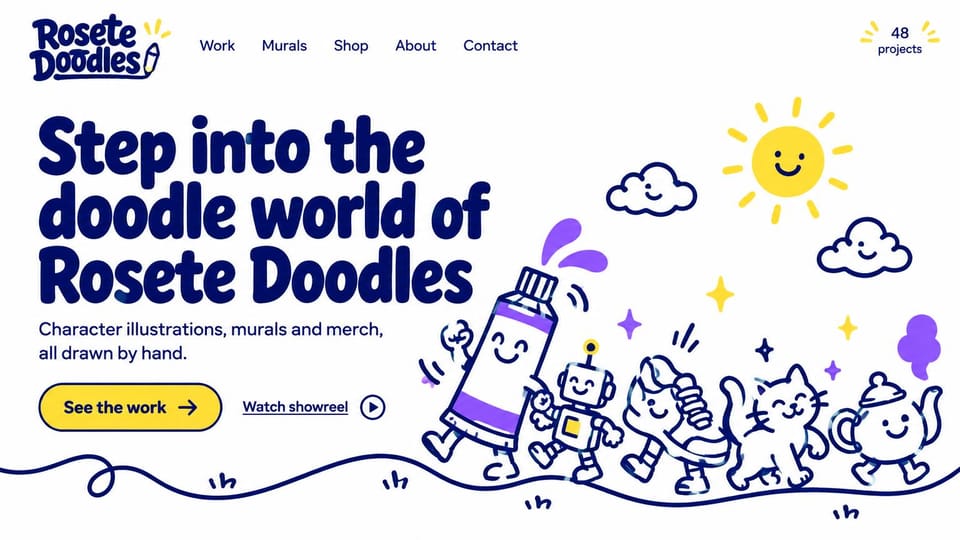
A parade of hand-drawn characters runs across the page, with a showreel link and murals and merch in the menu.
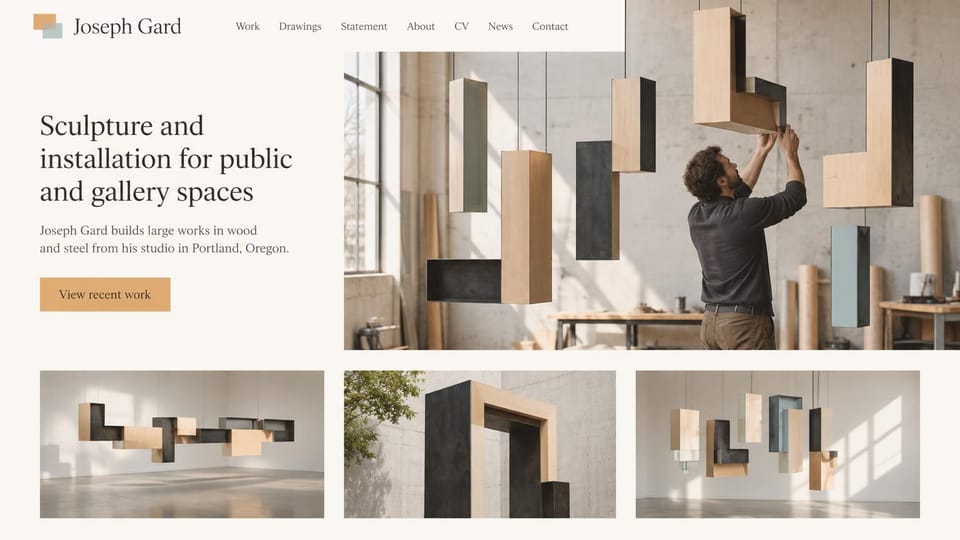
The sculptor adjusting a hanging piece sits above three recent works, with a CV and statement in the menu.
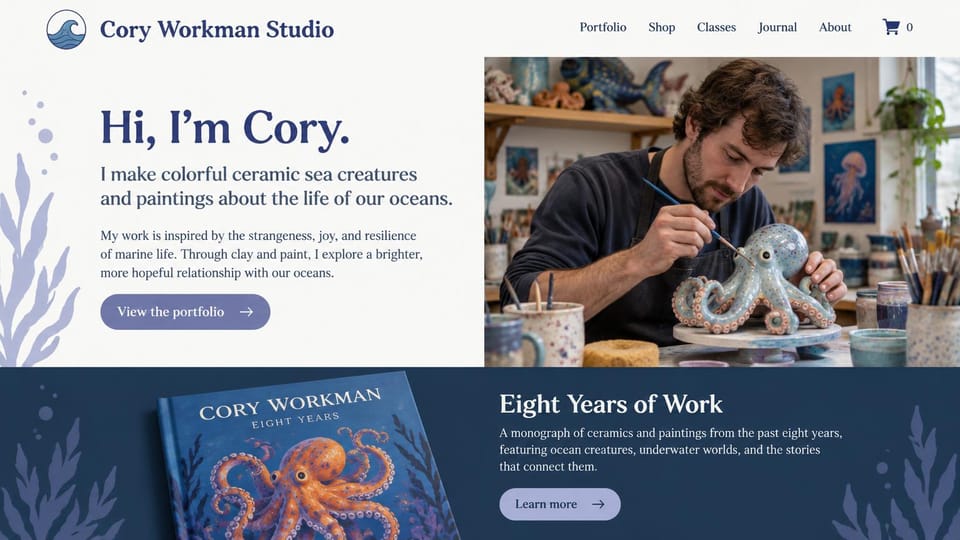
A first-person hello beside the artist at work, then a band for the book that collects the work.
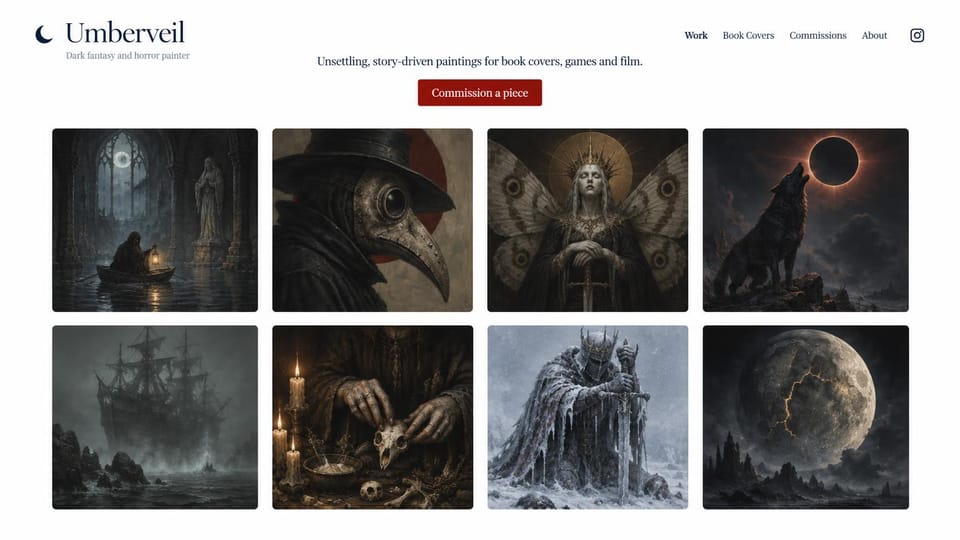
A one-line statement and a commission button over a tight grid, for painters of covers and game art.
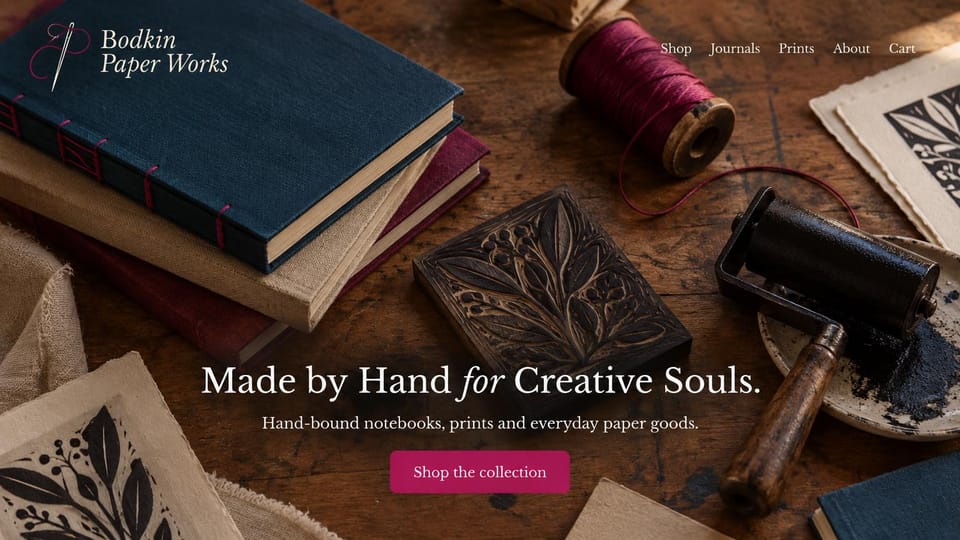
One full-screen photo of books, blocks and tools on the bench, for makers of notebooks, prints and paper goods.
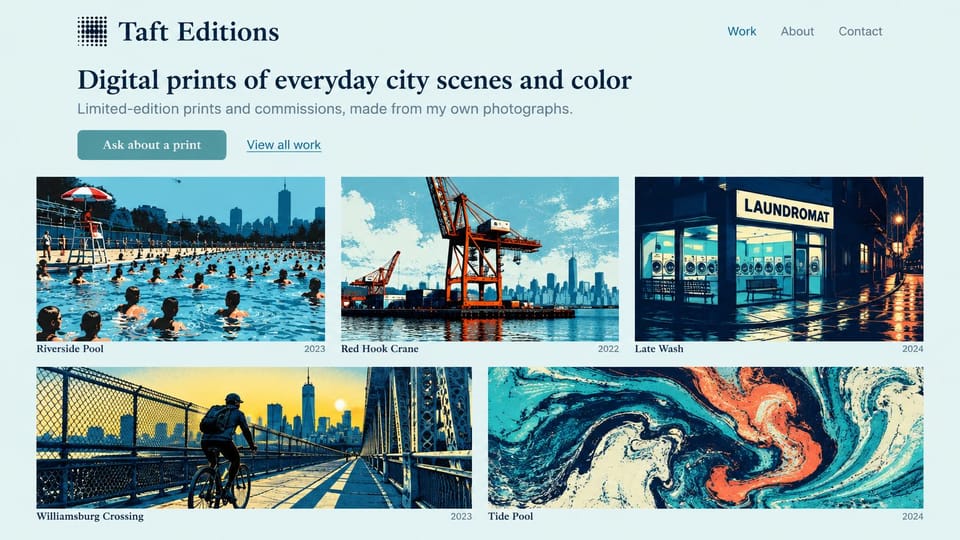
A grid of bold, color-shifted city scenes with titles and years, for artists who sell editions of their photos.
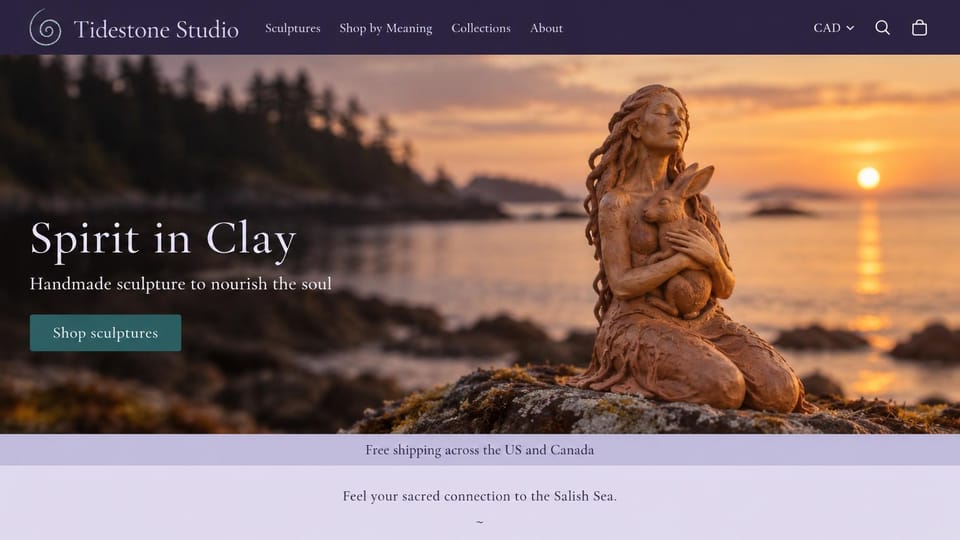
A sculpture against a sunset coast, with a shop button and a shipping note, for sculptors who sell online.
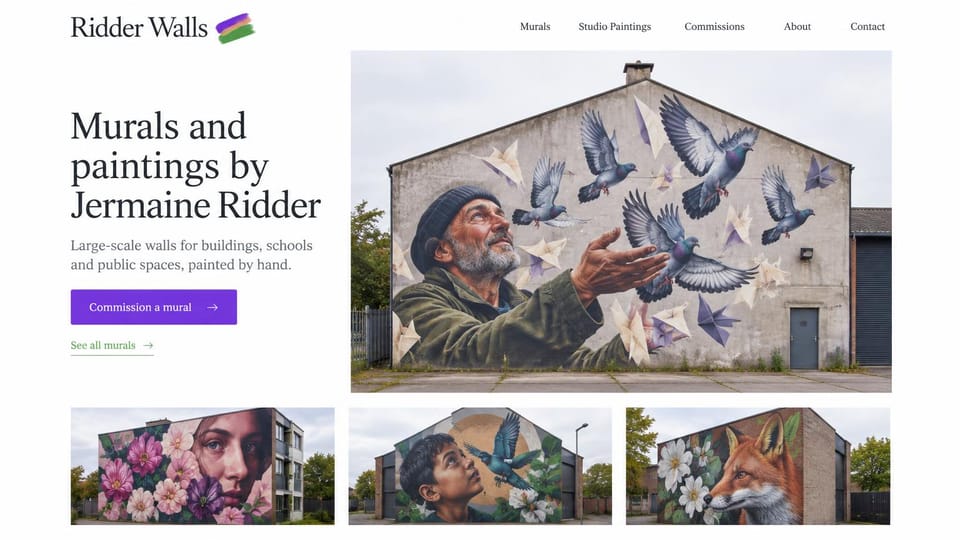
A big finished wall beside a commission button, with more walls in a row below, for public art painters.
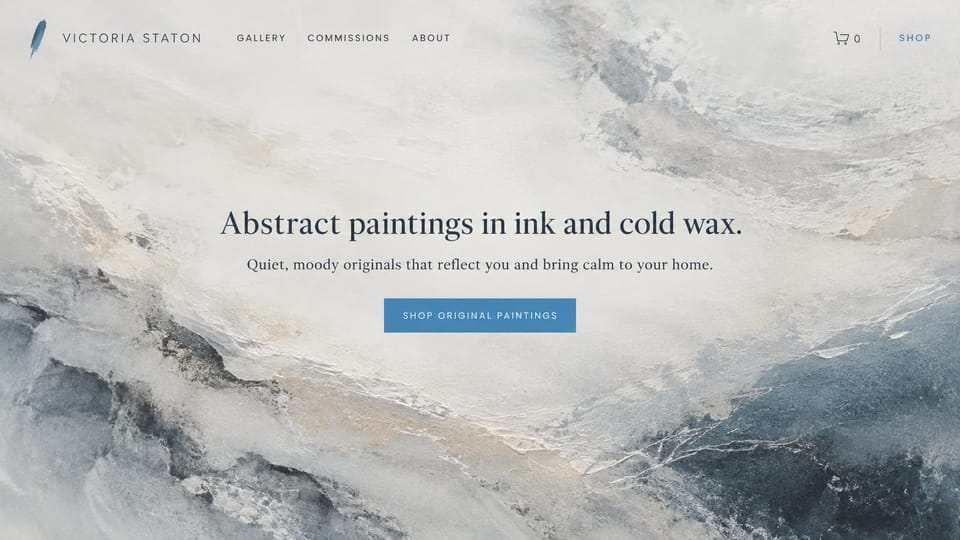
The painting fills the whole screen behind one calm line and a shop button, so the work sets the mood.
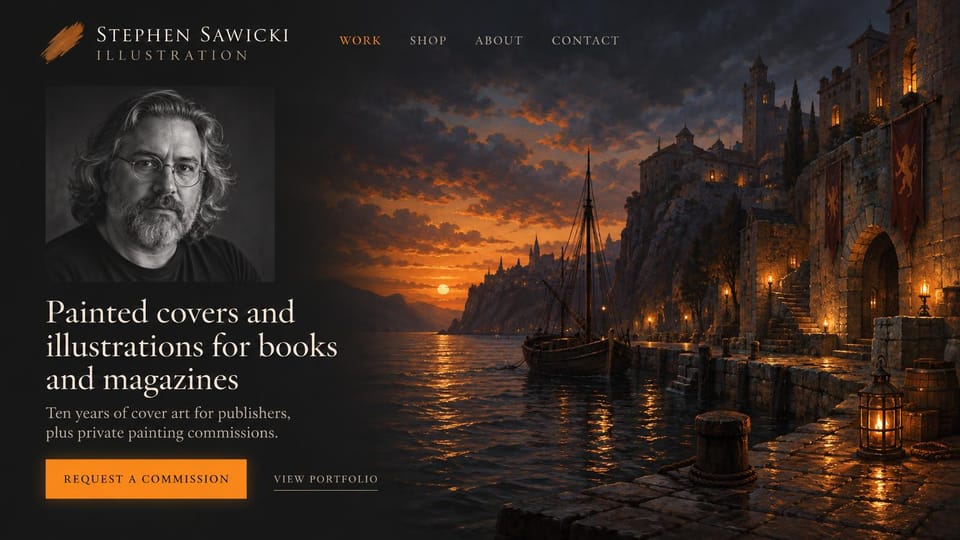
Your portrait and a short line sit over a dark painted scene, for illustrators who paint book covers.
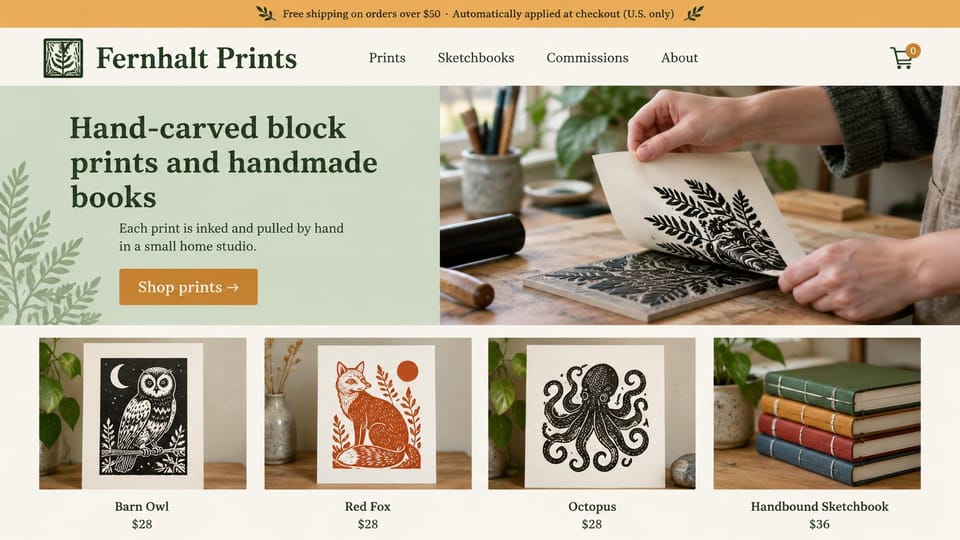
Hands pulling a print in the hero and priced pieces below, for printmakers who sell prints and handmade books.
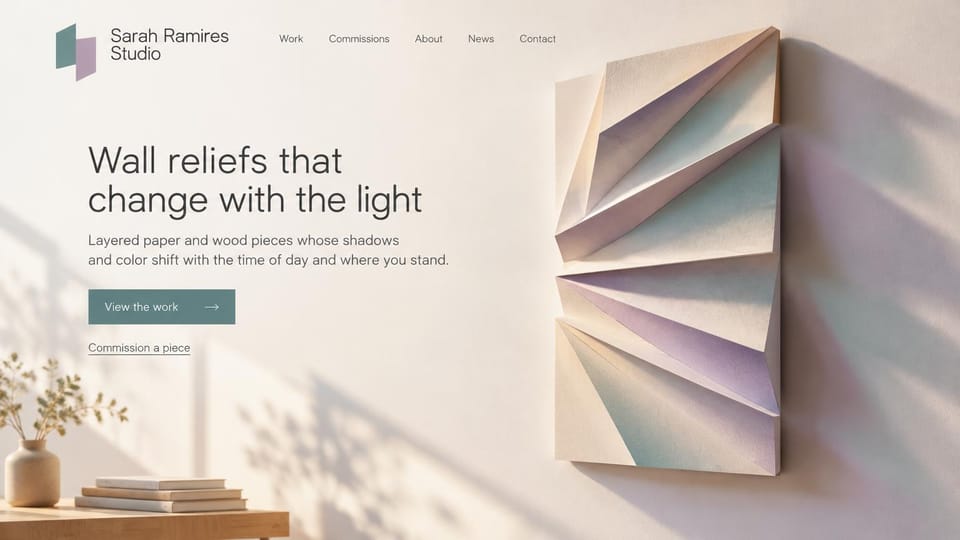
One piece on a sunlit wall and a short line, with buttons to see the work or ask for a commission.
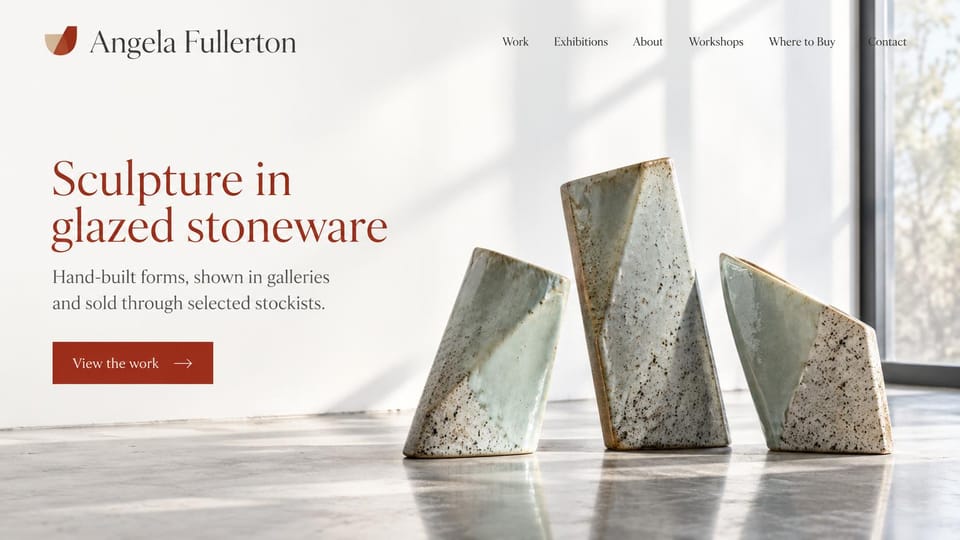
Three forms in soft light sit beside a short line, with a where to buy page for artists sold through shops.
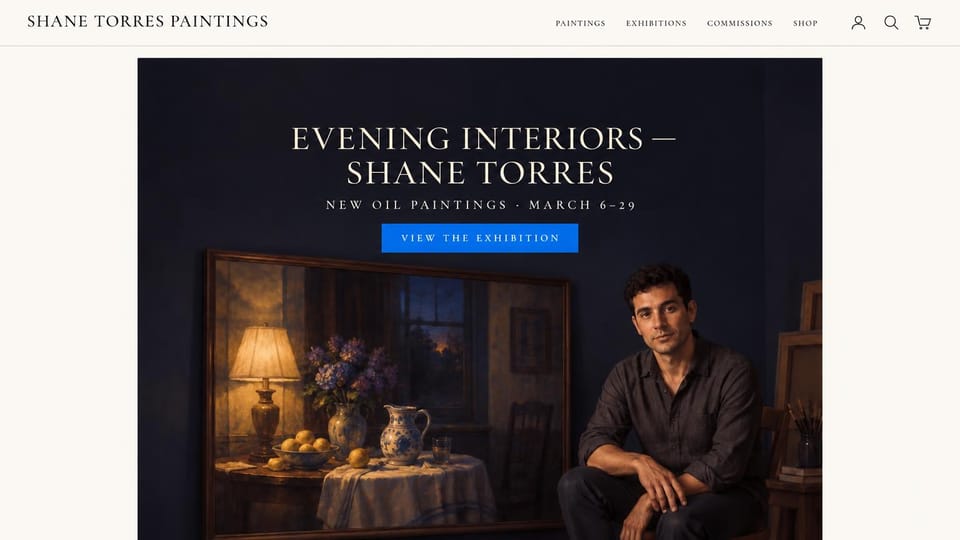
A dark banner announces the current show over a photo of the painter beside the work.
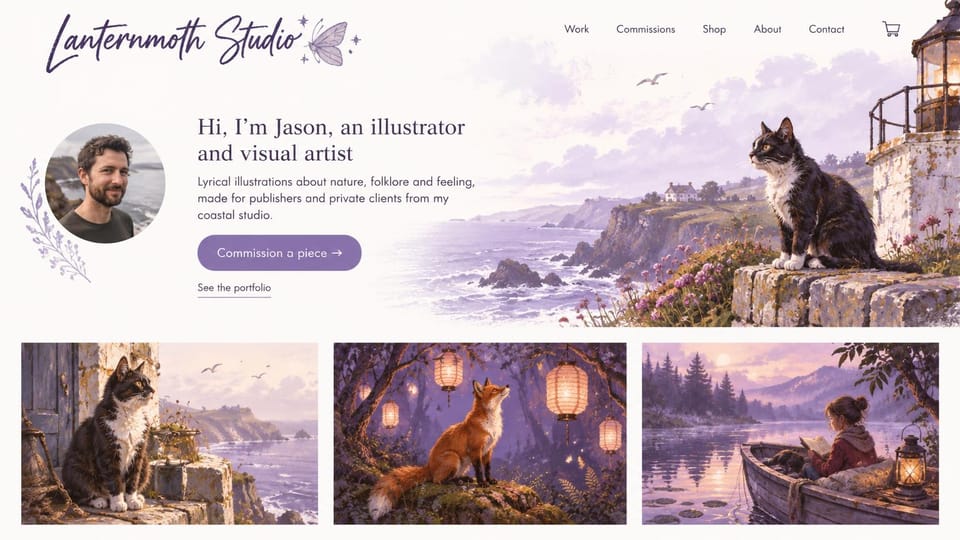
A friendly portrait and a short hello beside a wide coastal scene, with three previews of recent work.
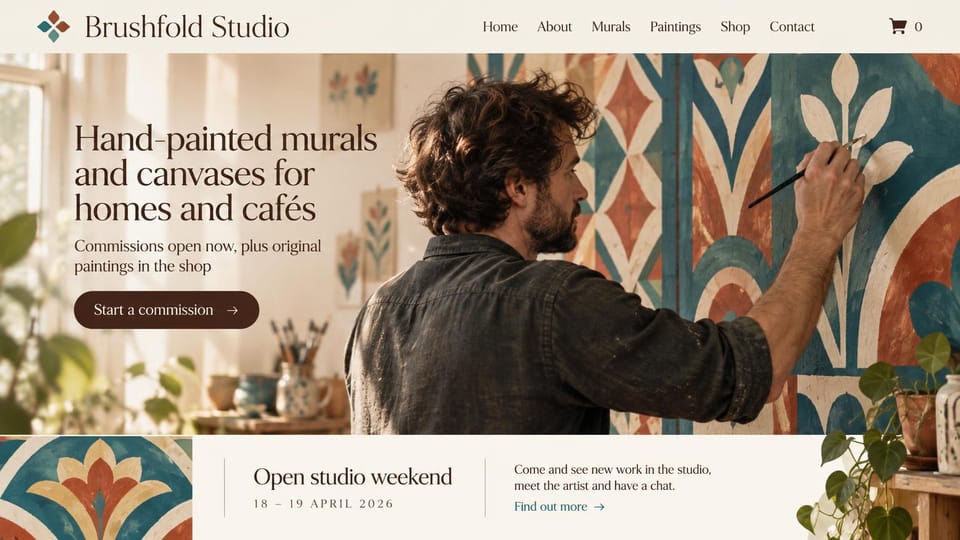
The painter at a patterned wall leads to commissions, with an open studio weekend in a band below.

Two buttons split the work from the classes, with four glazed pieces below the potter at the wheel.
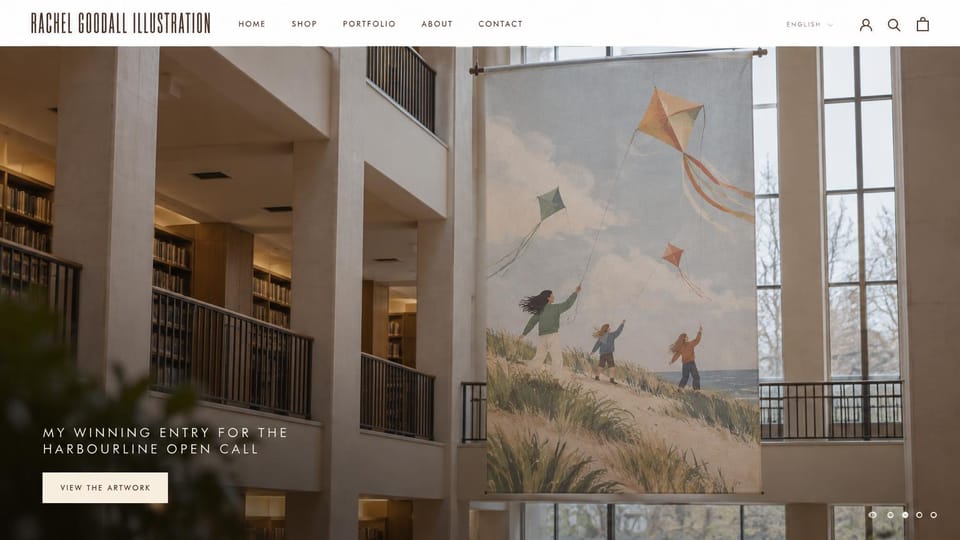
A photo of one piece installed at full scale, with a caption and a slider, for illustrators with public work.
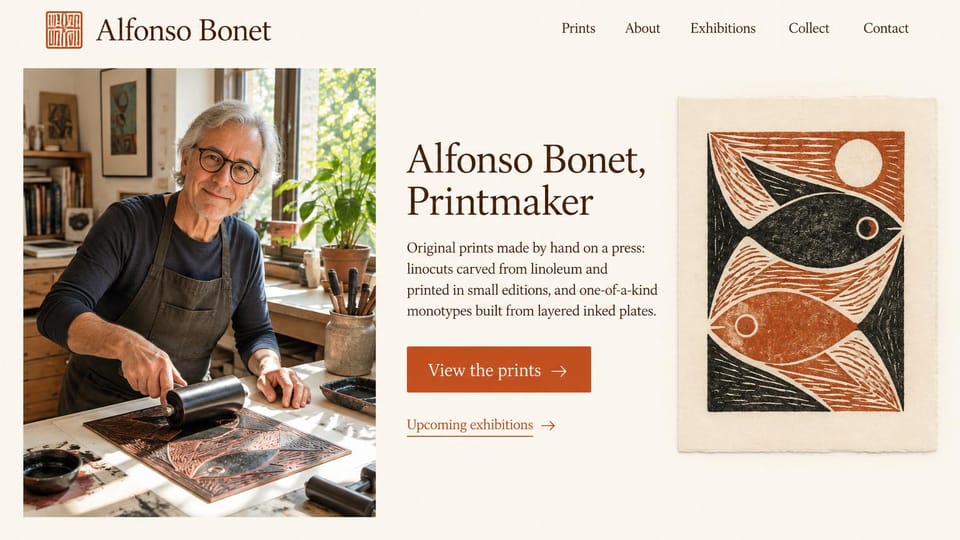
Portrait, intro and one print share the first screen in three columns, so visitors meet the maker and the work.
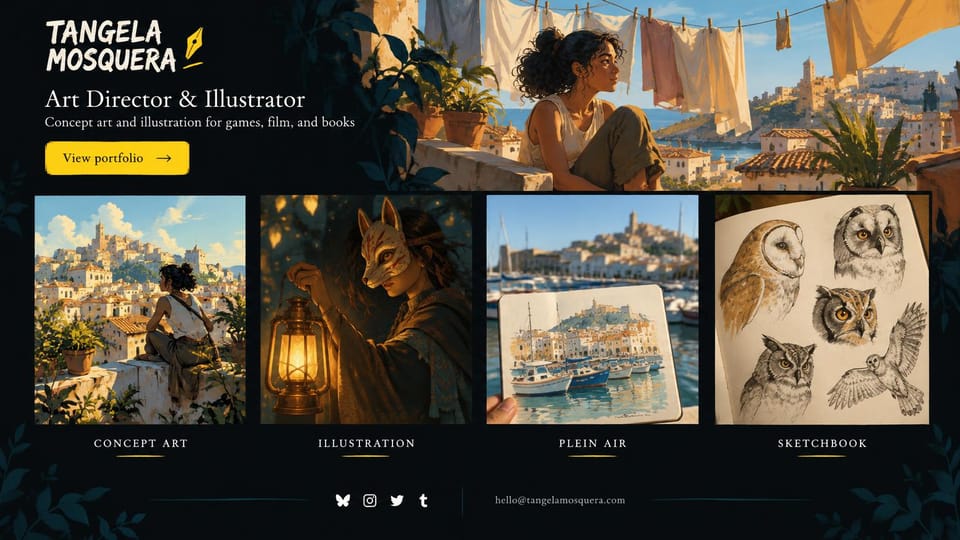
A wide painting heads a dark page above labeled tiles for concept art, plein air and sketchbook work.
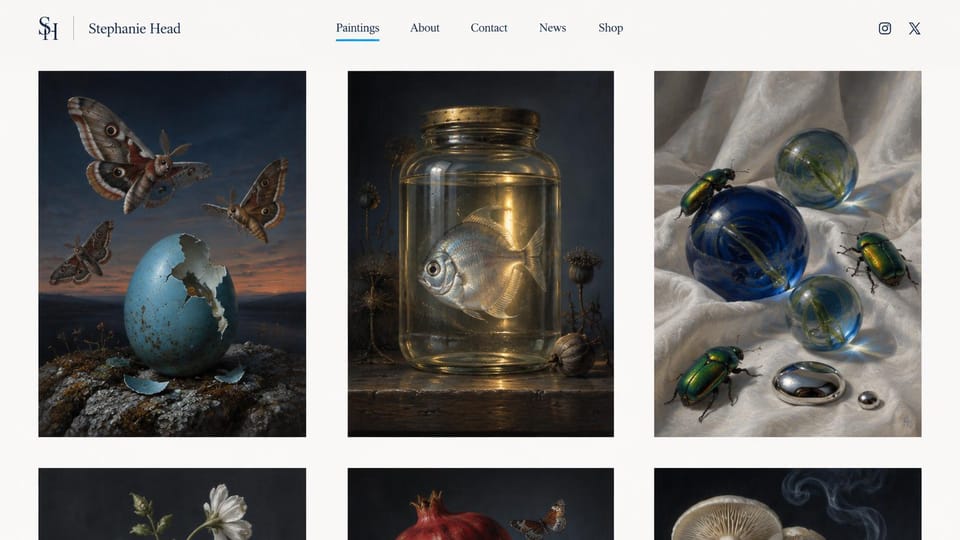
A calm three-column grid lets detailed paintings speak, with news and a shop in the menu.
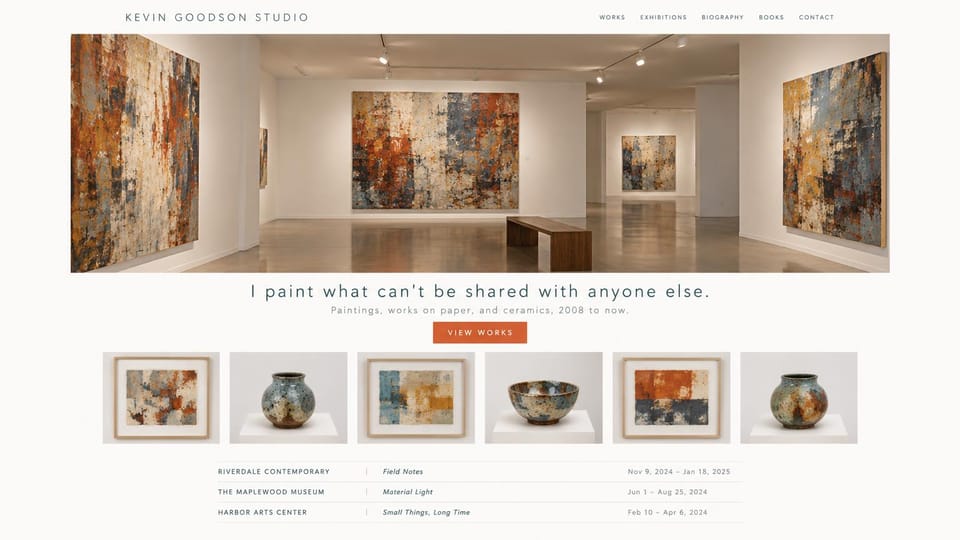
An installation view leads into paintings and pots side by side, with recent shows listed below.
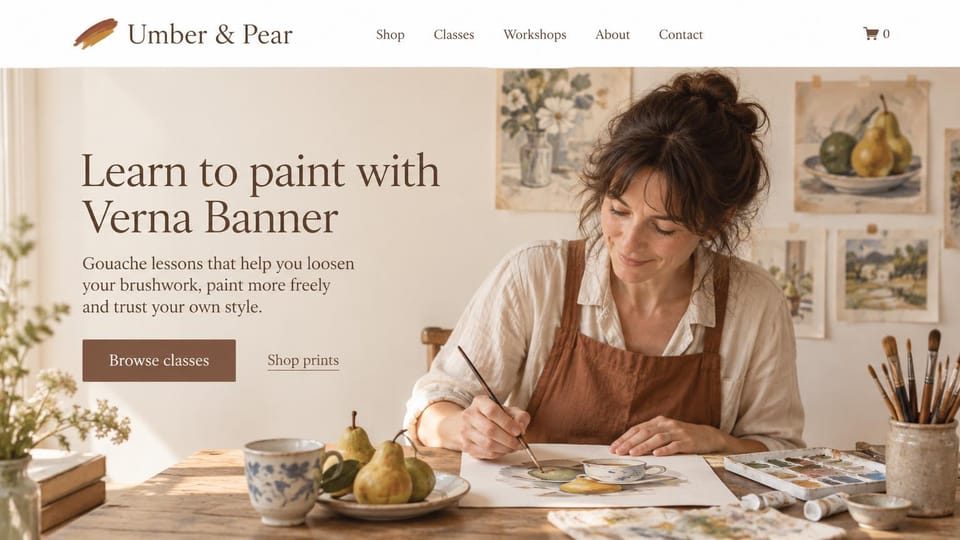
Classes take the main button and prints the second link, for a painter whose teaching comes first.
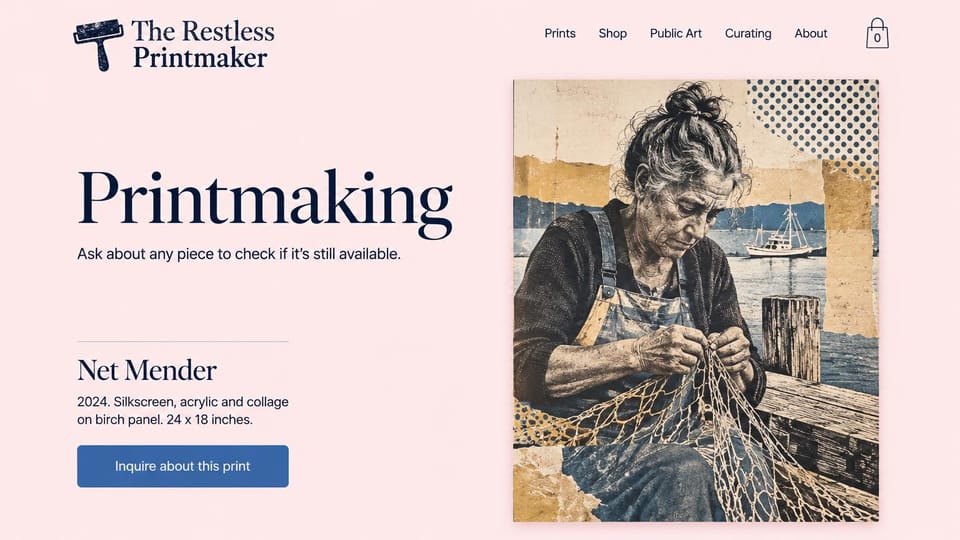
One featured piece comes with its medium, size and an inquiry button, for artists who sell each work directly.
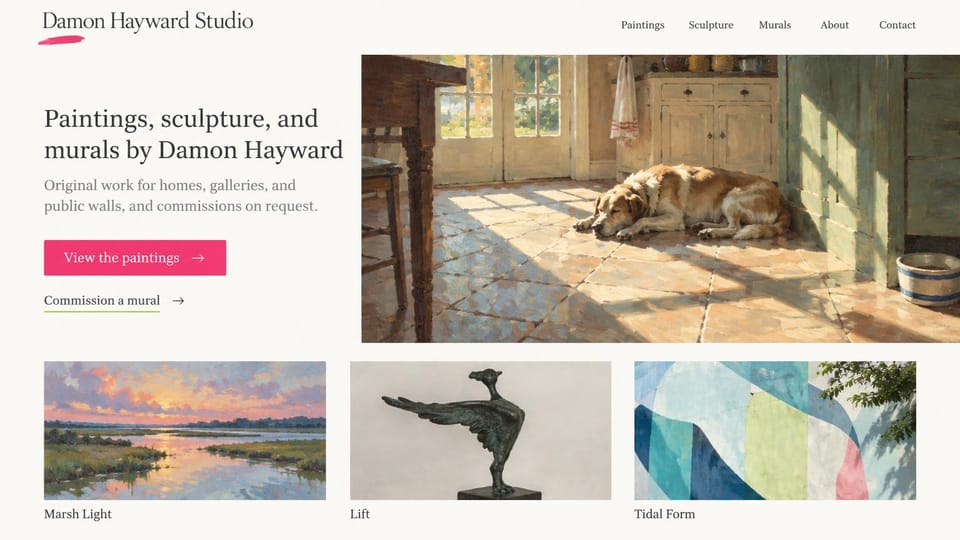
A large interior painting leads, with a painting, a bronze and a mural below to show your range.
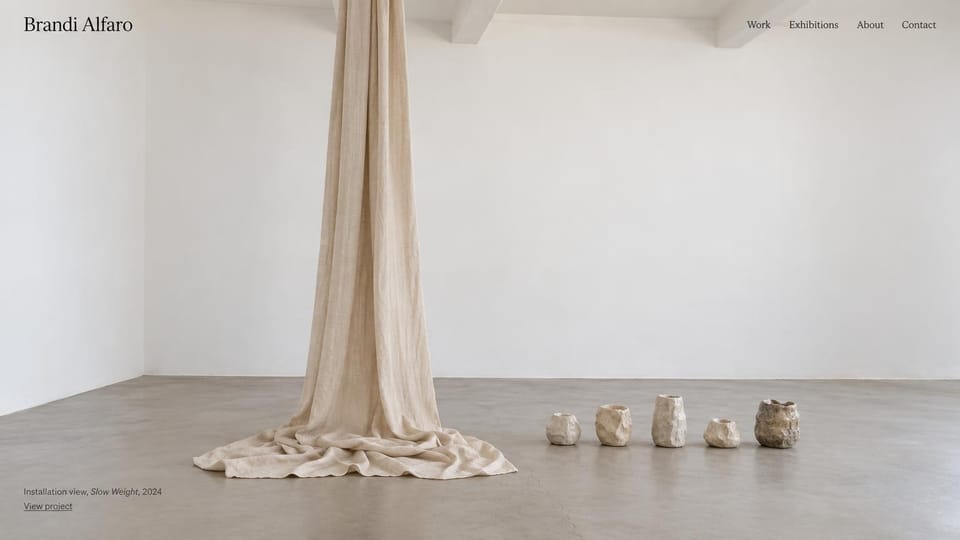
A single installation view and almost no words, letting the space and the work set the tone.
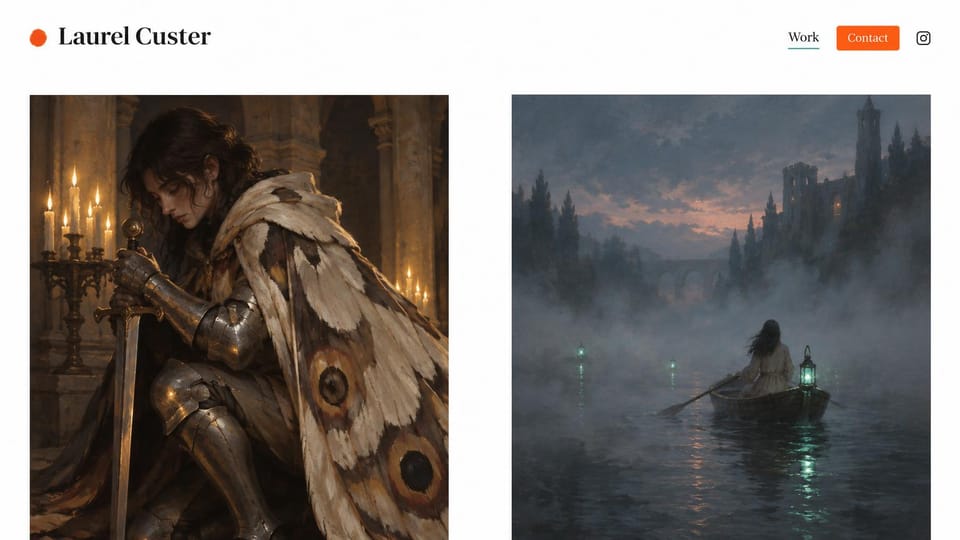
Two large paintings fill the page under a tiny header, for painters who let the work do the talking.
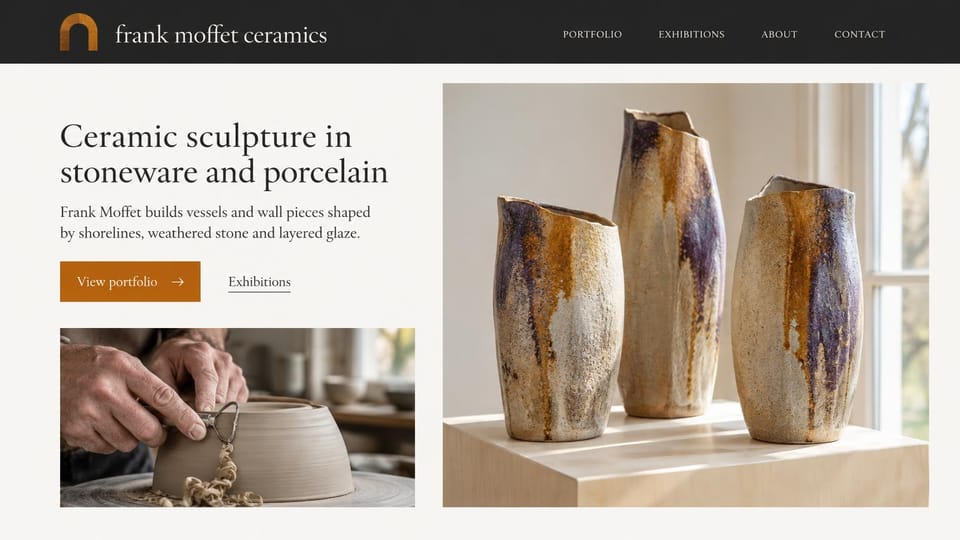
Finished vessels beside a close-up of hands at the wheel, for ceramicists who show the work and the process.
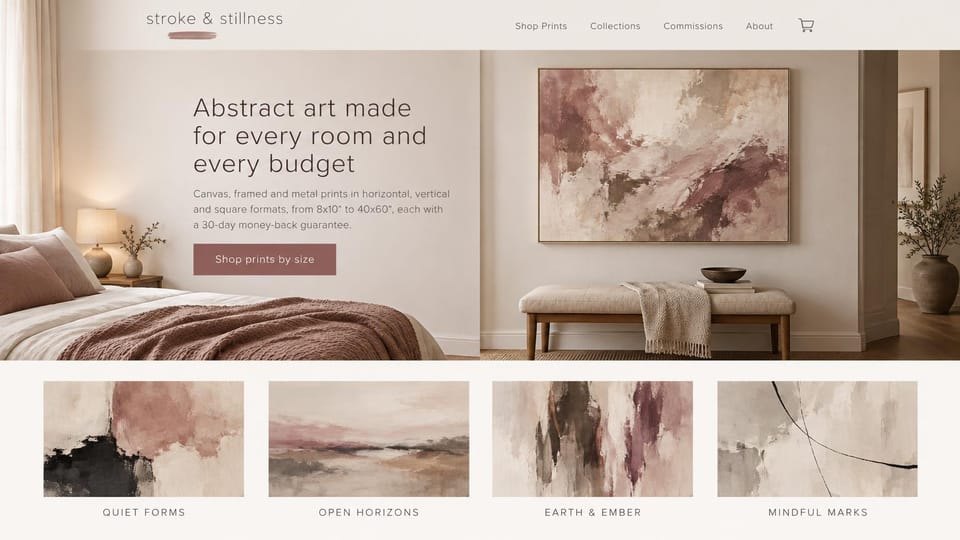
A room shot shows a print in place above collection tiles, for artists who sell prints in many sizes.
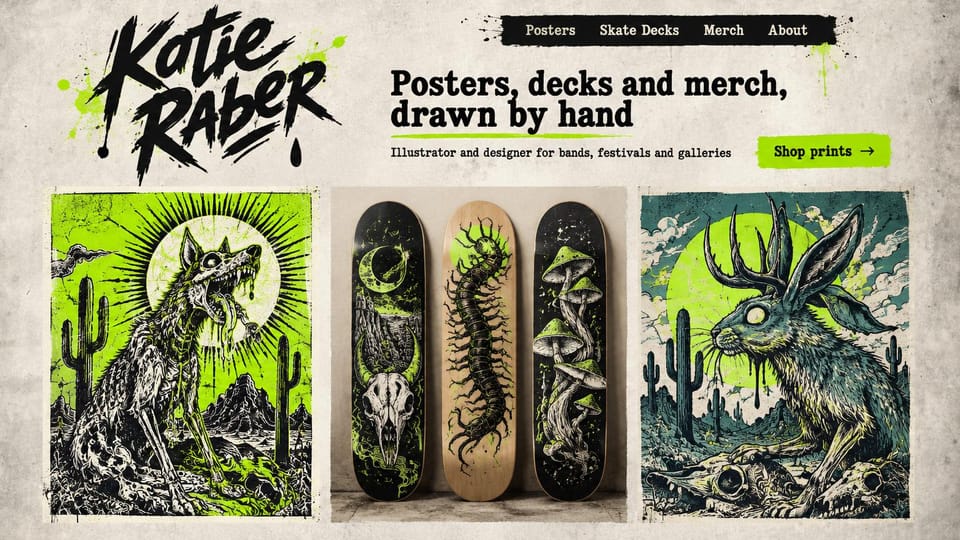
A hand-lettered name over three big shots of the work, for an illustrator who sells posters and merch.
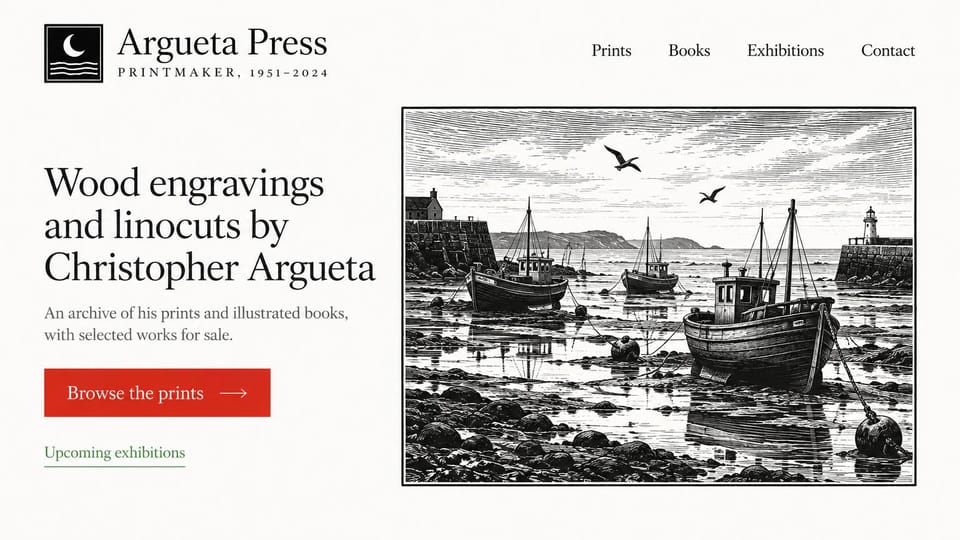
Keeps a late artist's prints and books together with selected works for sale, for estates and families.
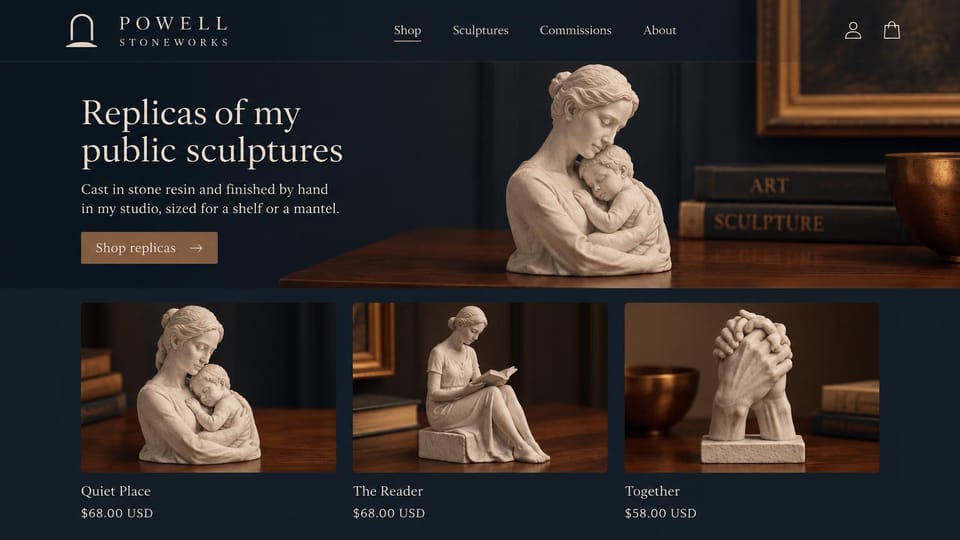
Small casts of your larger works lead the page, with three priced pieces below a shop button.
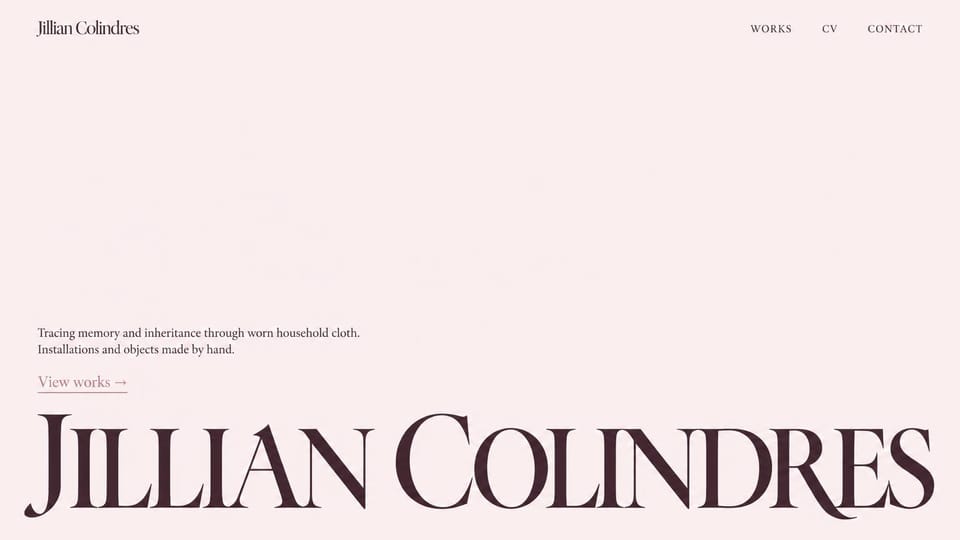
No image at all, just an oversized name and one line about the work, for an artist who wants restraint.
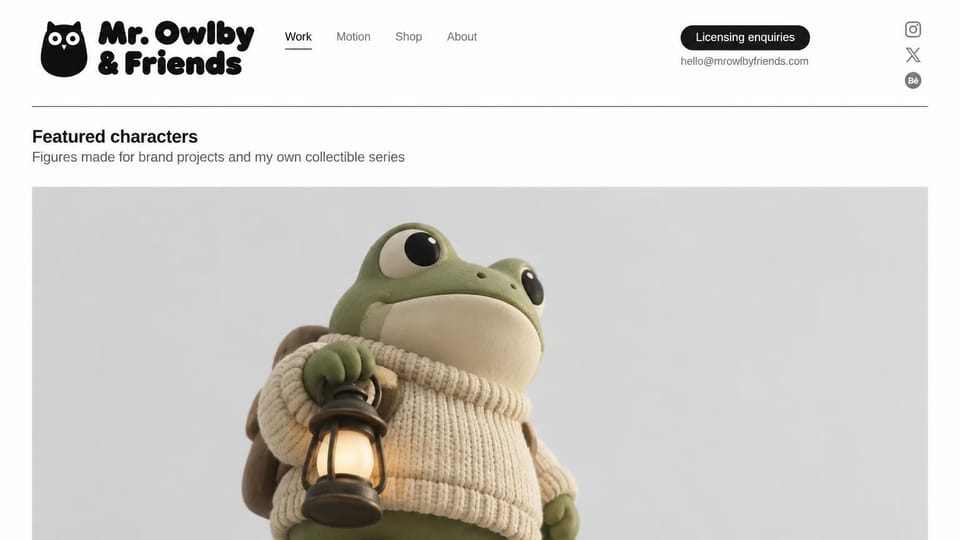
One character fills the page under a short line on brand work and your own series, with licensing up top.
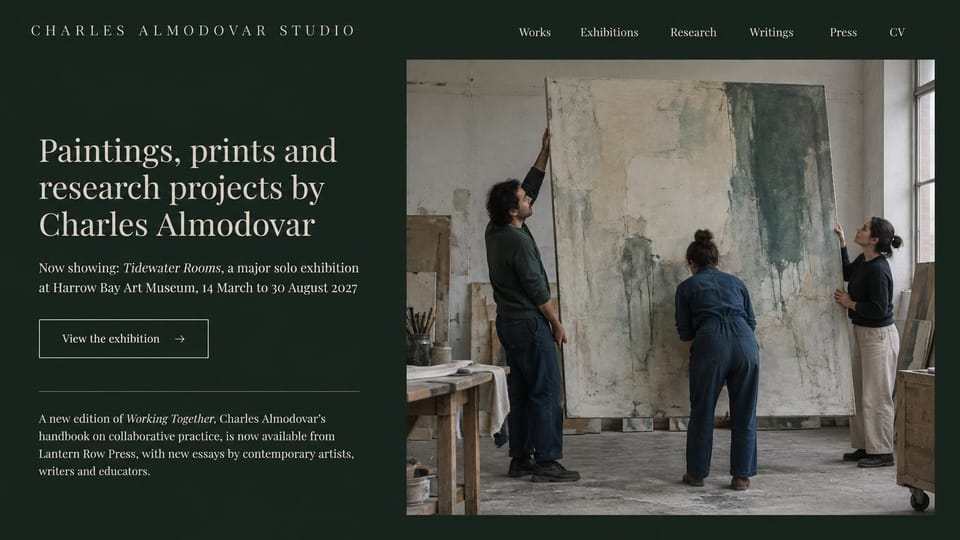
Pairs a current museum show with a new publication, for artists whose practice includes research and writing.
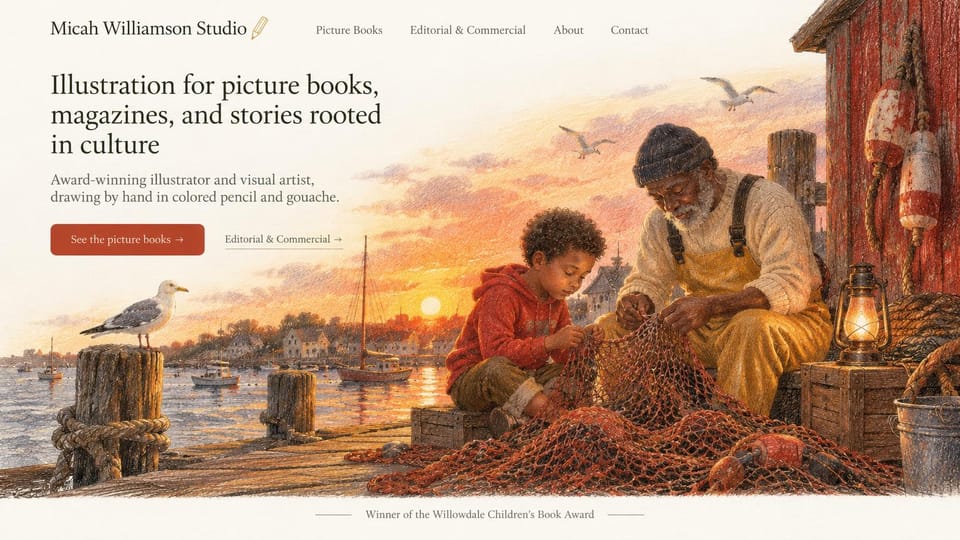
A detailed scene fills the page behind a short headline, with links for picture books and editorial work.
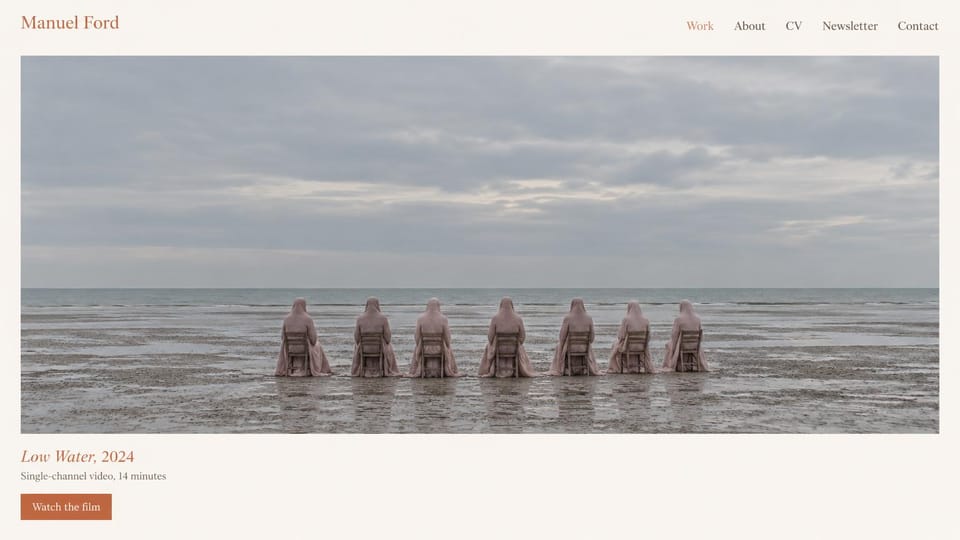
One wide still from the newest film with its title, year and length, for an artist who works in video.
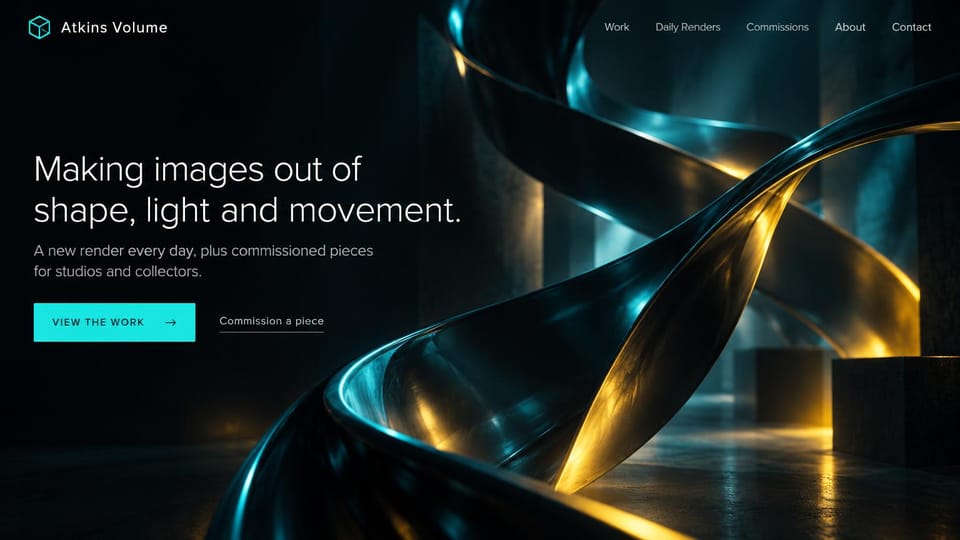
One glossy render fills a dark screen beside a short line on your practice, with a daily series in the menu.
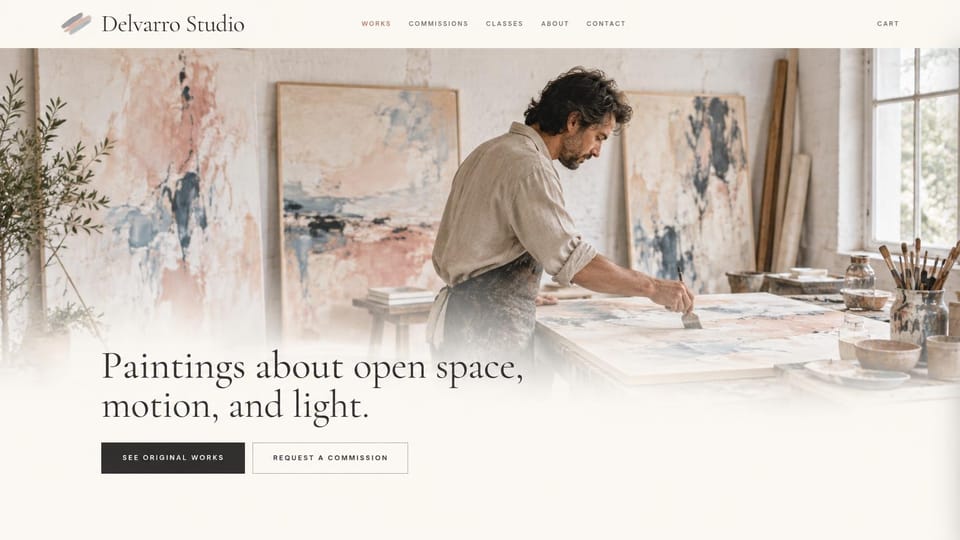
The painter at work fades into the headline, with separate buttons for originals and commissions.
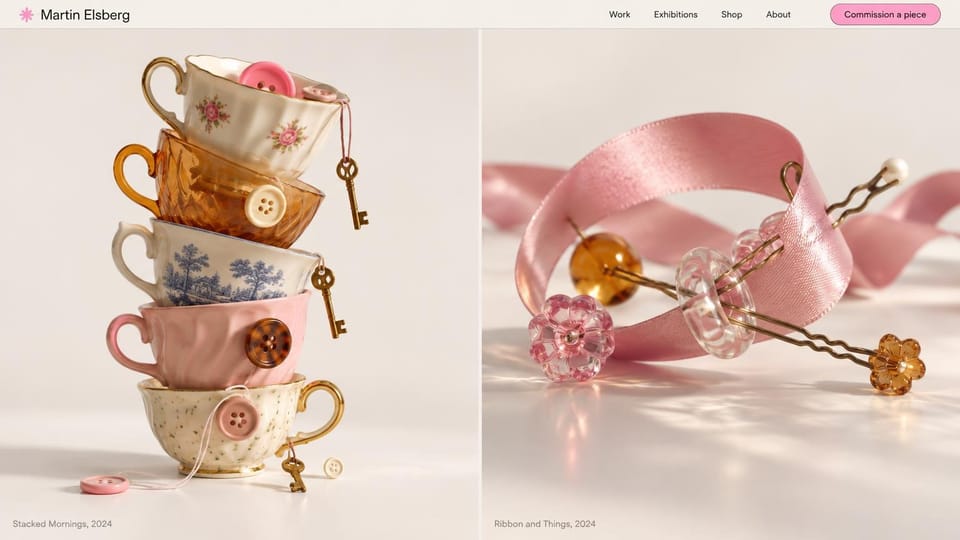
Two captioned pieces split the first screen under a slim menu, with a commission button always in view.
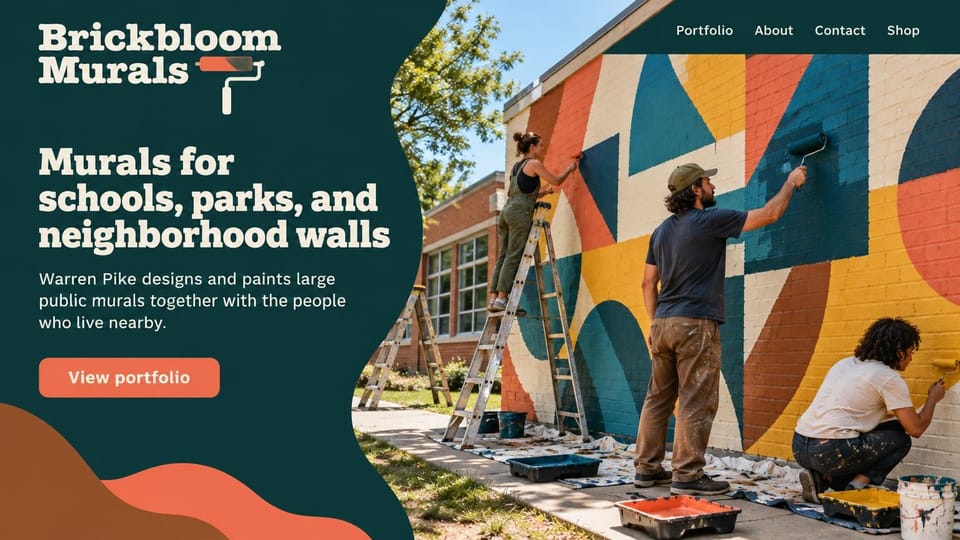
People painting a wall together show how the work gets made, for muralists who run community projects.
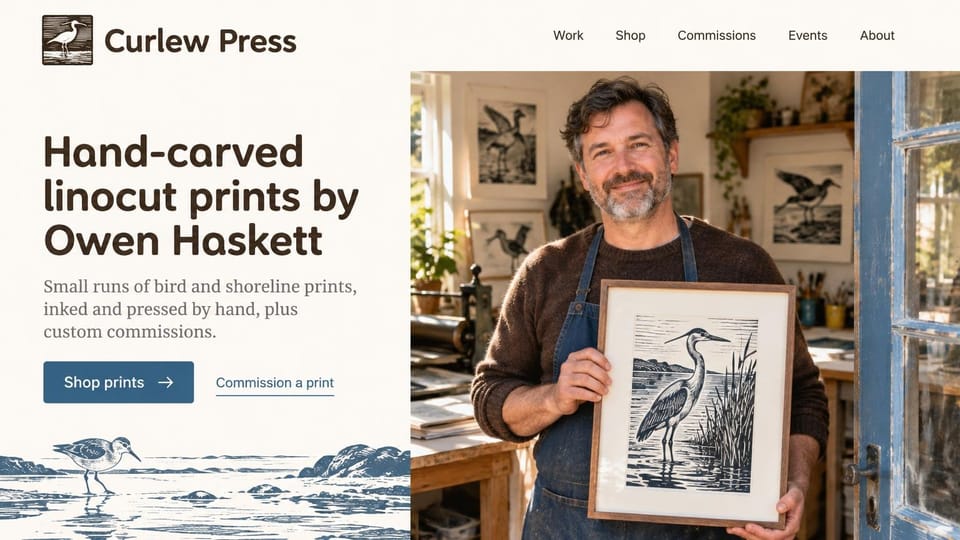
The printmaker holds up a framed print beside a bold intro, with a drawn shoreline along the bottom.
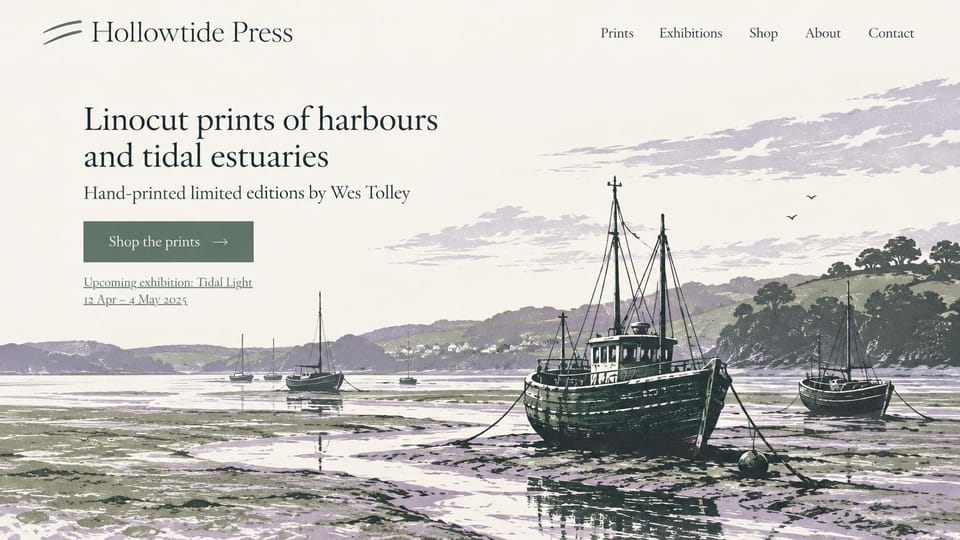
One wide print runs under the headline, with the shop and the next exhibition as the two calls to action.
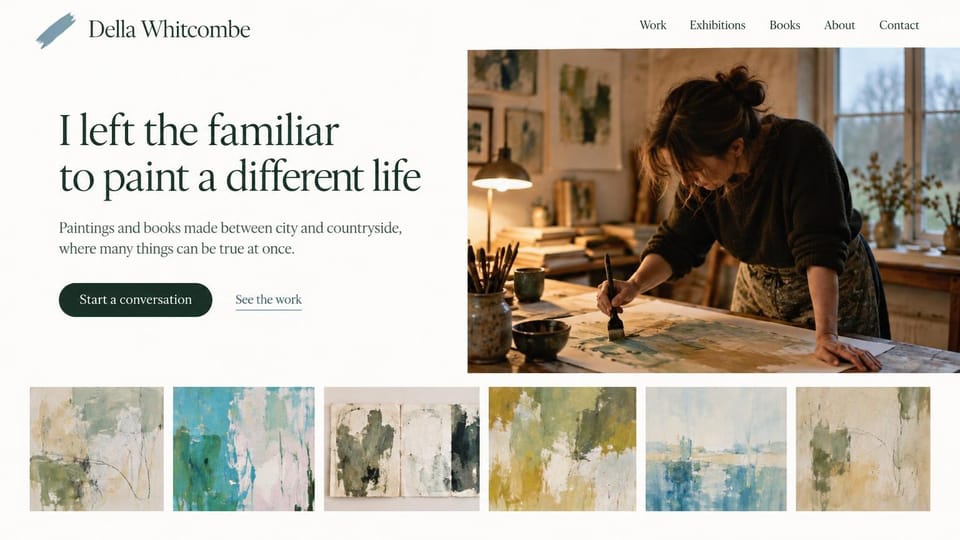
A personal headline and the painter at work lead into six recent paintings, with books and shows in the menu.
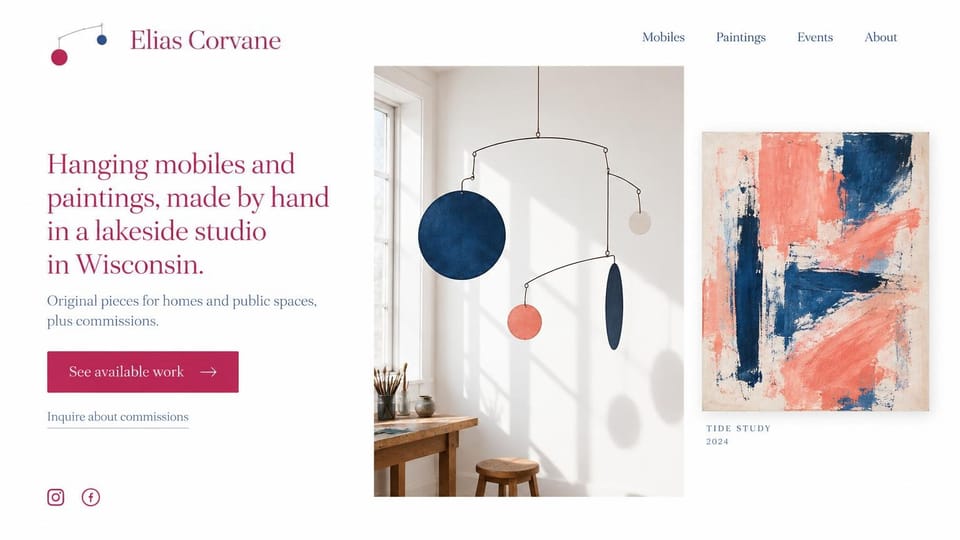
A mobile in a sunlit room sits next to a painting, for artists who move between sculpture and canvas.
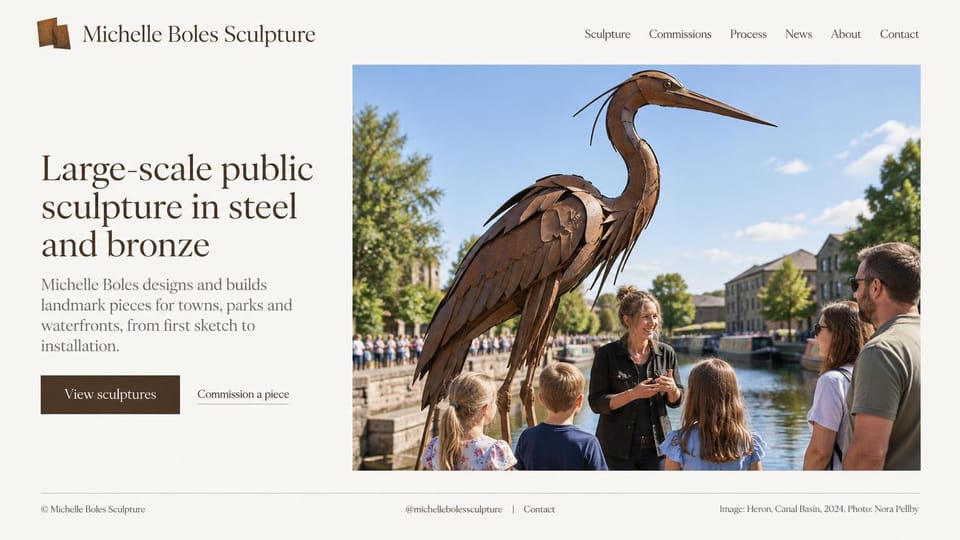
A finished piece in its public setting with the artist and visitors, for sculptors who pitch towns and parks.
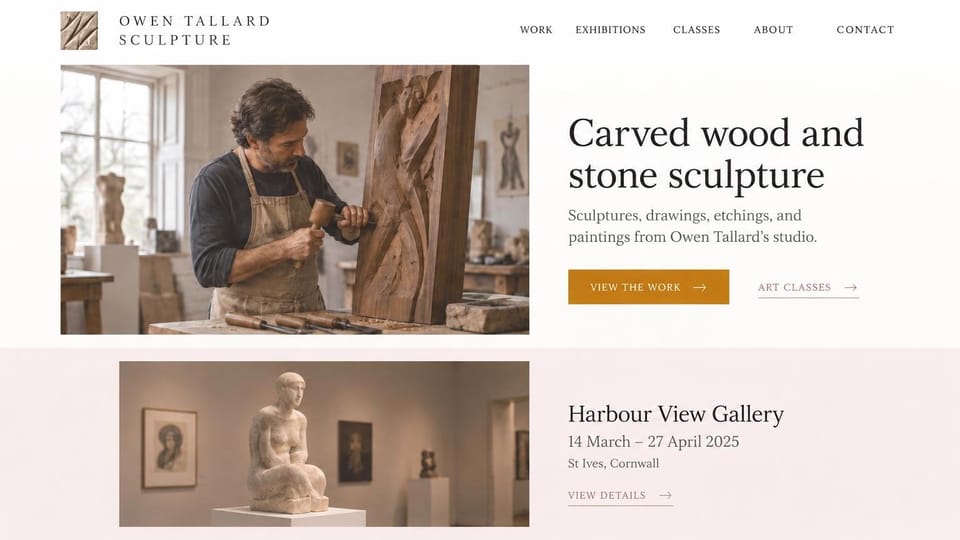
The sculptor carving fills the top half, with a band below for the next gallery show and a link to classes.
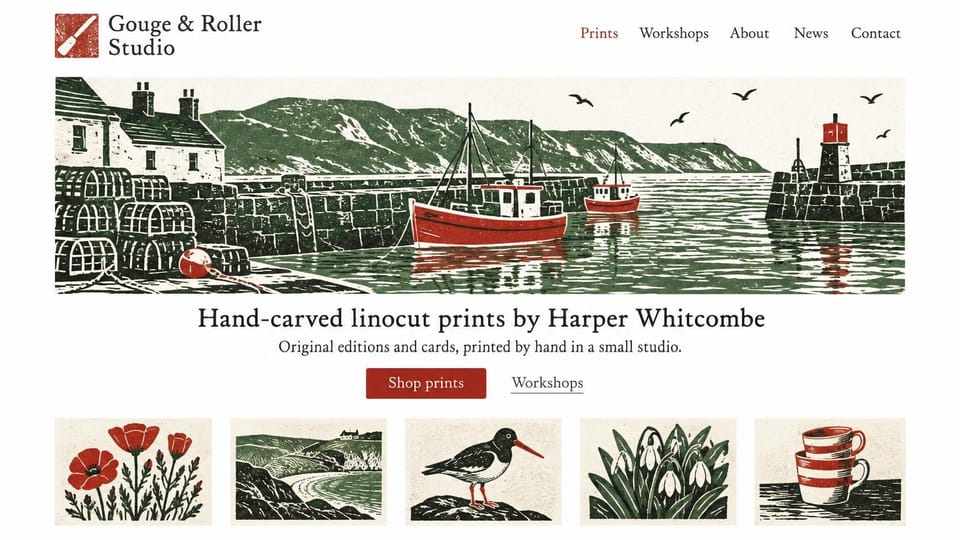
A wide print opens the page, with a shop button, workshops and five smaller prints below to browse.
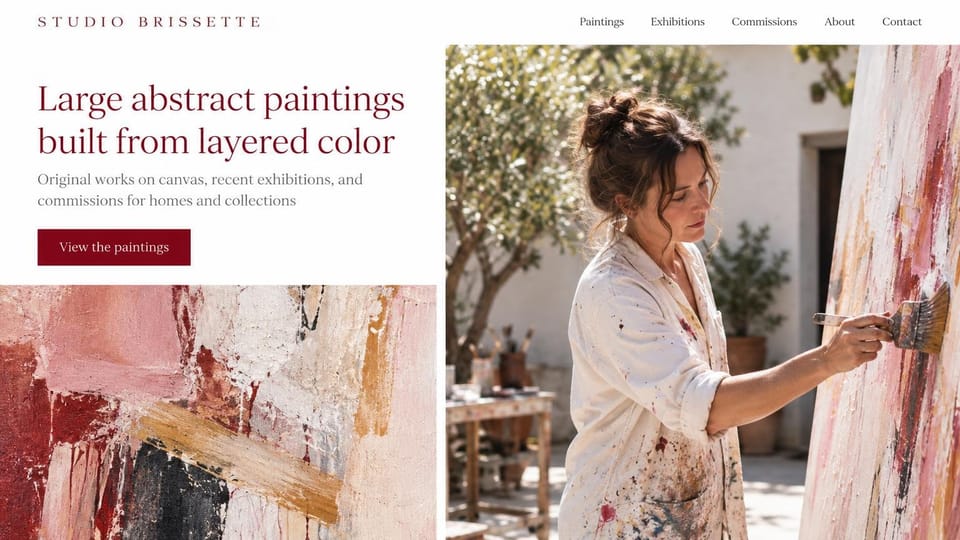
A detail of a canvas and the painter at work, side by side, with one button to the paintings.
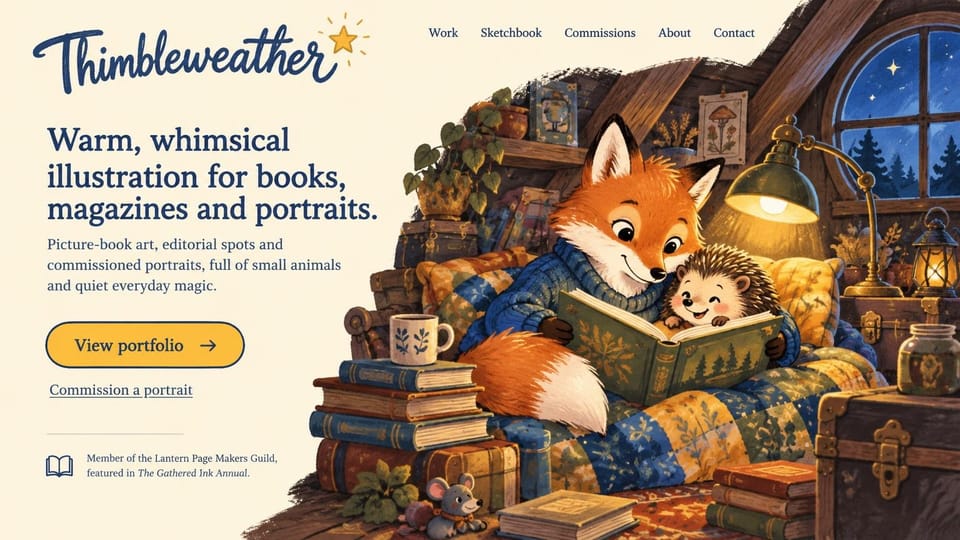
A warm attic scene beside a serif headline, with a portfolio button and a link to commission a portrait.
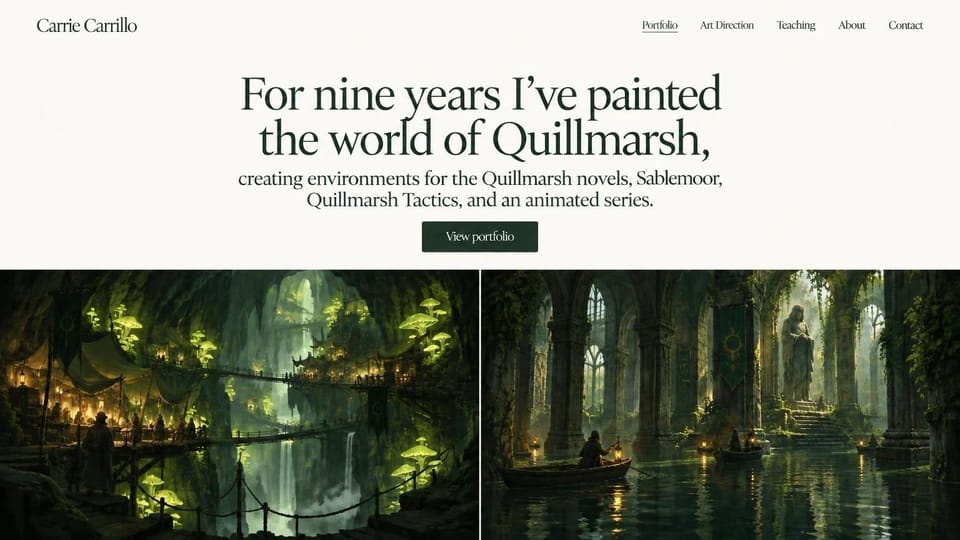
A centered line on the worlds you've painted sits above two wide environment pieces, for concept artists.
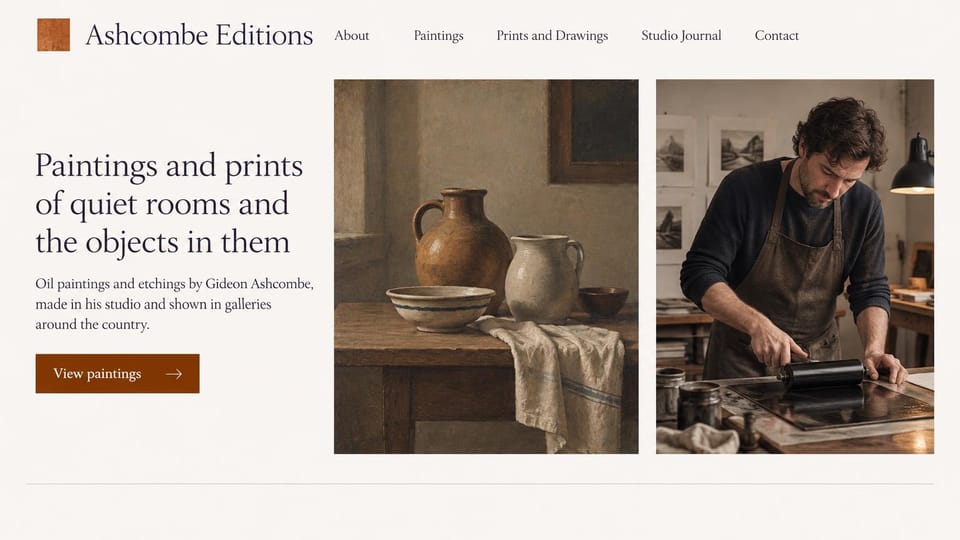
A finished still life sits beside the artist at the press, for painters who also make prints.
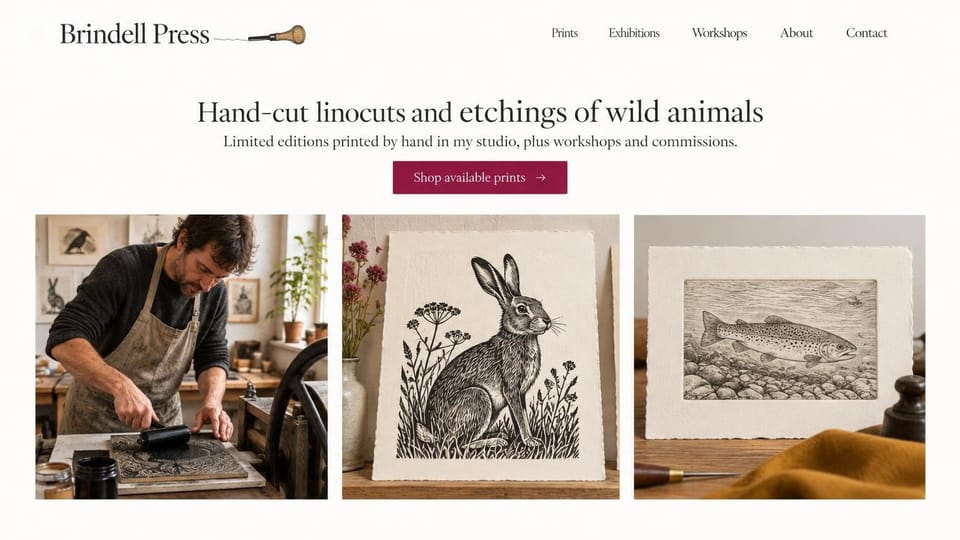
A centered intro sits above three photos, one of the press and two of the prints, for printmakers who teach.
Designs by Cactal. Updated November 2026.
Describe your studio
What you make, where people can see it and how buyers and galleries should reach you. Cactal writes the pages, sets up your inquiry form and publishes the site.
How it works
1 Pick a design
Browse by medium and open any design to see it full size.
2 Add your work
Your artworks, series, exhibitions and how buyers should reach you. Cactal writes every page and builds the site from your design.
3 Publish
Ask for changes in plain words until it's right, then publish free on a Cactal domain, or on your own domain with Pro.
What an artist website needs
Your work, photographed well
Even light and true color matter more than any layout. For larger pieces and murals, add a photo of the work in its setting so people can judge the scale.
Details beside every piece
Title, year, medium, size and whether it's available. Collectors and curators look for these first, and they help search engines understand each work.
A short statement and a bio
A few plain sentences on what you make and why, plus shows, residencies and collections if you have them. Keep the full CV on its own page.
A clear way to buy or commission
Say how buying works: an inquiry for originals, a link to the shop you already use for prints, or a commission form that asks for size, budget and timing.
Shows, markets and open studios
Upcoming dates give people a reason to come back and to meet the work in person. A list of past shows builds a record that galleries can check.
A way to stay in touch
Many people follow an artist for a while before they buy. Link to the newsletter or social account you keep up with, so a single visit can turn into a following.
Questions
Are these artist website templates free?
Every design here is free to start from. You can sign up, build and publish on a Cactal domain without a card and with no time limit. Putting your site on a domain you own is $25 a month on Pro, or $240 a year.
Do I need to know how to code or design?
No. Describe your work in plain words and Cactal builds, edits and publishes the site. When you want a change, ask for it the same way.
How many pieces should I show?
A focused selection grouped by series works better than everything you've ever made. Give each series its own page, and list the title, year, medium and size of every piece.
Can I use my own domain?
Yes. Every site starts on a free Cactal address. Connect a domain you own on Pro for $25 a month, or $240 a year, and each additional website on its own domain is $20 a month.
Who owns the website?
You do. Every Cactal site is real React source code, so you can take it and run it anywhere. There is no export to buy.
Can I sell my art through the site?
Cactal doesn't include a shopping cart or payments. Your site can show what's available with an inquiry form for each piece, and link to or embed the shop or marketplace you already sell through.
Can I add new work and shows later?
Yes. Ask Cactal in plain words to add a new series, mark a piece as sold or post an exhibition, and the site updates. Pages and posts also live in a built-in CMS.
More website templates
- Photography website templates
- Architecture portfolio website templates
- Interior design website templates
- Fashion and clothing website templates
- Videographer and video production website templates
- Jewelry website templates
- Art gallery website templates
- Portfolio website templates
- Marketing agency website templates

Your artist website, built for you.
Pick a design or just describe your work. Free to start, no card needed.
Start building